Introduction to English Basics: Alphabet and Sounds
From the English curriculum
Introduction to English Basics: Alphabet and Sounds
TL;DR
English uses 26 letters in its alphabet, which can be uppercase or lowercase. Each letter represents different sounds, and learning these sounds is key to reading and speaking. Practicing letter recognition and sound association will help you build a strong foundation in English.
1. The Mental Model
Think of English letters as building blocks. Just as you need to know what each block looks like and what it can do to build something, you need to know each letter and the sounds it makes to build words.
2. The Core Material
English has an alphabet of 26 letters. These letters can be written in two forms: uppercase (also called capital letters) and lowercase (small letters). You'll use uppercase letters at the beginning of sentences and for proper nouns (names of people, places, etc.).
2.1 The English Alphabet
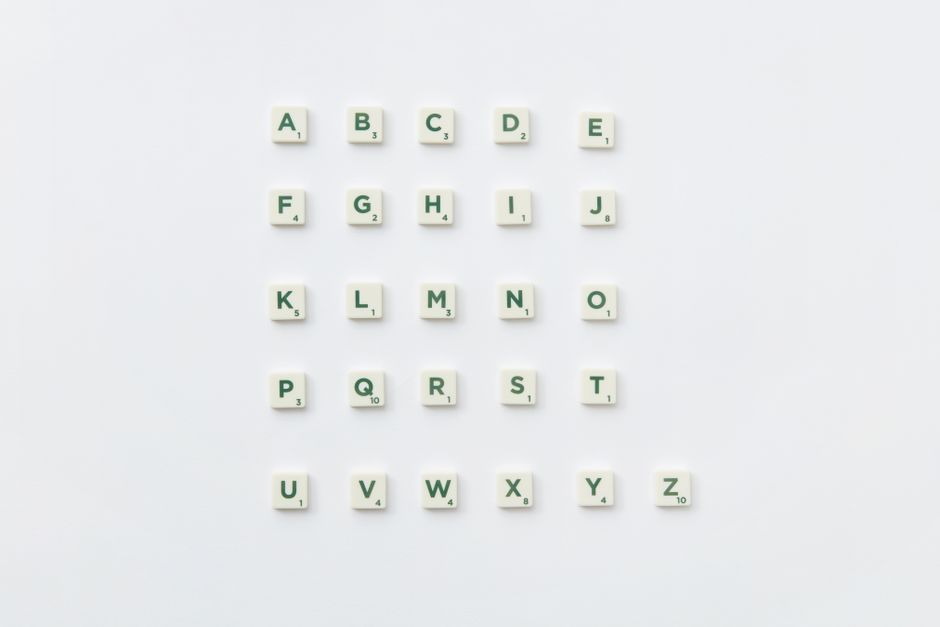
Photo by DS stories on Pexels
Here are all 26 letters:
- Uppercase: A B C D E F G H I J K L M N O P Q R S T U V W X Y Z
- Lowercase: a b c d e f g h i j k l m n o p q r s t u v w x y z
2.2 Letter Sounds (Phonics)

Photo by RDNE Stock project on Pexels
Each letter in the alphabet has at least one sound, and many have several! This is often the trickiest part of English. We call the study of these sounds "phonics."
For example:
* The letter 'A' can sound like the 'a' in apple (short 'a'), or the 'a' in ape (long 'a').
* The letter 'C' can sound like the 'k' in cat, or the 's' in city.
Letters are categorized into two groups:
* Vowels: A, E, I, O, U (and sometimes Y). Vowels are sounds where the air flows freely from your mouth. They're like the "glue" that holds words together.
* Consonants: All other letters. Consonant sounds involve some obstruction of the air flow (e.g., your tongue touching your teeth).
Here’s a simplified look at how letters connect to forming words.
graph TD
    A["Alphabet (26 Letters)"] --> B["Uppercase Letters"]
    A --> C["Lowercase Letters"]
    B --> D["Letter Sounds (Phonics)"]
    C --> D
    D --> E["Vowel Sounds"]
    D --> F["Consonant Sounds"]
    E --> G["Forming Words"]
    F --> G
    G --> H["Reading & Speaking"]
2.3 Learning Strategies

Photo by Pixabay on Pexels
- Flashcards: Create cards with an uppercase letter on one side and its lowercase on the other. Add pictures of objects starting with that letter to help with sounds.
- Pronunciation practice: Listen to native speakers pronounce words and letters. Many online resources can help with this.
- Say words aloud: As you learn new words, say them out loud, focusing on the sounds each letter makes.
3. Worked Example
Let's take the word "CAT."
- Identify the letters: C, A, T.
- Determine if they are uppercase or lowercase: All are lowercase.
- Identify letter types: 'C' is a consonant, 'A' is a vowel, 'T' is a consonant.
- Practice sounds:
- 'C' makes the /k/ sound (like in "kick").
- 'A' makes the short /a/ sound (like in "apple").
- 'T' makes the /t/ sound (like in "top").
- Blend the sounds: /k/ + /a/ + /t/ = "cat."
4. Key Takeaways
- The English alphabet has 26 letters, each with an uppercase and lowercase form.
- Vowels (A, E, I, O, U, sometimes Y) are essential for forming words.
- Consonants are the remaining letters that typically block airflow.
- Letters have different sounds (phonics), which can change depending on the word.
- Learning letter recognition and associated sounds is fundamental to reading and speaking English.
Common mistakes to avoid:
- Don't assume each letter always makes the same sound; English sounds are flexible.
- Don't get discouraged by irregular spellings; they're common.
- Don't just memorize the alphabet; focus on the sounds each letter represents.
5. Now Try It
For the next 15 minutes, find five simple English words (like "dog," "sun," "bed," "cup," "pig"). For each word, write down: 1) the uppercase and lowercase form of each letter, 2) whether it's a vowel or consonant, and 3) the sound each letter makes in that specific word. Success looks like correctly identifying and articulating the sounds for each letter in your chosen words.
Frequently asked about Introduction to English Basics: Alphabet and Sounds
Get the full English curriculum
Clone the complete plan to your dashboard for unlimited AI-generated notes, practice quizzes, and a personalised revision schedule.
Create Free Account