Types of Governments
From the Sst curriculum
Types of Governments
TL;DR
Governments are how societies organize themselves, ranging from one person holding all power to citizens making decisions directly. The main types depend on who holds the power and how much control they have. Understanding these types helps you see how different countries operate and why.
1. The Mental Model
Think of government as the system a group of people uses to make decisions, enforce rules, and provide services. It's like the operating system for a country, and different "OSes" have different features and ways of working.
2. The Core Material
Governments come in many forms, each with its own way of distributing power and making decisions. We'll look at some of the most common types.
Monarchy
In a monarchy, a single person, usually a king or queen, holds the supreme power. This power is often inherited, meaning it passes down through families.
* Absolute Monarchy: The monarch has total, unchecked power. Think of historical kings who could do anything they wished.
* Constitutional Monarchy: The monarch's power is limited by a constitution or laws, often acting as a ceremonial head of state while real power rests with an elected body (like in the UK).
Oligarchy
An oligarchy is when a small group of people holds all the power. This group might be distinguished by wealth, family, military control, or religion. Decisions are made by these few, and the general population has little to no say.
Autocracy / Dictatorship
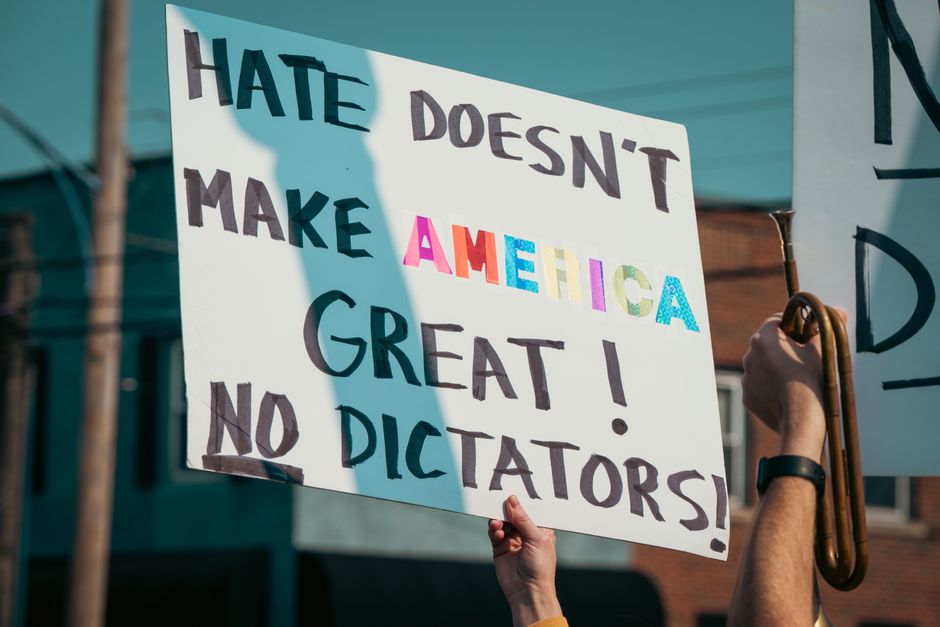
Photo by Chris F on Pexels
An autocracy is similar to an absolute monarchy in that one person has total power, but this power isn't usually inherited. Instead, a dictator seizes and maintains power, often through military force or political suppression. They have absolute control over the government and the lives of their citizens.
Theocracy
A theocracy is a government where religious leaders rule in the name of God or a deity, and the laws are based on religious texts. There's often no distinction between religious law and state law.
Democracy
Democracy means "rule by the people." In a democracy, citizens have a say in how they are governed.
* Direct Democracy: Citizens vote directly on every law and decision. This works best in small communities.
* Representative Democracy (Republic): Citizens elect representatives to make decisions on their behalf. This is what most large democratic countries have (e.g., the USA, India).
Anarchy
Anarchy isn't really a government type, but rather the absence of government. There are no laws, no rulers, and no organized system of control. This often leads to chaos.
Let's visualize the different types based on how many people hold power:
graph TD
    A["Number of Rulers"] --> B["One"]
    B --> C["Absolute Monarchy"]
    B --> D["Dictatorship/Autocracy"]
    A --> E["Few"]
    E --> F["Oligarchy"]
    E --> G["Theocracy (often)"]
    A --> H["Many"]
    H --> I["Democracy"]
    I --> J["Direct Democracy"]
    I --> K["Representative Democracy (Republic)"]
    A --> L["None"]
    L --> M["Anarchy"]
3. Worked Example
Imagine you're studying three fictional countries: Agraria, Borland, and Castelia.
-
Agraria is ruled by King Theon, whose family has ruled for 500 years. King Theon can issue any law he wants, and no one can challenge him. He controls the military, economy, and legal system without any checks or balances. This is a classic example of an Absolute Monarchy.
-
Borland holds elections every four years. Citizens vote for representatives to sit in a national assembly, and these representatives debate and pass laws. The head of government, a Prime Minister, is chosen by the assembly. This structure aligns with a Representative Democracy (specifically, a parliamentary republic).
-
Castelia is led by a council of five military generals who took power in a coup. They make all decisions for the country, control all media, and suppress any opposition. Citizens have no vote and no say in their governance. This is a clear case of an Oligarchy (specifically, a military junta).
4. Key Takeaways
- The primary way to classify governments is by who holds the power.
- Monarchies involve inherited rule by a single person, which can be absolute or limited.
- Autocracies/Dictatorships are also single-person rule, but usually seized power, not inherited.
- Oligarchies concentrate power in a small group, often based on wealth or status.
- Democracies empower the citizens, either directly or through elected representatives.
- Theocracies blend religious authority with governmental rule.
Common mistakes to avoid:
* Confusing a constitutional monarchy with an absolute monarchy; their power structures are very different.
* Thinking all oligarchies are necessarily bad; while often restrictive, some can be stable, though less representative.
* Assuming "democracy" always means direct voting on every issue; representative democracy is far more common for large populations.
* Calling any oppressive government a "dictatorship" without considering if it's actually an oligarchy or absolute monarchy.
5. Now Try It
Choose three real-world countries you know something about (e.g., USA, China, Saudi Arabia). For each country, determine what type of government it most closely represents based on who holds power and how decisions are made. Write a short paragraph for each explaining your reasoning. What would success look like? You'll have correctly identified the primary government type for each country and clearly justified your choice using the concepts learned above.
Frequently asked about Types of Governments
More from Sst
Get the full Sst curriculum
Clone the complete plan to your dashboard for unlimited AI-generated notes, practice quizzes, and a personalised revision schedule.
Create Free Account