Introduction to Minerals
From the Minerals curriculum
Introduction to Minerals
TL;DR
Minerals are naturally occurring, solid substances with a definite chemical makeup and an ordered atomic structure. You can identify them by checking out their unique physical and chemical properties. Understanding minerals is super important for everything from geology to industry.
1. The Mental Model
Think of minerals as nature's building blocks. Each type is like a specific LEGO brick: always the same shape and material, no matter where you find it.
2. The Core Material
A mineral is defined by a few key characteristics. It must be:
1. Naturally occurring: Formed by natural geological processes, not made by humans.
2. Solid: At normal temperatures and pressures.
3. Inorganic: Generally, not composed of organic carbon compounds (though some exceptions exist, like graphite and diamond).
4. Definite chemical composition: Has a specific chemical formula, like NaCl for halite (table salt). This formula can vary slightly within a range.
5. Ordered atomic arrangement (crystalline structure): Atoms are arranged in a repeating, organized pattern. This gives minerals their characteristic shapes.
These properties help us tell one mineral from another. We call these diagnostic properties. They include:
2.1. Physical Properties

Photo by https://kaboompics.com/ on Pexels
- Color: Often the first thing you notice, but can be misleading (impurities!).
- Streak: The color of a mineral's powder when rubbed on an unglazed porcelain plate. More reliable than main color.
- Luster: How light reflects off its surface (e.g., metallic, glassy, dull, earthy).
- Hardness: Its resistance to scratching, usually measured on the Mohs Hardness Scale.
- Cleavage: Tendency to break along flat, parallel surfaces due to weak bonds in its atomic structure. Described by the number of directions and angles.
- Fracture: How a mineral breaks when it doesn't cleave (e.g., conchoidal, irregular, splintery).
- Density/Specific Gravity: How heavy it feels for its size. Specific gravity is the ratio of a mineral's weight to the weight of an equal volume of water.
- Crystal Habit/Form: The typical shape a mineral grows into when it has space.
2.2. Chemical Properties
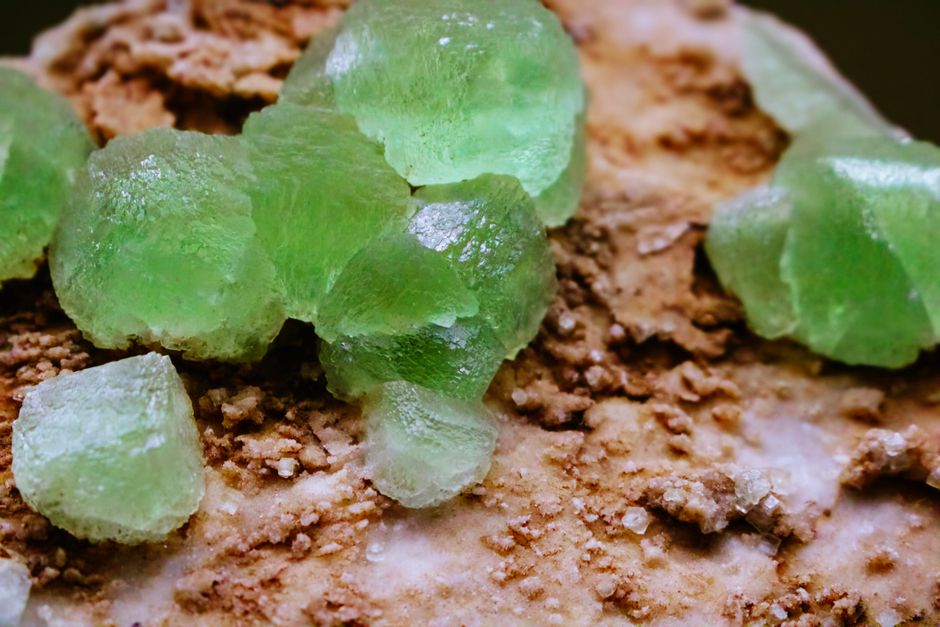
Photo by James Lee on Pexels
- Reaction to acid: Some minerals (like calcite) fizz when a drop of dilute hydrochloric acid is applied.
- Magnetism: Some are naturally magnetic (like magnetite).
Here's how you can think about the criteria that define a mineral:
graph TD
    A["Substance"] --> B{{"Is it naturally occurring?"}};
    B -- Yes --> C{{"Is it a solid?"}};
    B -- No --> NotMineral["Not a Mineral"];
    C -- Yes --> D{{"Is it inorganic?"}};
    C -- No --> NotMineral;
    D -- Yes --> E{{"Does it have a definite chemical composition?"}};
    D -- No --> NotMineral;
    E -- Yes --> F{{"Does it have an ordered atomic arrangement?"}};
    E -- No --> NotMineral;
    F -- Yes --> G["It IS a Mineral!"];
    F -- No --> NotMineral;
3. Worked Example
Imagine you find a clear, cube-shaped crystal.
- Naturally Occurring? Yes, you dug it up from the ground.
- Solid? Yes, it's hard.
- Inorganic? Yes, it's not a plant or animal remains.
- Definite Chemical Composition? You suspect it's NaCl (halite).
- Ordered Atomic Arrangement? Its cubic shape suggests this.
Now, to confirm it's halite using diagnostic properties:
* Color: Colorless/white. (Matches halite)
* Streak: White. (Matches halite)
* Luster: Vitreous (glassy). (Matches halite)
* Hardness: Can be scratched with your fingernail (Mohs 2.5). (Matches halite)
* Cleavage: Breaks into perfect cubes. (Crucial for halite, 3 directions at 90°)
* Taste: Tastes salty. (Unique property for halite)
Based on these checks, you'd confidently identify it as halite.
4. Key Takeaways
- Minerals are natural, solid, inorganic substances with specific chemical formulas and crystal structures.
- Their identity is determined by a unique set of physical and chemical properties.
- Always check multiple properties to accurately identify a mineral, as some properties can be misleading alone.
- Hardness, cleavage, and streak are often more reliable for identification than color.
- The Mohs Hardness Scale helps quantify a mineral's scratch resistance.
Common mistakes you should avoid:
- Don't identify a mineral based only on its color; it's often variable.
- Don't confuse cleavage (breaking along flat planes) with fracture (irregular breaks).
- Don't assume anything shiny is metallic luster; it could be glassy or resinous.
- Forgetting to check the "naturally occurring" and "ordered atomic arrangement" criteria for what makes something a mineral.
5. Now Try It
Go find three common household items that aren't minerals (e.g., plastic, sugar, wood, brick) and for each one, identify which of the five mineral definition criteria it fails. For example, sugar isn't inorganic and isn't naturally occurring in that form. What success looks like: a list of three items, each with a clear explanation of which mineral criteria it doesn't meet.
Frequently asked about Introduction to Minerals
Get the full Minerals curriculum
Clone the complete plan to your dashboard for unlimited AI-generated notes, practice quizzes, and a personalised revision schedule.
Create Free Account