Fundamentals of Chemistry
From the chemistry class 9th curriculum
Fundamentals of Chemistry
TL;DR
Chemistry is the study of matter and how it changes, focusing on its composition, structure, and properties. Everything around you, from the air you breathe to the food you eat, is made of matter. Understanding chemistry helps you explain the world and predict how things will react.
1. The Mental Model
Think of chemistry as the rulebook for how everything in the universe is built and interacts. It's about taking things apart to see what they're made of, and then figuring out how those pieces can combine or rearrange to form new things.
2. The Core Material
Chemistry starts with understanding matter. Matter is anything that has mass (how much "stuff" is in it) and takes up space (has volume). You're matter, your desk is matter, even the air is matter.
We classify matter in a few ways:
States of Matter
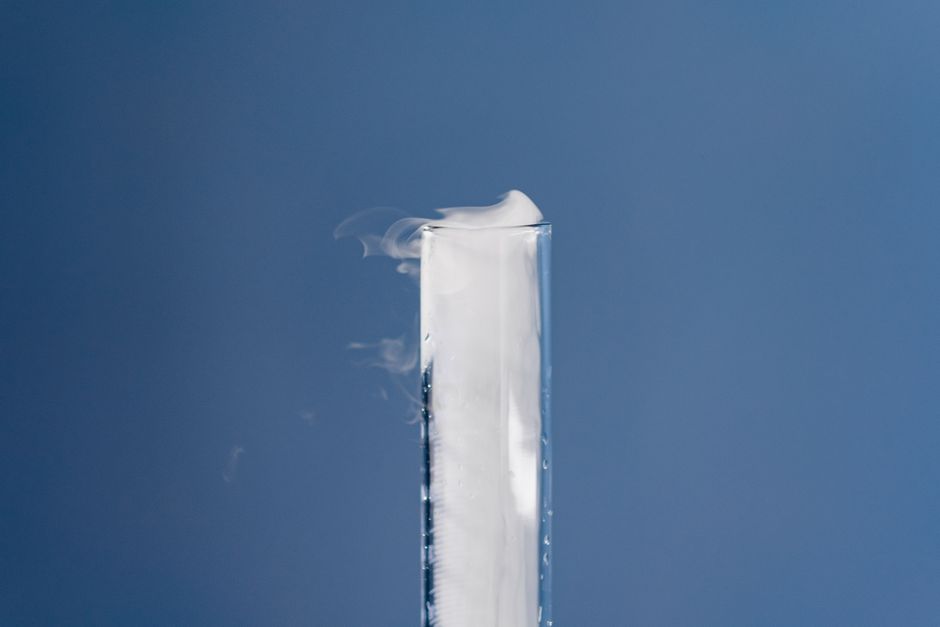
Photo by Ron Lach on Pexels
Matter typically exists in three main states you'll encounter often:
- Solids: Have a definite shape and a definite volume. Their particles are tightly packed and vibrate in fixed positions. Think of an ice cube.
- Liquids: Have a definite volume but take the shape of their container. Their particles are close together but can slide past each other. Think of water.
- Gases: Have no definite shape and no definite volume. They expand to fill their container. Their particles are far apart and move freely. Think of steam.
Pure Substances vs. Mixtures

Photo by RF._.studio _ on Pexels
Matter can also be divided into two big categories:
- Pure Substances: These have a fixed chemical composition and distinct properties.
- Elements: The simplest pure substances that can't be broken down into simpler substances by ordinary chemical means. Each element is made of only one type of atom (e.g., Oxygen, Gold). You'll find them on the Periodic Table.
- Compounds: Pure substances formed when two or more different elements are chemically combined in a fixed ratio (e.g., Water, Salt). They have properties different from their constituent elements.
- Mixtures: These are combinations of two or more substances where each substance retains its own properties. They can be separated by physical means.
- Homogeneous Mixtures: Look uniform throughout (e.g., Saltwater, Air). You can't see the different components.
- Heterogeneous Mixtures: Don't look uniform; you can see the different components (e.g., Sand and water, Salad).
Here's a diagram to help visualize how we classify matter:
graph TD
    A["Matter"] --> B["Pure Substances"]
    A --> C["Mixtures"]

    B --> D["Elements"]
    B --> E["Compounds"]

    C --> F["Homogeneous Mixtures"]
    C --> G["Heterogeneous Mixtures"]
Physical and Chemical Changes

Photo by Vitaly Gariev on Pexels
Matter can undergo two types of changes:
- Physical Changes: These alter the form of a substance but not its chemical composition. The substance remains the same chemically. Examples include melting ice (it's still water, just in a different state), tearing paper, or dissolving sugar in water. These changes are often reversible.
- Chemical Changes (or Chemical Reactions): These result in the formation of new substances with different chemical compositions and properties. The original substances are transformed. Examples include burning wood (it turns into ash and smoke), rusting iron, or baking a cake. These changes are usually not easily reversible.
3. Worked Example
Let's say you have a glass of water, and you add a spoonful of sugar to it, stirring until it disappears.
- Original substances: Water (a compound) and Sugar (a compound).
- What happened? The sugar dissolved in the water.
- Is this a physical or chemical change? This is a physical change. The sugar molecules are still sugar, and the water molecules are still water. They've just mixed together to form a homogeneous mixture (sugar water). You could evaporate the water, and you'd be left with the sugar again. No new chemical substance was formed.
Now, imagine you put that sugar in a pan and heat it for a long time until it turns black and smells burnt.
- Original substance: Sugar (a compound).
- What happened? The sugar broke down and turned into a black substance (carbon) and other compounds.
- Is this a physical or chemical change? This is a chemical change. The heat caused the sugar molecules to break apart and rearrange into entirely new substances. You can't easily turn that black stuff back into sugar.
4. Key Takeaways
- Matter is anything with mass and volume, existing as solids, liquids, or gases.
- Pure substances are either elements (simplest form) or compounds (elements chemically combined).
- Mixtures are physical blends of substances, either uniform (homogeneous) or not (heterogeneous).
- Physical changes alter form but not chemical identity; they're often reversible.
- Chemical changes create new substances with different properties; they're usually irreversible.
- Understanding matter's classification and changes is fundamental to all chemistry.
Common mistakes to avoid:
- Confusing an element with a compound; remember compounds are combinations of elements.
- Thinking that dissolving something is a chemical change; it's a physical mixing.
- Assuming all bubbles mean a chemical change; boiling water produces bubbles but is a physical change.
- Forgetting that air is a mixture of gases, not a pure substance.
5. Now Try It
Grab five different items from your home (e.g., a coin, a glass of juice, a piece of wood, a spoonful of sugar, a rock). For each item:
- Identify its state of matter at room temperature.
- Classify it as either an element, compound, homogeneous mixture, or heterogeneous mixture.
- Describe one physical change and one chemical change it could undergo (even if you don't actually do the change).
Success looks like: You've correctly identified the state and classification for each item, and accurately described a physical and chemical change for each, clearly distinguishing between the two types of changes.
Frequently asked about Fundamentals of Chemistry
More from chemistry class 9th
Get the full chemistry class 9th curriculum
Clone the complete plan to your dashboard for unlimited AI-generated notes, practice quizzes, and a personalised revision schedule.
Create Free Account