AI Project Lifecycle and Ethical Foundations
From the Artificial Intelligence curriculum
AI Project Lifecycle and Ethical Foundations
TL;DR
Building AI projects involves a structured lifecycle, from understanding the problem to deploying and monitoring your solution. Throughout this process, it's crucial to integrate ethical considerations to ensure your AI is fair, transparent, and beneficial. Responsible AI development isn't an afterthought; it's a continuous part of every project phase.
1. The Mental Model
Think of developing an AI project like building a house: you start with a clear plan, gather materials, build it step-by-step, inspect it constantly, and ensure it meets safety standards for its occupants. Ethics are those safety standards and building codes that guide every decision.
2. The Core Material
Developing an AI solution isn't just about writing code; it's a systematic process that requires careful planning, execution, and continuous evaluation. At every step, you must consider the ethical implications of your work.
2.1 The AI Project Lifecycle
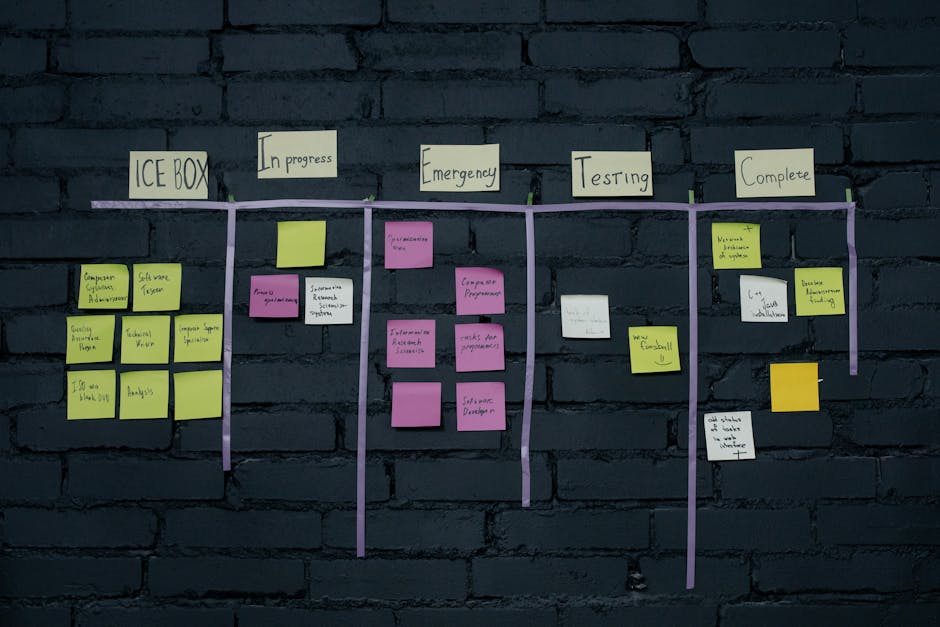
Photo by cottonbro studio on Pexels
The AI project lifecycle typically follows several key stages, often iteratively. It's not always a perfectly linear path; you'll often loop back to previous steps as you learn more.
graph TD
    A["Problem Definition & Scope (What are we solving?)"] --> B["Data Collection & Preparation (What info do we need?)"]
    B --> C["Model Design & Training (How will AI learn?)"]
    C --> D["Model Evaluation & Validation (Is it good enough?)"]
    D --> E["Deployment & Integration (How will people use it?)"]
    E --> F["Monitoring & Maintenance (Is it still working well?)"]
    F --> A
- Problem Definition & Scope: You start by clearly defining the problem you're trying to solve, why AI is a suitable approach, and what success looks like. This is where you identify stakeholders and potential impacts.
- Data Collection & Preparation: Once the problem is clear, you gather relevant data. This involves cleaning, transforming, and often labeling the data to make it usable for AI.
- Model Design & Training: You select an appropriate AI model architecture (e.g., a specific type of neural network or a decision tree) and train it using your prepared data. This phase involves tuning parameters to optimize performance.
- Model Evaluation & Validation: After training, you rigorously test your model using unseen data to ensure it performs well and generalizes to new situations. You check for bias and fairness here.
- Deployment & Integration: The trained model is then integrated into an application or system that users can interact with. This might involve setting up APIs or embedding the model directly into software.
- Monitoring & Maintenance: Once deployed, the AI system needs continuous monitoring to ensure it remains accurate, fair, and performs as expected over time. Data changes, and so might the model's performance.
2.2 Ethical Foundations in AI
Photo by Markus Winkler on Pexels
Ethics aren't a separate checklist; they're woven into every phase of the lifecycle. Key ethical considerations include:
- Fairness and Bias: AI models can unintentionally amplify biases present in their training data. You need to actively look for and mitigate these, ensuring your model doesn't discriminate against certain groups.
- Transparency and Explainability: Can you understand why your AI made a particular decision? For many applications, especially in critical areas like healthcare or finance, knowing the reasoning is crucial for trust and accountability.
- Privacy and Security: AI often relies on large datasets, some of which may contain sensitive personal information. Protecting this data from misuse or breaches is paramount.
- Accountability: Who is responsible when an AI system makes a mistake or causes harm? Establishing clear lines of accountability is essential, especially when AI makes autonomous decisions.
- Beneficence and Non-maleficence: Your AI system should aim to do good and avoid causing harm. Consider the broader societal impact of your creation.
Integrating ethics means asking questions like:
* At Problem Definition: Who might be negatively impacted by this AI? Are we solving the right problem responsibly?
* At Data Collection: Is this data representative? Does it contain biases? Is it ethically sourced?
* At Model Evaluation: Does the model perform equally well for all demographic groups? Can we explain its decisions?
3. Worked Example
Imagine you're building an AI system to recommend job candidates to recruiters.
Ethical Concern: Potential for bias against certain demographic groups if historical hiring data, which might contain human biases, is used for training.
Lifecycle Integration:
- Problem Definition: You explicitly define success not just as "accurate predictions" but also "fair and unbiased recommendations." You identify potential harms: unfairly excluding qualified candidates.
- Data Collection: You audit the historical hiring data for demographic imbalances. You decide to augment or re-weight data from underrepresented groups, or to use synthetic data to balance the dataset. You also ensure no legally protected attributes (race, gender) are directly used as features unless legally mandated and handled with extreme care.
- Model Design & Training: You explore models known for better explainability (e.g., decision trees over complex deep learning models, if appropriate for accuracy). You train the model, but also consider "fairness-aware" training techniques.
- Model Evaluation: Beyond standard accuracy metrics, you evaluate the model's performance (e.g., false positive rates, false negative rates) across different demographic groups. If a group has a significantly higher false negative rate, it means qualified candidates from that group are being unfairly overlooked. You use explainability tools (like SHAP or LIME) to understand which features drive particular recommendations for different groups.
- Deployment: The system is designed to show recruiters why a candidate was recommended (e.g., "skills match 80% to role requirements, 5 years experience in relevant field"), rather than just a score, empowering human oversight.
- Monitoring: You continuously monitor hiring outcomes post-AI introduction to ensure fairness metrics don't degrade over time and that the AI isn't perpetuating or introducing new biases as new data comes in. If bias is detected, the model is retrained or adjusted.
4. Key Takeaways
- The AI project lifecycle provides a structured approach from idea to deployment and beyond.
- Ethical considerations like fairness, transparency, and privacy must be integrated into every stage, not just added at the end.
- Data collection and preparation are critical stages for addressing and mitigating potential biases.
- Model evaluation shouldn't just focus on performance, but also on equitable outcomes across different user groups.
- Continuous monitoring of deployed AI systems is essential to ensure ongoing ethical performance and adapt to changing conditions.
Common Mistakes to Avoid:
* Treating ethics as an afterthought: Don't wait until deployment to consider the ethical implications; integrate them from the start.
* Ignoring data bias: Assuming your data is neutral can lead to AI systems that perpetuate or amplify societal biases.
* Focusing solely on performance metrics: Overlooking fairness or transparency for a slight gain in accuracy can lead to harmful or untrustworthy AI.
* Skipping monitoring: Deployed AI models can "drift" or develop new biases over time if not continuously monitored and maintained.
5. Now Try It
Choose a real-world problem you think AI could solve (e.g., predicting crop yields, moderating online comments, diagnosing a disease). Outline the major steps you would take through the AI project lifecycle. For each step, identify at least one specific ethical challenge you would need to address and briefly explain how you'd approach it.
Success looks like: A clear, step-by-step description of the lifecycle for your chosen problem, with a relevant ethical concern and a plausible mitigation strategy identified for each major phase.
Frequently asked about AI Project Lifecycle and Ethical Foundations
Get the full Artificial Intelligence curriculum
Clone the complete plan to your dashboard for unlimited AI-generated notes, practice quizzes, and a personalised revision schedule.
Create Free Account