Physical Chemistry Fundamentals: Solutions
From the chemistry curriculum
TL;DR
Solutions are homogeneous mixtures formed when a solute dissolves evenly into a solvent. Their properties often depend on the concentration of the solute rather than its identity. Understanding how solutions behave is crucial in many chemical and biological processes.
1. The Mental Model
Think of making a cup of sugar water: the sugar (solute) disappears into the water (solvent), forming a single, uniform liquid (solution). It's not just mixed; it's integrated at a molecular level.
2. The Core Material
When you mix two or more substances, you can get a solution. A solution is a homogeneous mixture, meaning it has the same composition and properties throughout. This is different from a heterogeneous mixture, like sand and water, where you can see distinct parts.
The substance that gets dissolved is the solute, and the substance that does the dissolving is the solvent. Usually, the solvent is present in a much larger amount. For example, in saltwater, salt is the solute and water is the solvent.
Factors Affecting Solubility
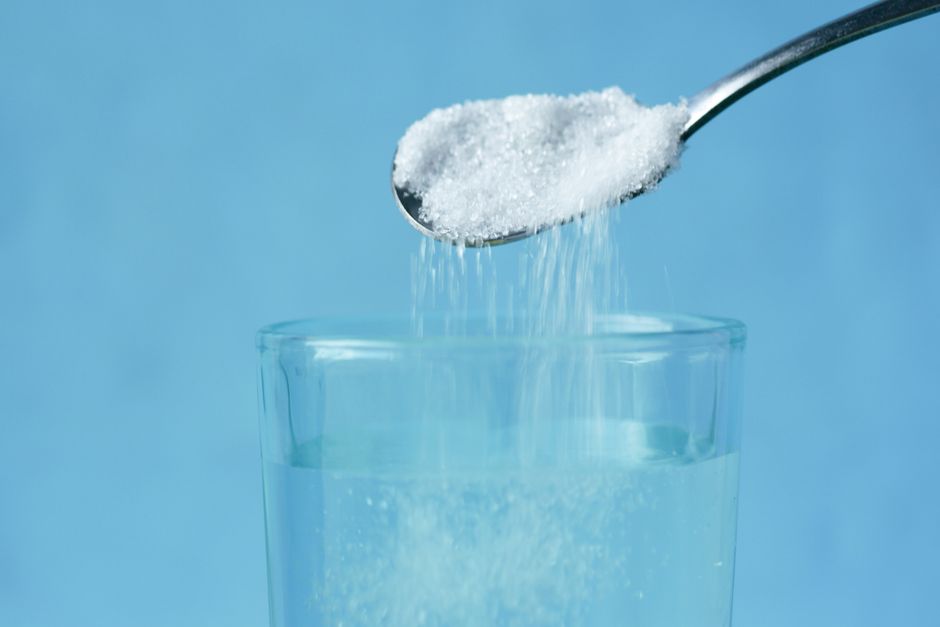
Photo by Towfiqu barbhuiya on Pexels
Solubility is how much solute can dissolve in a given amount of solvent at a specific temperature. Here's what influences it:
- "Like Dissolves Like": This is a key rule. Polar solvents (like water) dissolve polar or ionic solutes (like salt or sugar) because they can form strong attractions. Nonpolar solvents (like oil) dissolve nonpolar solutes (like fats).
- Temperature: For most solids dissolving in liquids, increasing temperature increases solubility. For gases dissolving in liquids, increasing temperature decreases solubility (think about why soda goes flat faster when warm).
- Pressure: For gases dissolving in liquids, increasing pressure increases solubility (that's how soda gets its fizz!). Pressure has little effect on the solubility of solids or liquids.
Expressing Concentration

Photo by cottonbro studio on Pexels
Concentration tells you how much solute is in a given amount of solution or solvent. It's super important because many properties of solutions depend on it.
- Molarity (M): Moles of solute per liter of solution. This is one of the most common units in chemistry.
$M = \frac{\text{moles of solute}}{\text{liters of solution}}$ - Molality (m): Moles of solute per kilogram of solvent. This unit is useful because it's independent of temperature changes (volume can change with temperature, mass doesn't).
$m = \frac{\text{moles of solute}}{\text{kilograms of solvent}}$ - Mass Percent (%): Mass of solute divided by the total mass of the solution, multiplied by 100.
$\text{Mass Percent} = \frac{\text{mass of solute}}{\text{mass of solution}} \times 100\%$
Here's a quick look at the main types of mixtures:
graph TD
    A["Mixtures"] --> B["Homogeneous (Solutions)"]
    A --> C["Heterogeneous"]

    B --> D["Solute + Solvent"]
    D --> E["Evenly dispersed"]
    E --> F["Cannot easily separate"]

    C --> G["Distinct components"]
    G --> H["Can easily separate"]

    D --> I["Examples: Saltwater, Air, Brass (alloy)"]
    H --> J["Examples: Sand & water, Oil & water"]
Colligative Properties
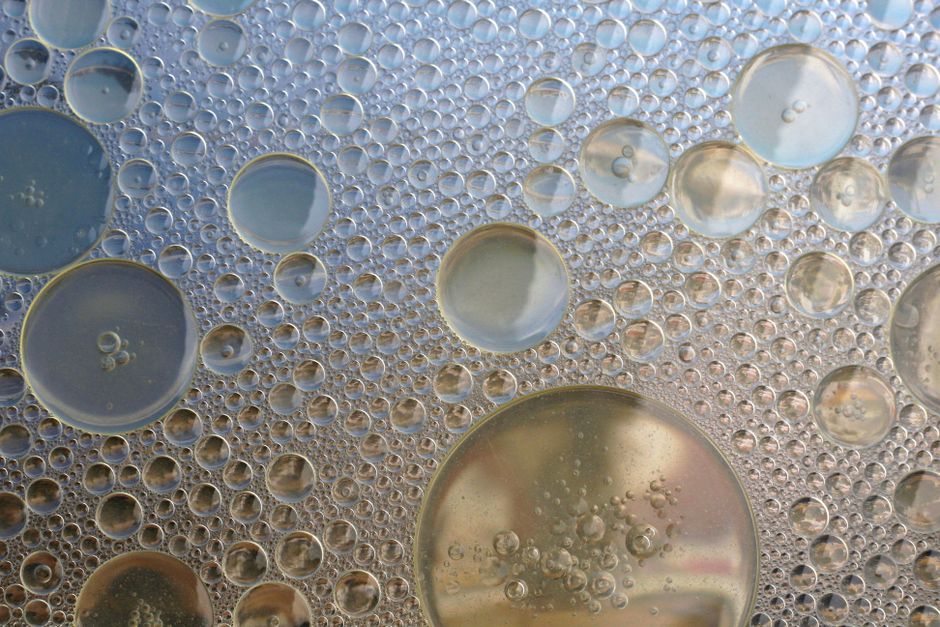
Photo by Landiva Weber on Pexels
These are properties of solutions that depend only on the number of solute particles dissolved in a given amount of solvent, not on the identity of the solute. They include:
- Vapor Pressure Lowering: Adding a non-volatile solute reduces the vapor pressure of the solvent.
- Boiling Point Elevation: The boiling point of a solution is higher than that of the pure solvent.
- Freezing Point Depression: The freezing point of a solution is lower than that of the pure solvent.
- Osmotic Pressure: The pressure required to stop osmosis (the net movement of solvent across a semipermeable membrane).
These properties are why we put salt on roads in winter (to lower the freezing point of water) or use antifreeze in car radiators (to both lower the freezing point and raise the boiling point).
3. Worked Example
Let's say you have 5.84 grams of sodium chloride (NaCl) and you dissolve it in enough water to make 500 mL of solution. What's the molarity of this solution?
First, you need the molar mass of NaCl. Na is about 22.99 g/mol and Cl is about 35.45 g/mol, so NaCl is 22.99 + 35.45 = 58.44 g/mol.
Now, convert grams of NaCl to moles:
Moles of NaCl = $\frac{5.84 \text{ g}}{58.44 \text{ g/mol}} \approx 0.100 \text{ mol}$
Next, convert the volume of the solution from mL to L:
Volume of solution = $500 \text{ mL} = 0.500 \text{ L}$
Finally, calculate molarity:
Molarity (M) = $\frac{\text{moles of solute}}{\text{liters of solution}} = \frac{0.100 \text{ mol}}{0.500 \text{ L}} = 0.200 \text{ M}$
So, the solution is 0.200 M NaCl.
4. Key Takeaways
- Solutions are uniform mixtures where a solute is completely dissolved in a solvent.
- "Like dissolves like" is a fundamental principle for predicting solubility.
- Temperature and pressure significantly affect solubility, especially for gases.
- Molarity and molality are common ways to express solution concentration.
- Colligative properties depend only on the number of solute particles, not their identity.
- These properties explain many real-world phenomena like salting roads in winter.
Common Mistakes to Avoid

Photo by KATRIN BOLOVTSOVA on Pexels
- Confusing homogeneous with heterogeneous mixtures; solutions are always homogeneous.
- Mixing up molarity (liters of solution) with molality (kilograms of solvent).
- Assuming all solids become more soluble as temperature increases (some don't).
- Forgetting that pressure primarily affects the solubility of gases.
5. Now Try It
You have 10.0 grams of glucose (C$_6$H$_{12}$O$_6$, molar mass = 180.16 g/mol) and dissolve it in 200.0 grams of water. Calculate the molality of this glucose solution. What does this value tell you about the concentration, and how is it different from if you calculated molarity? You should get a value around 0.277 m.
Frequently asked about Physical Chemistry Fundamentals: Solutions
Study this next
Get the full chemistry curriculum
Clone the complete plan to your dashboard for unlimited AI-generated notes, practice quizzes, and a personalised revision schedule.
Save this course free