Introduction to Agricultural Extension and Participatory Approaches
From the agricultural extension curriculum
TL;DR
Agricultural extension helps farmers improve their practices and livelihoods by sharing knowledge and skills. It's about bridging the gap between research and practical farming. Participatory approaches make sure farmers are active partners in this process, not just passive recipients.
1. The Mental Model
Think of agricultural extension as a two-way street connecting agricultural science and farming communities. Information flows from research to farmers, and farmer needs and experiences flow back to researchers, all to improve agriculture. Participatory approaches ensure farmers are at the wheel, guiding the direction.
2. The Core Material
Agricultural extension is essentially a system designed to provide non-formal education and advisory services to rural communities, primarily farmers. Its main goal is to help them improve farming methods, increase productivity, enhance livelihoods, and adapt to changing conditions. Traditionally, this involved a "top-down" approach, where experts told farmers what to do. However, modern extension heavily emphasizes "participatory approaches."
What is Agricultural Extension?
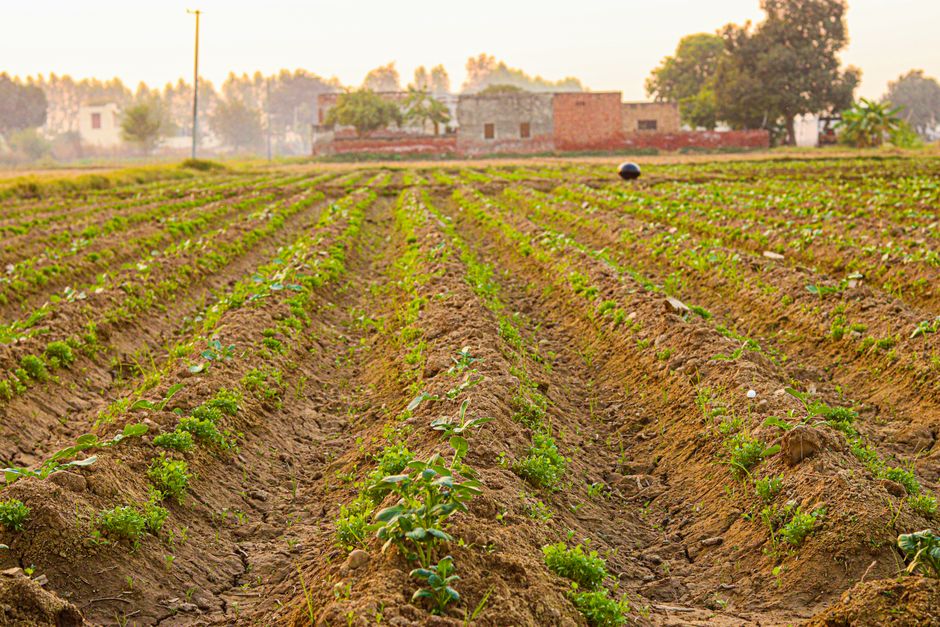
Photo by Swastik Arora on Pexels
It's about applying scientific research and new knowledge to agricultural practices through farmer education. It aims to:
* Disseminate information: Share new technologies, best practices, and market information.
* Develop skills: Train farmers in new techniques, farm management, and value addition.
* Facilitate decision-making: Help farmers make informed choices about their crops, livestock, and resources.
* Empower communities: Build capacity and self-reliance among farming groups.
Why Participatory Approaches?

Photo by https://kaboompics.com/ on Pexels
Participatory approaches are crucial because they involve farmers directly in identifying problems, planning solutions, and implementing activities. This shifts from a one-way flow of information to a collaborative learning process.
Here's why they're so effective:
* Relevance: Solutions are tailored to local conditions and farmers' actual needs.
* Ownership: Farmers feel a sense of ownership over projects, leading to higher adoption rates and sustainability.
* Empowerment: It builds farmers' confidence and decision-making abilities.
* Local knowledge: It values and integrates traditional farming knowledge with scientific research.
* Sustainability: Projects are more likely to continue and thrive long-term if the community is invested.
Key Participatory Methods

Photo by Jan van der Wolf on Pexels
Several methods are used to engage farmers actively:
- Participatory Rural Appraisal (PRA): A set of techniques (like mapping, timelines, and seasonal calendars) used to gather information about a community's resources, problems, and priorities from their perspective.
- Farmer Field Schools (FFS): Groups of farmers meet regularly to learn by doing, experimenting with new techniques in their own fields with guidance from a facilitator. This is hands-on learning.
- Participatory Technology Development (PTD): Farmers and researchers collaborate to develop and test new agricultural technologies that are suitable for local conditions.
- Community Action Planning (CAP): Communities identify their own problems, set priorities, and create action plans to address them, often with external support.
Here’s a simplified flow of how a participatory extension process might work:
graph TD
    A["Problem Identification (Farmers' Perspective)"] --> B["Needs Assessment (Shared understanding)"]
    B --> C["Joint Planning (Farmers & Extensionists)"]
    C --> D["Implementation (Farmers lead, Extension supports)"]
    D --> E["Monitoring & Evaluation (Farmers & Extensionists)"]
    E --> F["Learning & Adaptation (Continuous Improvement)"]
3. Worked Example
Imagine a community of smallholder maize farmers in a dry region. For years, extension agents tried to introduce a specific drought-resistant maize variety, but adoption was low.
Using a participatory approach:
- Problem Identification (PRA): An extension worker facilitates community meetings using seasonal calendars. Farmers reveal that while drought is an issue, their biggest challenge isn't just drought-resistant varieties, but reliable access to quality seeds, suitable planting times that align with unpredictable rain, and controlling a specific local pest they call "maize armyworm." They also show how their traditional planting methods differ from recommended ones due to labor availability.
- Joint Planning: Instead of pushing one variety, the extension agent works with farmers. They discuss several drought-tolerant varieties, considering local seed availability. They also collaboratively design small-scale trials on farmers' own fields to test different planting times and simple, locally available remedies for the "maize armyworm" based on farmer knowledge, alongside a few research-backed options.
- Implementation (FFS): A Farmer Field School is set up. Farmers meet weekly to observe the trial plots, discuss growth, pest incidence, and compare results. They learn basic entomology to understand the armyworm lifecycle and experiment with different control methods (e.g., ash application, specific botanical extracts).
- Monitoring & Evaluation: Farmers record observations in simple notebooks, discussing findings with the extension agent. They collectively decide which varieties performed best, which planting times were most reliable, and which pest control methods were effective and practical for their context.
- Learning & Adaptation: Based on the FFS results, the community decides to adopt specific, chosen drought-tolerant varieties, adjust their planting calendars, and share the effective pest control methods widely. The extension agent connects them to a seed supplier for the chosen varieties and helps them document their local pest remedies for wider sharing.
This approach didn't just introduce a new seed; it empowered farmers to identify their real problems and find appropriate, sustainable solutions they owned.
4. Key Takeaways
- Agricultural extension bridges the gap between agricultural research and farming communities to improve practices and livelihoods.
- Traditional extension often used a "top-down" approach, where experts dictated solutions.
- Participatory approaches empower farmers by actively involving them in problem identification, planning, and implementation.
- Benefits of participation include increased relevance of solutions, greater ownership, and more sustainable outcomes.
- Key participatory methods include PRA, FFS, PTD, and Community Action Planning.
- Farmers' local knowledge is a valuable resource that should be integrated with scientific insights.
Common Mistakes to Avoid:
- Don't assume you know farmers' problems better than they do; always start by listening.
- Avoid imposing solutions; instead, facilitate discovery and joint decision-making.
- Don't neglect local knowledge; it's a rich source of practical solutions and context.
- Don't make the process too complex or time-consuming; keep methods practical for farmers.
- Don't expect immediate, perfect results; participatory approaches are iterative and require patience.
5. Now Try It
Think of a farming challenge you've heard about (e.g., low yields, pest outbreaks, difficulty accessing markets). Imagine you're an extension agent tasked with helping a community of farmers overcome this challenge using participatory approaches. Outline three specific participatory methods you would use in sequence, explaining why each method is appropriate at that stage and what information or outcome you'd expect to get from it. What would success look like after applying these methods for six months?
Frequently asked about Introduction to Agricultural Extension and Participatory Approaches
More from agricultural extension
Get the full agricultural extension curriculum
Clone the complete plan to your dashboard for unlimited AI-generated notes, practice quizzes, and a personalised revision schedule.
Save this course free