Financial Instruments Overview
From the fmi curriculum
TL;DR
Financial instruments are contracts representing monetary value, used by individuals and organizations to raise capital, invest, and manage risk. They can be simple assets like cash or complex agreements like derivatives, each with unique characteristics and purposes. Understanding their basic types helps you grasp how financial markets function.
1. The Mental Model
Think of financial instruments as standardized agreements that represent a claim to money or an asset. They allow people to exchange value today for value in the future, facilitating transactions beyond simple cash exchanges.
2. The Core Material
Financial instruments are broadly categorized into debt instruments and equity instruments, with a third major category, derivatives, built upon them. Each type serves different purposes for both the issuer (who creates the instrument) and the investor (who buys it).
2.1 Debt Instruments

Photo by Monstera Production on Pexels
When you buy a debt instrument, you're essentially lending money to the issuer. In return, the issuer promises to pay you back the original amount (principal) plus interest over a set period. Debt instruments are generally less risky for the investor than equity but offer lower potential returns.
- Bonds: A common type of debt instrument. When you buy a bond, you're lending money to a government or corporation. They promise to pay you fixed interest payments (coupon payments) for a certain number of years and then return your principal at maturity.
- Loans: Similar to bonds, but often directly negotiated between a borrower and a lender (e.g., a bank loan).
- Commercial Paper: Short-term, unsecured promissory notes issued by corporations, typically for financing current assets.
2.2 Equity Instruments
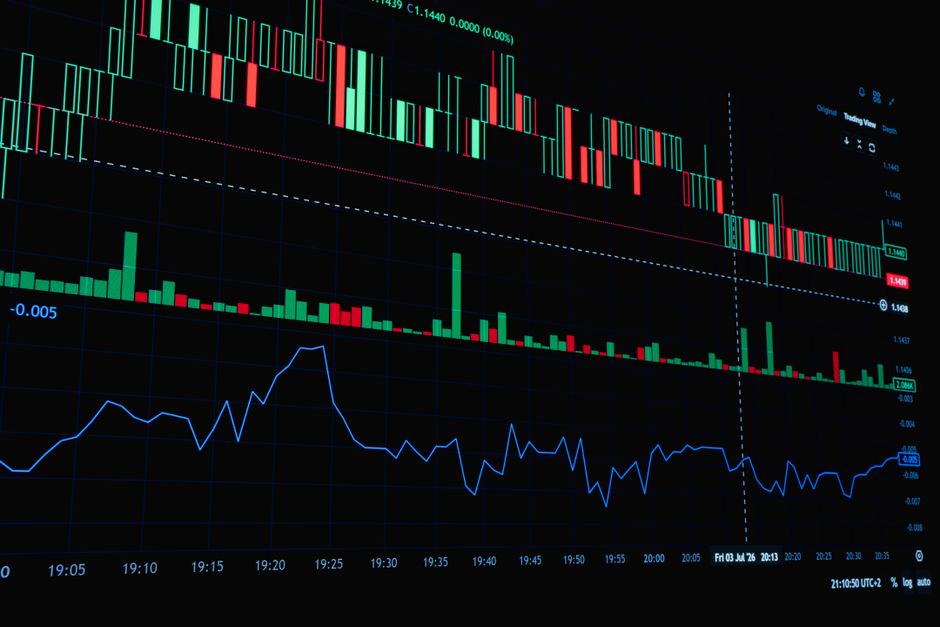
Photo by Rafael Minguet Delgado on Pexels
When you buy an equity instrument, you're buying a piece of ownership in a company. This means you have a claim on the company's assets and earnings, and you might get voting rights. Equity offers higher potential returns than debt but also comes with higher risk, as your investment value can fluctuate significantly.
- Stocks (Shares): The most common equity instrument. Buying a stock makes you a shareholder. You profit if the company does well (share price goes up) or if the company pays out profits (dividends).
- Mutual Funds/ETFs: While technically a collection of instruments, these provide a way to invest in a diversified portfolio of stocks or bonds, often considered equity-like for their ownership structure (you own units of the fund).
2.3 Derivatives
Derivatives are financial instruments whose value is "derived" from an underlying asset, like stocks, bonds, commodities (oil, gold), interest rates, or even other derivatives. They are used for hedging risk or for speculation.
- Futures: A contract to buy or sell an asset at a predetermined price on a future date. You must fulfill the contract.
- Options: Give the buyer the right, but not the obligation, to buy or sell an underlying asset at a specific price on or before a certain date.
- Call Option: Right to buy.
- Put Option: Right to sell.
- Swaps: Agreements to exchange cash flows between two parties over a period. Often used to swap fixed-rate interest payments for floating-rate payments (interest rate swaps).
Here's a diagram to visualize the hierarchy of financial instruments:
graph TD
    A["Financial Instruments"] --> B["Debt Instruments"];
    A --> C["Equity Instruments"];
    A --> D["Derivatives"];

    B --> B1["Bonds (e.g., Corporate, Gov't)"];
    B --> B2["Loans (e.g., Mortgages)"];
    B --> B3["Commercial Paper"];

    C --> C1["Stocks (Common, Preferred)"];
    C --> C2["Mutual Funds/ETFs (Units)"];

    D --> D1["Futures Contracts"];
    D --> D2["Options (Calls, Puts)"];
    D --> D3["Swaps (e.g., Interest Rate)"];

    D1 -- "Derived From" --> U1["Underlying Asset"];
    D2 -- "Derived From" --> U1;
    D3 -- "Derived From" --> U1;
    B1 -- "Represents" --> U2["Obligation to Repay"];
    C1 -- "Represents" --> U3["Ownership Stake"];
3. Worked Example
Let's consider a company, "Tech Innovations Inc.," looking to raise capital for expansion.
-
To borrow money (Debt): Tech Innovations Inc. could issue corporate bonds. They might issue 1,000 bonds, each with a face value of \$1,000, paying a 5% annual interest rate, maturing in 10 years. An investor buys one bond for \$1,000. Each year, the investor receives \$50 (5% of \$1,000). After 10 years, the investor gets their original \$1,000 back. This provides Tech Innovations with \$1,000,000 in capital, which they must repay.
-
To sell ownership (Equity): Alternatively, Tech Innovations Inc. could issue new shares of stock. They might issue 100,000 shares at \$10 each. An investor buys 100 shares for \$1,000. Now, the investor owns a tiny piece of Tech Innovations. If the company performs well and profits grow, the share price might increase to \$15, and the investor's 100 shares are now worth \$1,500. They might also receive dividends if the company distributes profits. Tech Innovations gets \$1,000,000 in capital, with no obligation to repay it directly, but they've given up a piece of ownership and control.
These two approaches illustrate how different instruments suit different capital-raising and investment goals.
4. Key Takeaways
- Financial instruments are contracts representing value, facilitating saving, investing, and risk management.
- Debt instruments involve lending money in exchange for interest and principal repayment.
- Equity instruments represent ownership in a company, offering potential growth and dividends.
- Derivatives derive their value from an underlying asset and are used for hedging or speculation.
- Each instrument type has unique risk and return characteristics for both issuer and investor.
- Understanding these categories is fundamental to comprehending financial markets.
Common Mistakes to Avoid:
- Confusing debt with equity: Remember, debt is a loan; equity is ownership.
- Underestimating derivative complexity: Derivatives can be powerful but also very risky if not fully understood.
- Ignoring risk: No financial instrument is entirely risk-free; always assess the potential for loss.
- Thinking all bonds or all stocks are the same: There's a wide variety within each category with different features.
5. Now Try It
Imagine you're starting a small business and need \$50,000. Briefly outline two different ways you could raise this money using a financial instrument. For each method, state the type of instrument (debt or equity), what you'd promise to the investor, and what the investor would gain. What would success look like for your business in terms of raising this capital?
Frequently asked about Financial Instruments Overview
Study this next
Get the full fmi curriculum
Clone the complete plan to your dashboard for unlimited AI-generated notes, practice quizzes, and a personalised revision schedule.
Save this course free