The Study of Life: Foundations and Diversity
From the Biology curriculum
TL;DR
Biology is the scientific study of life, exploring its characteristics, organization, and incredible diversity. You'll learn what makes something "alive" and how living things are related and classified. Understanding these basics sets the stage for everything else in biology.
1. The Mental Model
Think of biology as trying to figure out how life works, from the tiniest parts to the biggest groups of living things. It's about recognizing what all living things have in common, how they're different, and how we organize them to make sense of it all.
2. The Core Material
Biology is a vast field, but it starts with understanding the fundamental properties that define life itself. We also need a way to organize and categorize the incredible variety of living organisms.
What Defines Life?

Photo by Mesut Yalçın on Pexels
Living things aren't just collections of molecules; they share several key characteristics. If something has all of these, it's generally considered alive:
- Order: Living things have complex, organized structures. Think of a cell, which isn't just a random blob.
- Reproduction: Organisms produce their own kind, passing on genetic information (DNA).
- Growth and Development: They grow and change according to specific instructions carried by genes.
- Energy Processing: They take in energy and transform it to do work (like moving or growing).
- Response to Environment: They react to stimuli from their surroundings (e.g., a plant turning towards light).
- Regulation (Homeostasis): They maintain a stable internal environment (like keeping body temperature steady).
- Evolutionary Adaptation: Over generations, populations of organisms change to better suit their environment.
Levels of Biological Organization

Photo by MART PRODUCTION on Pexels
Life isn't just one big thing; it's organized in a hierarchy, from tiny atoms to the entire planet. Understanding these levels helps you see how everything connects.
graph TD
    A["Biosphere (all ecosystems)"] --> B["Ecosystem (living + non-living)"]
    B --> C["Community (interacting populations)"]
    C --> D["Population (same species in an area)"]
    D --> E["Organism (individual living thing)"]
    E --> F["Organ System (e.g., circulatory)"]
    F --> G["Organ (e.g., heart)"]
    G --> H["Tissue (group of similar cells)"]
    H --> I["Cell (basic unit of life)"]
    I --> J["Organelle (e.g., nucleus)"]
    J --> K["Molecule (e.g., DNA)"]
    K --> L["Atom (smallest unit of matter)"]
Classifying Life: Taxonomy
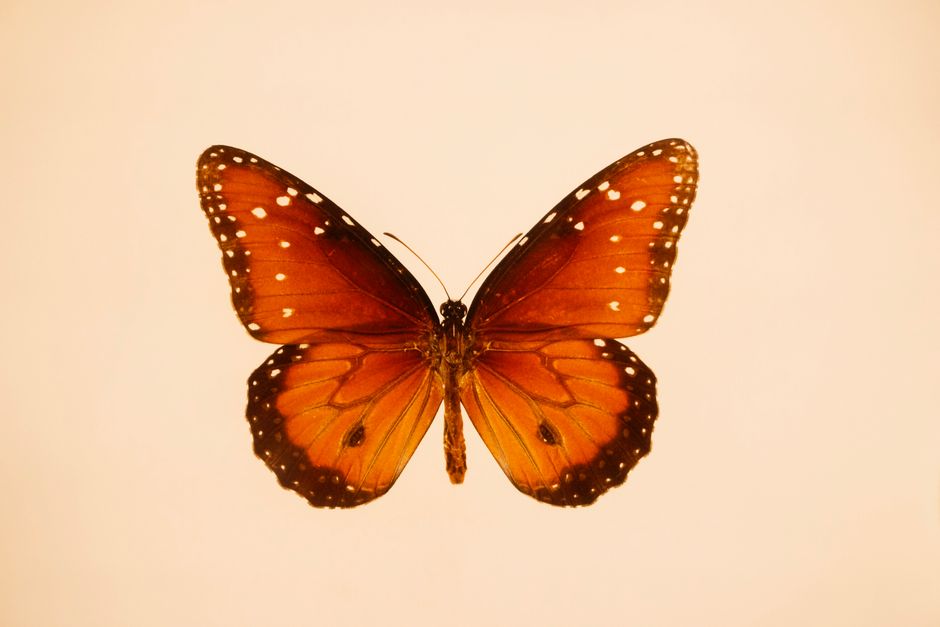
Photo by James Lee on Pexels
With millions of different species, we need a system to classify them. Taxonomy is the science of naming and classifying organisms. It uses a hierarchical system developed by Carl Linnaeus, which groups organisms based on shared characteristics. The main categories, from broadest to most specific, are:
- Domain (the broadest category, e.g., Bacteria, Archaea, Eukarya)
- Kingdom (e.g., Animalia, Plantae, Fungi)
- Phylum
- Class
- Order
- Family
- Genus
- Species (the most specific, a group of organisms that can interbreed and produce fertile offspring)
A species' scientific name uses its Genus and species, like Homo sapiens for humans.
Three Domains of Life

Photo by Tommes Frites on Pexels
The most fundamental division of life is into three domains:
- Bacteria: These are prokaryotes (single-celled organisms without a membrane-bound nucleus or other organelles) and are incredibly diverse.
- Archaea: Also prokaryotes, but they often live in extreme environments and have some genetic and biochemical differences from bacteria.
- Eukarya: This domain includes all organisms whose cells have a nucleus and other membrane-bound organelles. This includes kingdoms like Protists, Fungi, Plants, and Animals.
3. Worked Example
Let's classify a human using the taxonomic hierarchy.
- Domain: Eukarya (our cells have nuclei)
- Kingdom: Animalia (we're multicellular, heterotrophic, and lack cell walls)
- Phylum: Chordata (we have a spinal cord)
- Class: Mammalia (we have fur/hair, mammary glands)
- Order: Primates (grasping hands, large brains relative to body size)
- Family: Hominidae (great apes)
- Genus: Homo (humans and our close extinct relatives)
- Species: sapiens (modern humans)
So, our scientific name is Homo sapiens. This system allows scientists worldwide to refer to the exact same organism without confusion.
4. Key Takeaways
- Living things share seven core characteristics, including order, reproduction, and energy processing.
- Biological organization ranges from atoms to the biosphere, showing how complexity builds up.
- Taxonomy is the science of classifying organisms into hierarchical groups like domain, kingdom, and species.
- The three domains of life are Bacteria, Archaea, and Eukarya, based on fundamental cell structure.
- Scientific names (Genus species) provide a universal way to identify specific organisms.
Common mistakes you should avoid:
- Forgetting that viruses aren't generally considered "alive" because they lack some key characteristics, like independent reproduction.
- Confusing the order of taxonomic ranks; remember "Did King Philip Come Over For Good Soup?" to help.
- Thinking that all prokaryotes are bacteria; Archaea are a distinct domain.
- Assuming adaptation happens within an individual's lifetime; it occurs over generations through natural selection.
5. Now Try It
Choose three different organisms (e.g., a mushroom, an oak tree, and a specific type of insect). For each, list at least three of the characteristics of life that it exhibits. Then, try to classify one of them (e.g., the oak tree) as far down the taxonomic hierarchy as you can using a reliable online source like Wikipedia or a biology textbook.
What success looks like: You can clearly state three life characteristics for each organism, and you can correctly list at least Kingdom, Phylum, and Class for your chosen organism without mixing up the order.
Frequently asked about The Study of Life: Foundations and Diversity
Study this next
Get the full Biology curriculum
Clone the complete plan to your dashboard for unlimited AI-generated notes, practice quizzes, and a personalised revision schedule.
Save this course free