Integrated Problem Solving and Review
From the typically covers Primes, Highest Common Factor (HCF), and Lowest Common Multiple (LCM). curriculum
TL;DR
This section is all about bringing together everything you've learned about primes, HCF, and LCM to solve trickier, real-world problems. You'll learn a systematic way to approach these combined questions, ensuring you pick the right tool for the job. The key is to understand what the problem is really asking for.
1. The Mental Model
Think of primes, HCF, and LCM as tools in a toolbox. When you face a problem, you first figure out what kind of "job" needs doing (splitting things, finding a cycle, etc.), and then you grab the correct tool. Don't just randomly apply a tool; understand the problem's core request.
2. The Core Material
Sometimes, problems won't explicitly ask for "HCF" or "LCM." They'll use descriptive language that hints at what you need to calculate. Your job is to translate those words into the correct mathematical operation.
Recognizing HCF Problems

Photo by Katerina Holmes on Pexels
You'll typically use HCF when a problem involves:
* Dividing things into smaller, equal parts.
* Finding the largest possible size or quantity for something that divides evenly into others.
* Arranging items into rows or groups of the greatest possible number without remainder.
* Keywords like "greatest common divisor," "largest possible group," "maximum number of..."
Recognizing LCM Problems
Photo by Katerina Holmes on Pexels
You'll typically use LCM when a problem involves:
* Finding when events will happen again at the same time.
* Calculating the smallest quantity that multiple items can all fit into or divide evenly into.
* Determining the shortest length or time that multiple cycles will align.
* Keywords like "least common multiple," "first time they'll meet again," "smallest number of..."
The Problem-Solving Flow
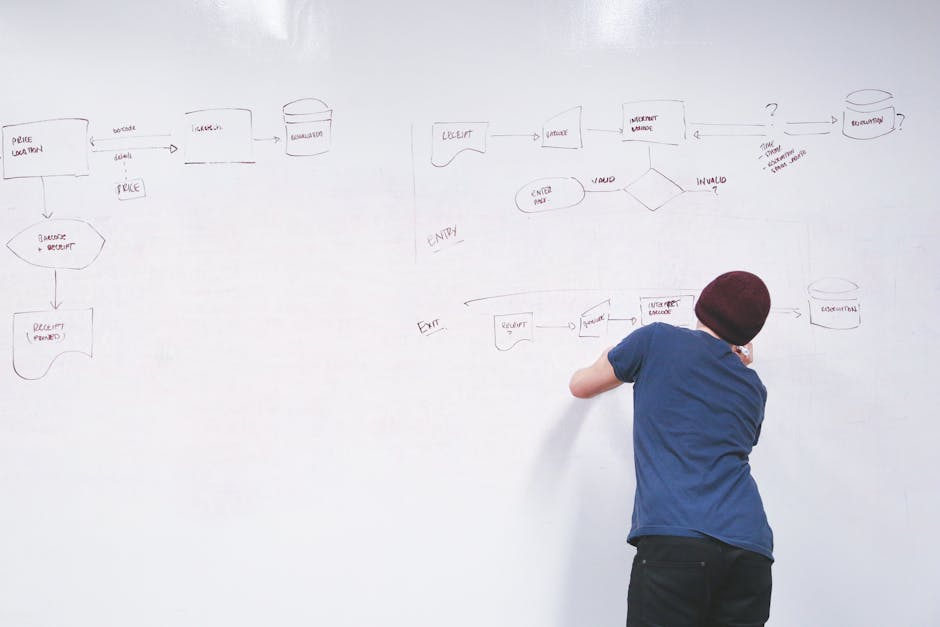
Photo by Startup Stock Photos on Pexels
Here's a structured way to approach these integrated problems.
graph TD
    A["Read the problem carefully"] --> B{"Is it asking to 'split' or 'combine/align'?"};
    B -- "Split into equal parts? Find largest group?" --> C["Think: HCF"];
    B -- "Find when events align? Smallest common quantity?" --> D["Think: LCM"];
    C --> E["Identify the numbers involved"];
    D --> E;
    E --> F["Calculate HCF or LCM"];
    F --> G["Check your answer in the context of the problem"];
    G --> H["Does it make sense?"];
    H -- "No" --> A;
    H -- "Yes" --> I["State your final answer clearly"];
Primes as the Foundation

Photo by Brett Jordan on Pexels
Remember that both HCF and LCM calculations often rely on prime factorization. Breaking numbers down into their prime components is a robust way to find both HCF (common prime factors to the lowest power) and LCM (all prime factors to their highest power). If you're unsure about HCF/LCM, prime factorization is always a reliable first step.
3. Worked Example
Let's say you have three different types of fruit: 60 apples, 72 oranges, and 96 bananas. You want to make identical fruit baskets to donate to a charity, with no fruit left over. What's the greatest number of identical baskets you can make, and how many of each fruit will be in each basket?
- Understand the problem: You're trying to divide different quantities of fruit into identical baskets, with the greatest possible number of baskets. This clearly points to finding the Highest Common Factor (HCF).
- Identify the numbers: 60, 72, 96.
- Calculate HCF:
- Prime factorization of 60: $2^2 \times 3 \times 5$
- Prime factorization of 72: $2^3 \times 3^2$
- Prime factorization of 96: $2^5 \times 3$
- Common prime factors are 2 and 3.
- Lowest power of 2: $2^2$
- Lowest power of 3: $3^1$
- HCF = $2^2 \times 3 = 4 \times 3 = 12$.
- Interpret the HCF: You can make 12 identical baskets.
- Find quantities per basket:
- Apples per basket: $60 / 12 = 5$
- Oranges per basket: $72 / 12 = 6$
- Bananas per basket: $96 / 12 = 8$
- Final answer: You can make 12 identical baskets. Each basket will contain 5 apples, 6 oranges, and 8 bananas.
4. Key Takeaways
- Always read the problem carefully to understand what's being asked before jumping to calculations.
- "Dividing into equal parts," "greatest number of groups," or "maximum size" usually means HCF.
- "Events happening again simultaneously," "smallest common quantity," or "first time they meet" usually means LCM.
- Prime factorization is a reliable method for finding both HCF and LCM for any set of numbers.
- After calculating, check if your answer makes sense in the context of the original problem.
- Integrated problems often require multiple steps; don't stop after just finding the HCF or LCM.
5. Now Try It
Two lighthouses flash their lights. One flashes every 12 seconds, and the other flashes every 18 seconds. If they both flash at the exact same moment right now, how many seconds will pass before they both flash together again? What does this mean you need to calculate? What's your final answer?
Frequently asked about Integrated Problem Solving and Review
Study this next
Get the full typically covers Primes, Highest Common Factor (HCF), and Lowest Common Multiple (LCM). curriculum
Clone the complete plan to your dashboard for unlimited AI-generated notes, practice quizzes, and a personalised revision schedule.
Save this course free