Defining Imperialism and its Historical Roots
From the Imperialism curriculum
TL;DR
Imperialism is when a powerful nation extends its control over weaker territories, often for economic and political gain. It's a system of domination that has shaped global history, leaving lasting impacts on both the imperial powers and their subjects. Understanding its roots helps us see how power dynamics have evolved over centuries.
1. The Mental Model
Think of imperialism as a bigger kid taking control of a smaller kid's toys and telling them what to do. The bigger kid does this because they want something the smaller kid has, or they just want more power. This isn't just about owning land; it's about control.
2. The Core Material
Imperialism, at its heart, is about one country's domination over another. This isn't just military conquest; it often involves economic, political, and cultural control. It's about setting up a relationship where the imperial power benefits from the resources, labor, and markets of the controlled territory.
2.1 What is Imperialism?
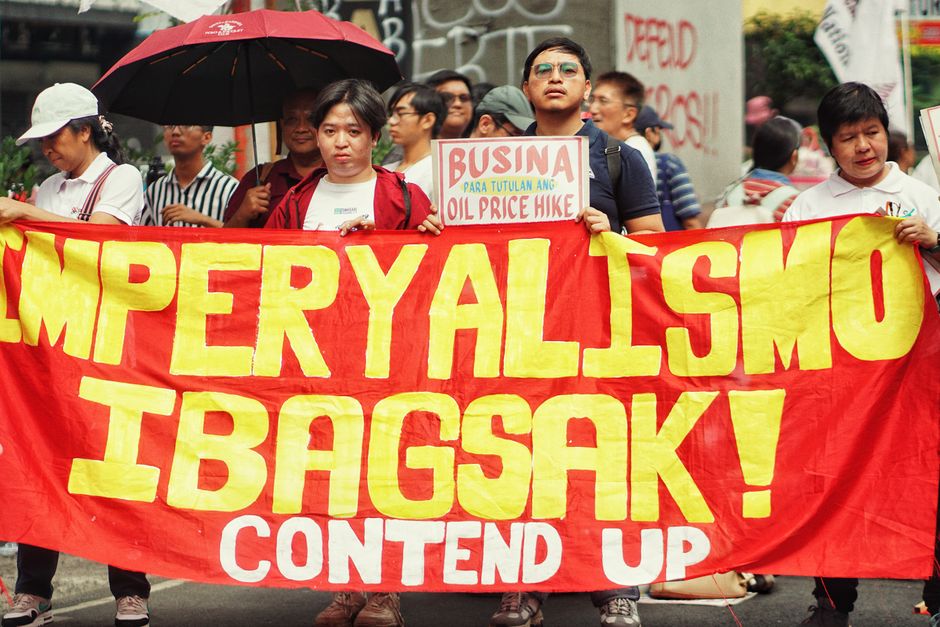
Photo by Mico Medel on Pexels
It's the policy or ideology of extending a country's rule over foreign nations, often by military force or by gaining political and economic control of other areas. It's not just about setting up colonies, though that's a common form. It also includes informal control, like influencing a country's government or economy without direct occupation.
2.2 Historical Roots
Photo by Mico Medel on Pexels
Imperialism isn't new. It has deep historical roots, evolving through different phases.
Ancient Empires
Think of the Roman Empire or the Chinese dynasties. They conquered territories, extracting resources and labor, and imposed their culture and administration. The goal was often expansion, security, and wealth.
Age of Exploration and Colonialism (15th-18th Centuries)
European powers like Spain, Portugal, Britain, and France explored and claimed vast new lands in the Americas, Africa, and Asia. This period was driven by the desire for new trade routes, resources (like gold, silver, spices), and the spread of Christianity. This is where the concept of colonies—territories directly governed by a foreign power—became central.
The "New Imperialism" (Late 19th - Early 20th Centuries)
This was an intense period of global competition, especially among European powers and later the US and Japan. The main drivers were:
* Economic: Industrialization created a need for raw materials (rubber, oil, minerals) and new markets to sell manufactured goods.
* Political/Strategic: Competition among nations for power and prestige, securing strategic naval bases or trade routes.
* Ideological: Beliefs in racial superiority (Social Darwinism) and a "civilizing mission" to bring Western culture, religion, and technology to "less developed" peoples. This often justified brutal exploitation.
Here's how these drivers often connected:
graph TD
    A["Industrial Revolution (Economic Need)"] --> B["Need for Raw Materials"]
    A --> C["Need for New Markets"]
    B --> D["Scramble for Colonies/Territories"]
    C --> D
    E["National Competition/Prestige (Political)"] --> D
    F["Racial Superiority/Civilizing Mission (Ideological)"] --> D
    D --> G["Establishment of Imperial Control"]
    G --> H["Resource Extraction"]
    G --> I["Market Domination"]
    G --> J["Cultural Imposition"]
3. Worked Example
Consider the British Empire in India. Britain initially came to India in the 17th century through the East India Company for trade (spices, textiles). Over time, the company gained political and military control, exploiting internal divisions. After the Indian Rebellion of 1857, the British Crown took direct control, establishing the British Raj.
Britain needed India's raw materials like cotton and jute for its factories and a huge market for its manufactured goods. They built railways and infrastructure, not primarily for India's benefit, but to move raw materials to ports and distribute British goods. Indian industries were suppressed to prevent competition. British education, laws, and administration were imposed, reflecting the "civilizing mission" ideology. This wasn't just trade; it was a system where India's resources and economy were systematically structured to benefit Britain.
4. Key Takeaways
- Imperialism is a system of one country's domination over another, encompassing political, economic, and cultural control.
- Its roots go back to ancient empires but intensified dramatically during the Age of Exploration and the "New Imperialism" period.
- Key drivers of imperialism include the need for raw materials and markets, national power and prestige, and ideological beliefs like racial superiority.
- Imperialism often involves establishing colonies but can also take the form of indirect influence and control.
- The legacies of imperialism are still felt today in global power structures, economic inequalities, and cultural identities.
Common Mistakes to Avoid

Photo by KATRIN BOLOVTSOVA on Pexels
- Don't confuse imperialism solely with colonialism; colonialism is a specific type of imperial control involving direct settlement.
- Avoid thinking of imperialism as only a historical event; its patterns and impacts continue to influence the modern world.
- Don't assume all imperial powers had the same motivations; while economic gain was common, political and ideological factors varied.
- Don't forget that imperialism impacted both the controlling nation and the controlled territory, though in vastly different ways.
5. Now Try It
Take a specific example of an imperial power (e.g., France, USA, Japan) and a territory it controlled (e.g., Algeria, Philippines, Korea). Research the main reasons this imperial power took control, what forms of control they exercised, and what specific resources or benefits they gained. What was one significant long-term consequence for the controlled territory?
Success looks like a concise paragraph (3-5 sentences) that clearly links the imperial power's actions to the drivers of imperialism discussed above and identifies a lasting impact.
Frequently asked about Defining Imperialism and its Historical Roots
Study this next
Get the full Imperialism curriculum
Clone the complete plan to your dashboard for unlimited AI-generated notes, practice quizzes, and a personalised revision schedule.
Save this course free