Mixtures: Homogeneous and Heterogeneous
From the chem curriculum
TL;DR
Mixtures combine two or more substances that don't chemically react. Homogeneous mixtures, like saltwater, have a uniform composition throughout. Heterogeneous mixtures, such as sand and water, have visibly distinct components.
1. The Mental Model
Imagine you're mixing things in your kitchen. Sometimes everything blends perfectly, and you can't tell the individual ingredients apart. Other times, you can clearly see the separate components.
2. The Core Material
In chemistry, a mixture is formed when two or more substances are combined but not chemically bonded together. This means each substance retains its original chemical properties. You can often separate the components of a mixture using physical means (like filtering or evaporation), unlike compounds where separation requires chemical reactions.
There are two main types of mixtures:
2.1 Homogeneous Mixtures
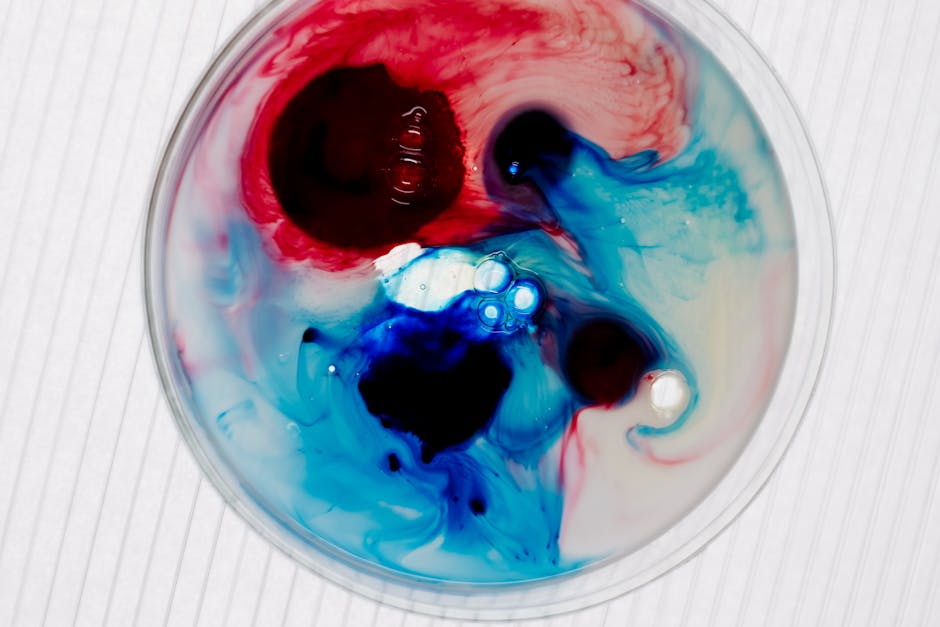
Photo by Ron Lach on Pexels
A homogeneous mixture has a uniform composition and appearance throughout. This means that if you take a sample from any part of the mixture, it will have the exact same properties as any other sample. You can't visibly distinguish the individual components, even under a microscope.
Think of dissolving sugar in water. After stirring, the sugar seems to disappear, and the entire solution looks like clear water. Every sip of that sugar water tastes the same, indicating a uniform distribution of sugar molecules. These are also called solutions.
Common examples include:
* Saltwater
* Air (a mixture of gases like nitrogen, oxygen, argon, etc.)
* Brass (an alloy of copper and zinc)
* Rubbing alcohol (alcohol dissolved in water)
2.2 Heterogeneous Mixtures

Photo by Kindel Media on Pexels
A heterogeneous mixture does not have a uniform composition. Its components are visibly distinct, meaning you can usually see the different parts with your naked eye (or sometimes with a simple magnifying glass). The properties of one part of the mixture might be different from another part.
If you mix sand and water, you can clearly see the sand settling at the bottom, separate from the water. Even if you stir it, the sand particles will eventually settle out.
Common examples include:
* Sand and water
* Oil and vinegar salad dressing (they separate into layers)
* Concrete (a mix of cement, gravel, and sand)
* A bowl of cereal with milk
* Rocks (often a mix of different minerals)
Here's a diagram to help visualize the difference:
graph TD
    A["Matter"] --> B["Pure Substances"]
    A --> C["Mixtures"]

    C --> D["Homogeneous Mixtures"]
    C --> E["Heterogeneous Mixtures"]

    D --> F["Solutions (e.g., Saltwater)"]
    E --> G["Suspensions (e.g., Sand & Water)"]
    E --> H["Colloids (e.g., Milk)"]
Suspensions (like sand in water, where particles settle) and colloids (like milk, where particles are dispersed but don't settle easily and scatter light) are specific types of heterogeneous mixtures, though sometimes colloids are tricky because they appear homogeneous to the naked eye. The key is that their components are still separate on a microscopic level.
3. Worked Example
Let's classify a few everyday items:
-
Chocolate chip cookie:
- Can you see different parts? Yes, you can see the chocolate chips, the cookie dough, and maybe nuts if they're included.
- Is its composition uniform throughout? No, one bite might have more chocolate chips than another.
- Classification: Heterogeneous mixture.
-
Brewed, clear coffee:
- Can you see different parts? No, it looks like one uniform liquid.
- Is its composition uniform throughout? Yes, every sip of properly brewed and filtered coffee tastes consistent.
- Classification: Homogeneous mixture (a solution of coffee compounds in water).
-
Blood:
- This is a tricky one! To the naked eye, it looks uniform. However, if you let it sit or spin it in a centrifuge, it separates into plasma, red blood cells, white blood cells, and platelets.
- Can you see different parts under a microscope? Yes, definitely.
- Is its composition truly uniform at a microscopic level? No.
- Classification: Heterogeneous mixture (specifically, a suspension and a colloid).
4. Key Takeaways
- Mixtures combine substances without forming new chemical bonds.
- Homogeneous mixtures have a uniform composition and appearance throughout.
- Heterogeneous mixtures have visibly distinct components and non-uniform composition.
- Solutions are a specific type of homogeneous mixture where one substance dissolves into another.
- You can often separate mixture components using physical methods like filtration or evaporation.
Common Mistakes to Avoid:
- Don't confuse mixtures with chemical compounds; compounds involve chemical bonds and new substances.
- Don't assume something is homogeneous just because it looks uniform at first glance (e.g., blood, milk).
- Forgetting that the components of a mixture retain their individual chemical properties.
- Thinking that all mixtures can be easily separated; some separations are complex.
5. Now Try It
Take a look around your kitchen or classroom. Identify three different items (food, drinks, materials) and classify each one as either a homogeneous or heterogeneous mixture. For each, briefly explain why you classified it that way, focusing on whether you can see distinct parts or if it has a uniform appearance.
What success looks like: You'll have three items correctly classified with a clear, concise justification for each based on the principles of uniform vs. non-uniform composition and appearance.
Frequently asked about Mixtures: Homogeneous and Heterogeneous
More from chem
Get the full chem curriculum
Clone the complete plan to your dashboard for unlimited AI-generated notes, practice quizzes, and a personalised revision schedule.
Save this course free