Review and Exam Preparation
From the chem curriculum
TL;DR
You'll maximize your exam score by actively recalling information, practicing problem-solving, and understanding why answers are correct. Focus on spaced repetition and simulating exam conditions. Your goal is to not just know the material, but to confidently apply it under pressure.
1. The Mental Model
Think of your brain like a muscle. To get stronger, you need to challenge it regularly, not just cram at the last minute. Effective review isn't about re-reading; it's about actively testing your understanding and filling knowledge gaps.
2. The Core Material
Active Recall: The #1 Study Technique

Photo by Markus Winkler on Pexels
Active recall means retrieving information from your memory without looking at your notes. This strengthens memory pathways. Flashcards (physical or digital), self-quizzing, or explaining concepts out loud are great ways to do this.
Spaced Repetition: Don't Cram

Photo by Ron Lach on Pexels
Instead of reviewing everything right before an exam, spread out your study sessions. Review material periodically, increasing the time between reviews as you get better at recalling it. This helps move information from short-term to long-term memory.
Problem-Solving Practice
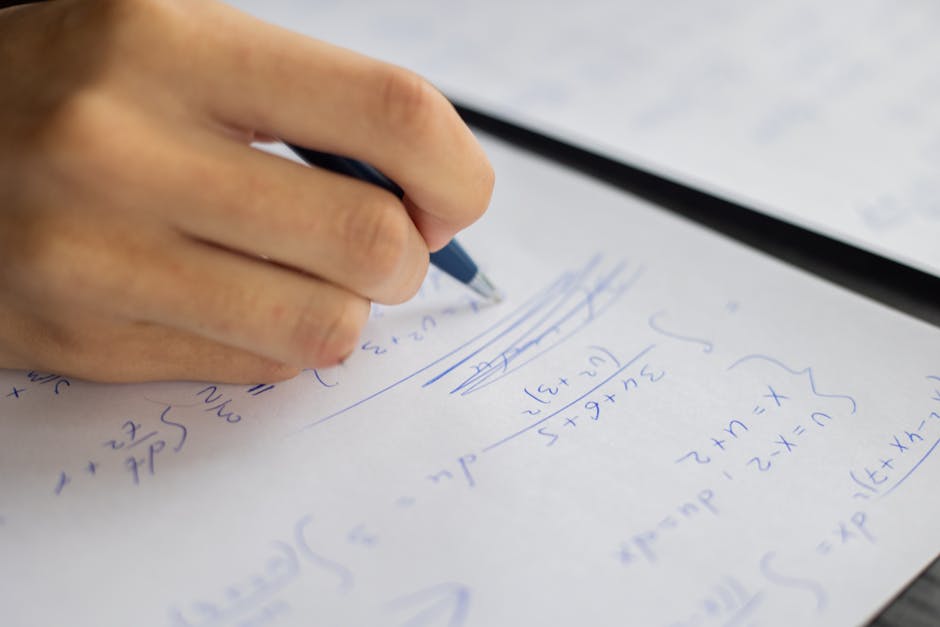
Photo by Monstera Production on Pexels
Chemistry is often about applying concepts. Don't just read solutions; try to solve problems yourself first. If you get stuck, identify where you got stuck and why. Then, review the relevant concept and try again. Work through all homework, quiz, and textbook problems.
Understanding "Why"

Photo by Ann H on Pexels
It's not enough to know what the answer is; you need to understand why it's the answer. If you can explain the reasoning behind a solution, you truly understand the concept.
Here's a flowchart showing a good review cycle:
graph TD
    A["Review Lecture Notes/Read Textbook (Initial Pass)"] --> B["Identify Key Concepts & Formulas"]
    B --> C{"Can I Explain This in My Own Words?"}
    C -- "No" --> A
    C -- "Yes" --> D["Practice Problems (Without Looking at Solutions)"]
    D --> E{"Did I Get it Right & Understand Why?"}
    E -- "No" --> F["Review Specific Concept/Solution"]
    E -- "Yes" --> G["Space Repetition: Revisit Later"]
    F --> D
    G --> H["Simulate Exam Conditions (Timed Practice)"]
    H --> I["Identify Weak Areas"]
    I --> J["Targeted Review/More Practice"]
    J --> H
Organizing Your Notes
Keep your notes clear and concise. Use headings, bullet points, and diagrams. If you've been highlighting, make sure it's active highlighting – highlighting only key terms or phrases, not entire paragraphs. Better yet, summarize sections in your own words.
Mock Exams/Practice Tests
Simulate the exam environment as closely as possible. Set a timer, use only allowed materials (e.g., calculator, periodic table), and work through the problems without interruptions. This helps with time management and reduces test anxiety.
3. Worked Example
Let's say you're reviewing for a chemistry exam on stoichiometry.
- Active Recall: You look at a flashcard: "What's the relationship between moles and balanced equations?" You try to explain: "Coefficients in a balanced equation represent the mole ratio of reactants and products."
- Problem Practice: You encounter a problem: "How many grams of CO2 are produced from 10.0g of CH4 reacting with excess O2?"
- First, you write the balanced equation: CH4 + 2O2 → CO2 + 2H2O.
- Then, you convert 10.0g CH4 to moles CH4 (10.0g / 16.05 g/mol = 0.623 mol CH4).
- Using the mole ratio from the balanced equation (1 mol CH4 : 1 mol CO2), you find you'll produce 0.623 mol CO2.
- Finally, convert moles CO2 to grams CO2 (0.623 mol * 44.01 g/mol = 27.4g CO2).
- Understanding "Why": If you got the answer wrong, you'd pinpoint the error. Did you balance the equation incorrectly? Did you use the wrong molar mass? Did you forget the mole ratio step? You'd then review that specific part of stoichiometry. If you got it right, you'd confirm you could explain each step and why it was necessary.
4. Key Takeaways
- Actively retrieve information from memory rather than just re-reading.
- Spread out your study sessions over time for better long-term retention.
- Practice solving problems hands-on; don't just review solutions.
- Always strive to understand the underlying principles and "why" behind the answers.
- Simulate exam conditions to improve time management and reduce anxiety.
- Identify your weak areas through practice and focus your review there.
Common Mistakes to Avoid:
- Passive Re-reading: This creates an illusion of knowing the material.
- Cramming: Your brain can only absorb so much; spaced repetition is key.
- Only Reviewing What You Already Know: Focus on your identified weak points.
- Ignoring Practice Problems: Chemistry is applied; you must practice applying it.
5. Now Try It
Spend 15 minutes right now on a topic you find challenging. Create 3-5 flashcards for key terms/concepts from that topic, then quiz yourself on them. Next, try to solve two practice problems related to that topic without looking at your notes or the solutions.
Success looks like: You've correctly defined at least 3 terms from memory, and you've made a solid attempt at both practice problems, even if you didn't get them perfectly right. The important thing is to engage with the material actively.
Frequently asked about Review and Exam Preparation
More from chem
Get the full chem curriculum
Clone the complete plan to your dashboard for unlimited AI-generated notes, practice quizzes, and a personalised revision schedule.
Save this course free