Magnetic Flux and Faraday's Law
From the Electromagnetic Physics curriculum
TL;DR
Magnetic flux is a measure of the total magnetic field passing through a given area, and it's what changes to induce a voltage. Faraday's Law explains how a changing magnetic flux through a coil creates an electromotive force (EMF), which is essentially a voltage. This induced voltage drives current and is the fundamental principle behind many electrical generators and transformers.
1. The Mental Model
Think of magnetic flux like the amount of "magnetic wind" blowing through a loop of wire. Faraday's Law says that if this "magnetic wind" changes its strength or direction through the loop, it creates electricity.
2. The Core Material
What is Magnetic Flux ($\Phi_B$)?

Photo by Nicola Narracci on Pexels
Magnetic flux tells you how much magnetic field lines are passing through a particular surface. Imagine a net held in a river: the flux is like how much water flows through the net. The more field lines (stronger magnetic field) or the bigger the area they pass through, the greater the magnetic flux. It also depends on the angle: if the field lines are parallel to the surface, no flux passes through. Maximum flux occurs when the field lines are perpendicular to the surface.
You can calculate magnetic flux for a uniform magnetic field ($B$) passing through a flat surface with area ($A$) as:
$\Phi_B = B \cdot A \cdot \cos(\theta)$
Here, $\theta$ is the angle between the magnetic field vector and the normal (perpendicular) to the surface.
Faraday's Law of Induction

Photo by Pixabay on Pexels
Faraday's Law states that a changing magnetic flux through a coil of wire induces an electromotive force (EMF), which is just another name for voltage. The faster the flux changes, the larger the induced EMF.
The formula for Faraday's Law is:
$EMF = -N \frac{\Delta \Phi_B}{\Delta t}$ (for a simple change over time)
or more generally:
$EMF = -N \frac{d\Phi_B}{dt}$ (for instantaneous rate of change)
Let's break that down:
* EMF: The induced voltage (measured in Volts).
* $N$: The number of turns in the coil. More turns mean a larger induced voltage.
* $\frac{\Delta \Phi_B}{\Delta t}$ (or $\frac{d\Phi_B}{dt}$): This is the rate of change of magnetic flux with respect to time. This is the crucial part! If the flux isn't changing, there's no induced EMF.
* The negative sign: This comes from Lenz's Law, which tells you the direction of the induced EMF. It means the induced current will create a magnetic field that opposes the change in the original magnetic flux.
How Can Magnetic Flux Change?
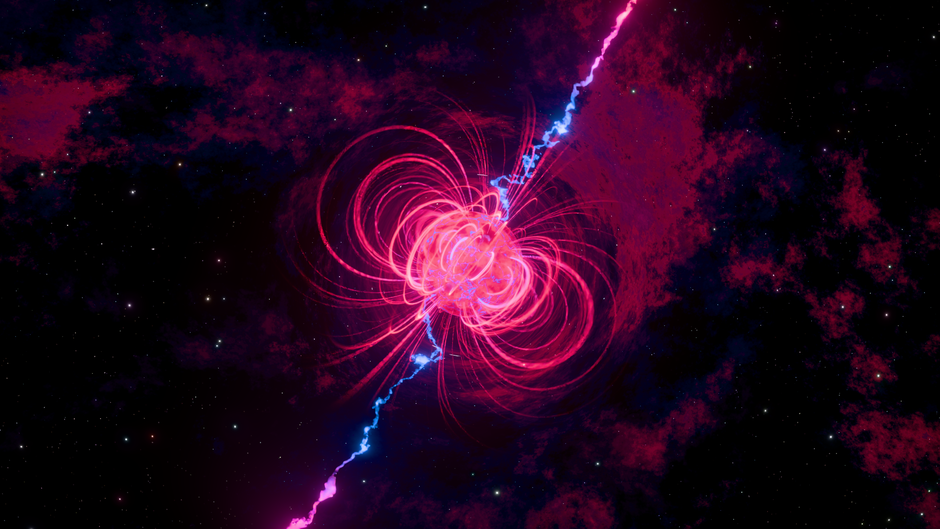
Photo by Nicola Narracci on Pexels
The magnetic flux $\Phi_B = B \cdot A \cdot \cos(\theta)$ can change in three main ways:
- Changing the magnetic field strength ($B$): Moving a magnet closer or further from a coil, or changing the current in an electromagnet.
- Changing the area ($A$): Deforming a loop of wire, or a conductor moving through a magnetic field.
- Changing the orientation ($\theta$): Rotating a coil within a magnetic field (this is how most generators work).
graph TD
    Flux_Change["Magnetic Flux Change (dΦ_B/dt)"] --> |Induces| EMF["Induced EMF (-N * dΦ_B/dt)"]
    EMF --> |Drives| Current["Induced Current"]

    subgraph Causes of Flux Change
        Change_B["1. Change Magnetic Field Strength (B)"]
        Change_A["2. Change Loop Area (A)"]
        Change_Theta["3. Change Angle (θ)"]
    end

    Change_B --> Flux_Change
    Change_A --> Flux_Change
    Change_Theta --> Flux_Change
3. Worked Example
Let's say you have a coil with 100 turns ($N=100$) and a cross-sectional area of 0.01 square meters ($A=0.01 \text{ m}^2$). Initially, a uniform magnetic field of 0.5 Tesla ($B=0.5 \text{ T}$) passes perpendicularly through the coil ($\theta=0^\circ$, so $\cos(\theta)=1$).
Then, the magnetic field is uniformly reduced to 0.1 Tesla in 0.2 seconds. We want to find the induced EMF.
First, calculate the initial and final magnetic flux:
-
Initial Flux ($\Phi_{B,initial}$):
$\Phi_{B,initial} = B_{initial} \cdot A \cdot \cos(\theta)$
$\Phi_{B,initial} = 0.5 \text{ T} \cdot 0.01 \text{ m}^2 \cdot 1 = 0.005 \text{ Weber}$ -
Final Flux ($\Phi_{B,final}$):
$\Phi_{B,final} = B_{final} \cdot A \cdot \cos(\theta)$
$\Phi_{B,final} = 0.1 \text{ T} \cdot 0.01 \text{ m}^2 \cdot 1 = 0.001 \text{ Weber}$
Next, calculate the change in magnetic flux ($\Delta \Phi_B$):
$\Delta \Phi_B = \Phi_{B,final} - \Phi_{B,initial}$
$\Delta \Phi_B = 0.001 \text{ Wb} - 0.005 \text{ Wb} = -0.004 \text{ Weber}$
The time taken for this change ($\Delta t$) is 0.2 seconds.
Finally, apply Faraday's Law:
$EMF = -N \frac{\Delta \Phi_B}{\Delta t}$
$EMF = -100 \cdot \frac{-0.004 \text{ Wb}}{0.2 \text{ s}}$
$EMF = -100 \cdot (-0.02 \text{ V})$
$EMF = 2 \text{ Volts}$
So, an EMF of 2 Volts is induced in the coil. The positive sign indicates the direction of the induced current according to Lenz's law relative to how we defined the initial and final flux.
4. Key Takeaways
- Magnetic flux quantifies the total amount of magnetic field lines passing through a specific area.
- For a uniform field and flat surface, magnetic flux is calculated as $B \cdot A \cdot \cos(\theta)$.
- Faraday's Law states that a changing magnetic flux induces an electromotive force (EMF), or voltage.
- The magnitude of the induced EMF is directly proportional to the number of coil turns and the rate of change of magnetic flux.
- The negative sign in Faraday's Law (Lenz's Law) tells you the induced EMF opposes the change in magnetic flux.
- Magnetic flux can change by altering the magnetic field strength, the area of the loop, or the angle between the field and the loop.
Common Mistakes to Avoid:
- Don't forget the number of turns ($N$) in Faraday's Law; it scales the induced EMF.
- Make sure to use the change in flux over time, not just the flux itself. No change, no EMF.
- Remember $\theta$ is the angle between the magnetic field and the normal to the surface, not parallel to it.
- Confusing the direction of induced current with the direction of the changing flux; Lenz's Law means it opposes the change.
5. Now Try It
Imagine a single loop of wire (N=1) with an area of 0.05 square meters. A magnetic field of 0.8 Tesla initially passes perpendicularly through the loop. If this magnetic field is completely removed (becomes 0 Tesla) in 0.1 seconds, what is the induced EMF? Calculate the initial flux, final flux, change in flux, and then the induced EMF. What success looks like: You should arrive at an EMF value with correct units.
Frequently asked about Magnetic Flux and Faraday's Law
Study this next
Get the full Electromagnetic Physics curriculum
Clone the complete plan to your dashboard for unlimited AI-generated notes, practice quizzes, and a personalised revision schedule.
Save this course free