Fundamentals of Magnetic Fields
From the Electromagnetic Physics curriculum
TL;DR
Magnetic fields are invisible influences created by moving electric charges, exerting forces on other moving charges. They're described by field lines that show direction and strength, and are essential for understanding motors, generators, and many technologies. You'll learn how current creates these fields and how they interact.
1. The Mental Model
Think of a magnetic field as an invisible "wind" around a current-carrying wire or a magnet. This "wind" can push or pull on other wires with current or other magnets, but it's only felt by things that are also moving electric charges.
2. The Core Material
You're probably familiar with magnets sticking to your fridge. That's a magnetic field at work! Fundamentally, magnetic fields are created by moving electric charges. This means electric currents (charges flowing through a wire) create magnetic fields, and permanent magnets have magnetic fields because of the intrinsic motion of electrons within their atoms.
What is a Magnetic Field?
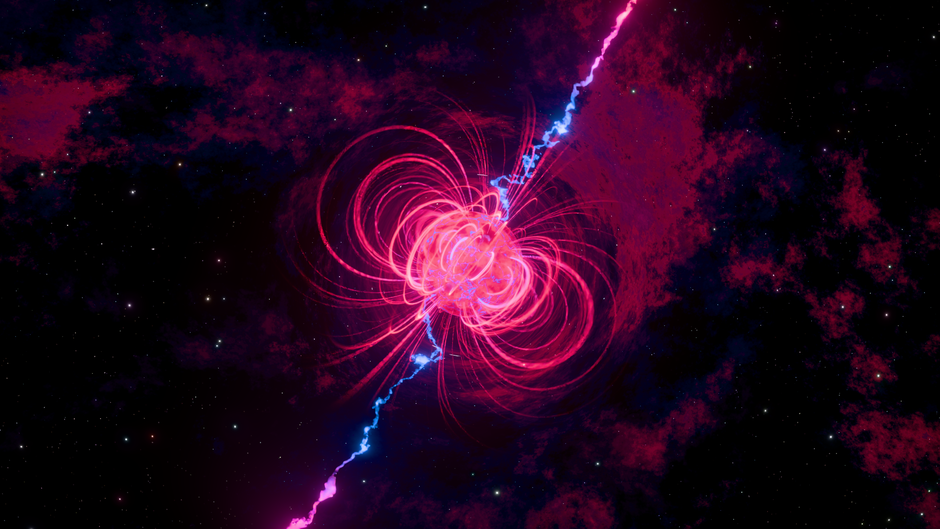
Photo by Nicola Narracci on Pexels
A magnetic field isn't a physical thing you can touch; it's a region of space where a magnetic force can be detected. We represent magnetic fields using magnetic field lines.
- Direction: Field lines point from the North pole to the South pole outside a magnet. For a current-carrying wire, you use the right-hand rule to find the direction.
- Strength: The closer the field lines are together, the stronger the magnetic field.
Magnetic Field from a Current-Carrying Wire (Right-Hand Rule)

Photo by Nic Wood on Pexels
This is super important. If you hold your right hand with your thumb pointing in the direction of conventional current flow, your curled fingers will show the direction of the magnetic field lines around the wire.
graph TD
    A["Current Flow (I)"] --> B["Right Hand Rule"]
    B --> C["Thumb points in 'I' direction"]
    B --> D["Fingers curl in magnetic field (B) direction"]
    D --> E["Concentric circles around wire"]
    E --> F["Field strength (B) decreases with distance from wire"]
Magnetic Force on a Moving Charge

Photo by Nicola Narracci on Pexels
Just as moving charges create magnetic fields, magnetic fields exert forces on other moving charges. This is the foundation of how motors work. The force on a single charge is given by the Lorentz force, but for now, just know that:
- A stationary charge in a magnetic field experiences no force.
- A charge moving parallel to a magnetic field experiences no force.
- The maximum force occurs when the charge moves perpendicular to the magnetic field.
Magnetic Force on a Current-Carrying Wire
Photo by Nicola Narracci on Pexels
Since current is just many moving charges, a current-carrying wire in a magnetic field will also experience a force. This is how electric motors work! The direction of this force is found using another version of the right-hand rule (sometimes called the "motor rule" or "Flemings Left-Hand Rule" in other contexts, but we'll stick to a consistent right-hand approach for simplicity):
Point your right-hand fingers in the direction of the magnetic field (B), and your thumb in the direction of the current (I). Your palm will then push in the direction of the force (F) on the wire.
3. Worked Example
Let's say you have a straight wire carrying a current of 2 Amperes (A) vertically upwards. You then place this wire in a uniform magnetic field that points horizontally to the right. What's the direction of the force on the wire?
- Identify Current Direction: Upwards.
- Identify Magnetic Field Direction: To the right.
- Apply Right-Hand Rule (for force):
- Point your right-hand fingers to the right (direction of B).
- Point your right-hand thumb upwards (direction of I).
- Your palm will now be facing out of the page/screen.
Therefore, the force on the wire is directed out of the page/screen. If the current was downwards, the force would be into the page. If the magnetic field was to the left, the force would be into the page.
4. Key Takeaways
- Moving electric charges create magnetic fields.
- Magnetic field lines show the direction and strength of the field.
- The right-hand rule helps determine the direction of a magnetic field around a wire.
- Magnetic fields exert forces on other moving charges or current-carrying wires.
- The right-hand rule also determines the direction of the force on a current-carrying wire in a magnetic field.
- The force is strongest when the current is perpendicular to the magnetic field.
Common Mistakes to Avoid:
- Confusing the two right-hand rules: one for field creation and one for force.
- Forgetting that stationary charges don't experience a magnetic force.
- Assuming the magnetic field direction is always the same as the current direction.
- Mixing up conventional current direction with electron flow (always use conventional current for these rules).
5. Now Try It
Imagine a long, straight wire carrying current into the page. You then place a small compass directly above this wire. What direction would the compass needle point (North is at the top of the page)? Sketch this setup and indicate the current, the magnetic field lines around the wire, and the compass needle direction.
Success looks like: Your sketch shows concentric circles of magnetic field lines around the wire. Using the right-hand rule (thumb pointing into the page), you'd find the magnetic field above the wire points to the left, so the compass needle should point left.
Frequently asked about Fundamentals of Magnetic Fields
Study this next
Get the full Electromagnetic Physics curriculum
Clone the complete plan to your dashboard for unlimited AI-generated notes, practice quizzes, and a personalised revision schedule.
Save this course free