Advanced Reproductive Biology and Clinical Aspects
From the Human reproductive system curriculum
TL;DR
This topic dives into the intricate hormonal controls and cellular processes essential for successful reproduction, covering both male and female systems. We'll explore how these systems can go awry and the sophisticated clinical interventions used to diagnose and treat infertility. Understanding these mechanisms is key to appreciating both natural fertility and assisted reproductive technologies.
1. The Mental Model
Think of the reproductive system as a highly sensitive orchestra, with hormones as the conductors and cells as the musicians. Each part must play its role perfectly and in sync for a successful performance (reproduction). When notes are missed or timing is off, clinical interventions are like skilled sound engineers stepping in to correct the balance.
2. The Core Material
Hormonal Regulation of Reproduction

Photo by Bedbible .com on Pexels
Both male and female reproductive systems are primarily governed by the hypothalamic-pituitary-gonadal (HPG) axis. This is a classic feedback loop. The hypothalamus releases Gonadotropin-Releasing Hormone (GnRH), which stimulates the anterior pituitary to release Follicle-Stimulating Hormone (FSH) and Luteinizing Hormone (LH). These gonadotropins then act on the gonads (testes in males, ovaries in females) to produce gametes and sex hormones (testosterone, estrogen, progesterone).
In males, FSH acts on Sertoli cells in the testes to support spermatogenesis, while LH stimulates Leydig cells to produce testosterone. Testosterone, in turn, is essential for sperm maturation and secondary sexual characteristics. High testosterone levels provide negative feedback to the hypothalamus and pituitary.
In females, the HPG axis is more complex due to the cyclical nature of the menstrual cycle. FSH stimulates follicular growth in the ovary and estrogen production. LH triggers ovulation and the formation of the corpus luteum, which produces progesterone. Estrogen and progesterone then exert feedback on the hypothalamus and pituitary, leading to cycles of hormone release that prepare the uterus for pregnancy or initiate menstruation.
Gamete Maturation and Fertilization

Photo by Deon Black on Pexels
Spermatogenesis is the continuous process in males where spermatogonia develop into mature spermatozoa over about 74 days within the seminiferous tubules. This involves mitosis, meiosis, and spermiogenesis (physical maturation).
Oogenesis in females is discontinuous. Oogonia enter meiosis I during fetal development, arresting until puberty. Each month, usually one oocyte completes meiosis I and begins meiosis II, arresting again until fertilization. Fertilization typically occurs in the fallopian tube, where a sperm penetrates the oocyte, triggering the completion of meiosis II and the fusion of pronuclei to form a zygote.
Causes of Infertility

Photo by Marta Branco on Pexels
Infertility is defined as the inability to conceive after 12 months of unprotected intercourse (or 6 months if the female partner is over 35). Causes can be male-factor, female-factor, combined, or unexplained.
- Male factors: Low sperm count (oligozoospermia), poor sperm motility (asthenozoospermia), abnormal sperm morphology (teratozoospermia), or blockages.
- Female factors:
- Ovulatory dysfunction: (e.g., Polycystic Ovary Syndrome - PCOS, premature ovarian insufficiency).
- Tubal factors: Blocked or damaged fallopian tubes (e.g., due to pelvic inflammatory disease, endometriosis).
- Uterine factors: Fibroids, polyps, or anatomical abnormalities.
- Endometriosis: Tissue similar to the uterine lining grows outside the uterus.
- Diminished ovarian reserve (DOR): Lower than expected number or quality of eggs.
Assisted Reproductive Technologies (ART)
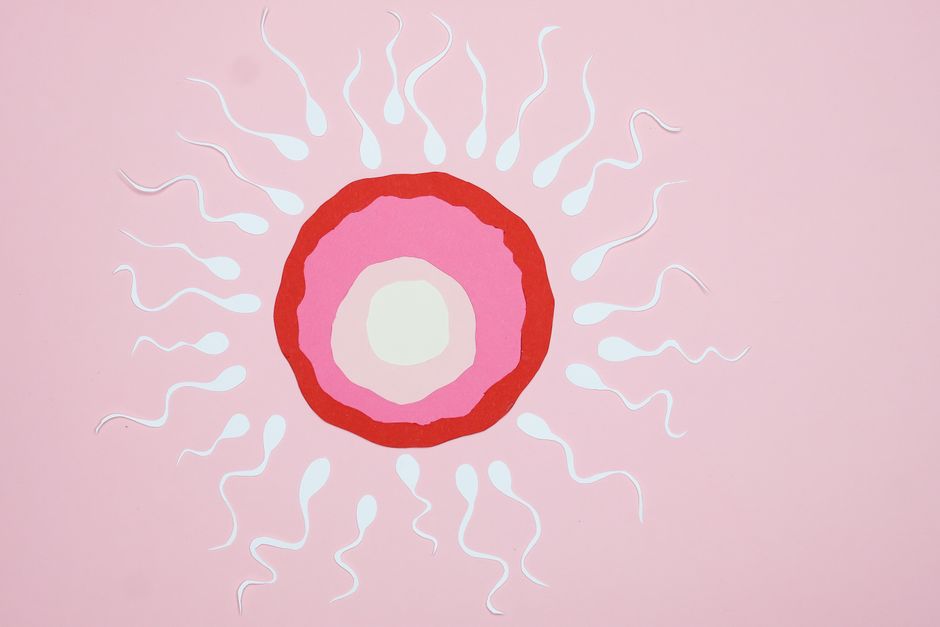
Photo by Nadezhda Moryak on Pexels
ARTs are treatments that involve handling eggs, sperm, or embryos.
- In Vitro Fertilization (IVF): Eggs are retrieved from the ovaries and fertilized by sperm in a lab dish. The resulting embryos are then transferred to the uterus. IVF often involves ovarian stimulation with hormones to produce multiple eggs.
- Intracytoplasmic Sperm Injection (ICSI): A single sperm is injected directly into an egg. This is particularly useful for male factor infertility or previous fertilization failures in IVF.
- Intrauterine Insemination (IUI): Washed and concentrated sperm are placed directly into the uterus around the time of ovulation.
- Gamete/Embryo Freezing (Cryopreservation): Eggs, sperm, or embryos can be frozen for later use, offering options for fertility preservation (e.g., before cancer treatment) or delaying childbearing.
- Preimplantation Genetic Testing (PGT): Embryos created via IVF can be screened for chromosomal abnormalities (PGT-A) or specific genetic diseases (PGT-M) before uterine transfer, reducing the risk of miscarriage or passing on genetic conditions.
Here's a simplified flow for an IVF cycle:
graph TD
    A["Patient Consultation & Workup"] --> B["Ovarian Stimulation (Hormones)"]
    B --> C["Egg Retrieval (Minor Surgery)"]
    C --> D{"Fertilization (IVF or ICSI)"}
    D --> E["Embryo Culture (Lab)"]
    E --> F{"Embryo Transfer or Cryopreservation?"}
    F -- Transfer --> G["Embryo Transfer (Uterus)"]
    G --> H["Pregnancy Test"]
    F -- Cryopreservation --> I["Embryo Freezing (Future Use)"]
3. Worked Example
Imagine a couple, Sarah (38) and Mark (40), who have been trying to conceive for 18 months.
1. Initial Assessment: Blood tests show Sarah has slightly elevated FSH on Day 3, suggesting diminished ovarian reserve. Mark's semen analysis shows a low sperm count (10 million/mL, normal >15 million/mL) and 30% normal morphology (normal >4%).
2. Diagnosis: Combined male and female factor infertility. Given Sarah's age and diminished ovarian reserve, IVF is recommended for a higher chance of success than IUI.
3. IVF Cycle:
* Ovarian Stimulation: Sarah is given daily injectable hormones (gonadotropins like FSH) for 10-12 days to stimulate multiple follicles to grow. Ultrasounds monitor follicle size and blood tests track estrogen levels.
* Egg Retrieval: Once follicles are mature, Sarah receives an hCG trigger shot, and 36 hours later, eggs are retrieved transvaginally under sedation. 8 eggs are retrieved.
* Fertilization (ICSI): Due to Mark's low sperm count and morphology, ICSI is performed. Each mature egg is injected with a single healthy sperm. 6 out of 8 eggs fertilize.
* Embryo Culture: The 6 fertilized eggs (zygotes) are cultured for 5-6 days. By day 5, 2 have developed into good-quality blastocysts.
* Embryo Transfer: One blastocyst is transferred to Sarah's uterus. The other is cryopreserved.
* Pregnancy Test: Two weeks later, a blood test confirms pregnancy.
This example shows how different aspects of advanced reproductive biology (hormonal stimulation, specific fertilization techniques like ICSI, embryo development stages) are integrated into a clinical treatment.
4. Key Takeaways
- The HPG axis orchestrates hormone production and gamete maturation in both sexes through complex feedback loops.
- Spermatogenesis is continuous, while oogenesis is cyclical and involves prolonged meiotic arrest.
- Infertility can stem from a variety of male, female, or combined factors, often affecting hormone balance, gamete production, or reproductive tract anatomy.
- ARTs like IVF, ICSI, and IUI offer solutions for different infertility causes by intervening at various stages of reproduction.
- Preimplantation Genetic Testing (PGT) allows for embryo screening before transfer, improving success rates and preventing genetic disease transmission.
- Cryopreservation provides flexibility for fertility preservation and planned future conception.
Common mistakes to avoid:
- Forgetting that the HPG axis involves negative feedback for sex hormones on the pituitary and hypothalamus.
- Confusing the roles of FSH and LH in male vs. female reproduction; while both are gonadotropins, their specific cellular targets and outcomes differ.
- Assuming all infertility is female-factor; male factors contribute significantly, and combined factors are common.
- Thinking IVF is a single procedure; it's a multi-step process with several variations (e.g., with or without ICSI, fresh vs. frozen transfer).
5. Now Try It
Review a case study of a couple undergoing fertility treatment. Identify the suspected cause(s) of infertility based on their history and initial test results. Then, outline the specific ART intervention you would recommend and justify your choice based on the principles discussed. What would "success" look like for this couple? (15 minutes)
Frequently asked about Advanced Reproductive Biology and Clinical Aspects
More from Human reproductive system
Get the full Human reproductive system curriculum
Clone the complete plan to your dashboard for unlimited AI-generated notes, practice quizzes, and a personalised revision schedule.
Save this course free