Foundations of Legal Experience and Justice
From the Introduccion curriculum
TL;DR
Law isn't just a set of rules; it's a dynamic system shaped by human experience, aimed at achieving justice. Understanding its foundations helps you see how legal concepts connect to real-world problems and societal values. Justice itself is a complex ideal, often debated, but always central to law's purpose.
1. The Mental Model
Think of law as a continuous conversation between societal needs, historical context, and the pursuit of fairness. It's not a static textbook but a living framework that responds to human actions and seeks to guide behavior towards a just society.
2. The Core Material
When we talk about the foundations of legal experience and justice, we're exploring why law exists, what it tries to achieve, and how people interact with it. It's about more than just knowing laws; it's about understanding their spirit and impact.
Law as a Social Phenomenon

Photo by FOERDER ZONE on Pexels
Law isn't some abstract idea; it grows directly from how people live together. Every society, in some form, has rules to maintain order, resolve disputes, and protect its members. These rules reflect that society's values, culture, and power structures. For instance, property laws emerged when people started owning land, and contract laws became vital with trade.
The Pursuit of Justice

Photo by Nika Poznyak on Pexels
Justice is the core ideal that law strives for. It's about fairness, equality, and treating people equitably. However, what "justice" means can vary. Is it about strict adherence to rules (formal justice), or about achieving a fair outcome for individuals, even if it means bending a rule (substantive justice)? Often, legal systems try to balance these two.
Sources of Law
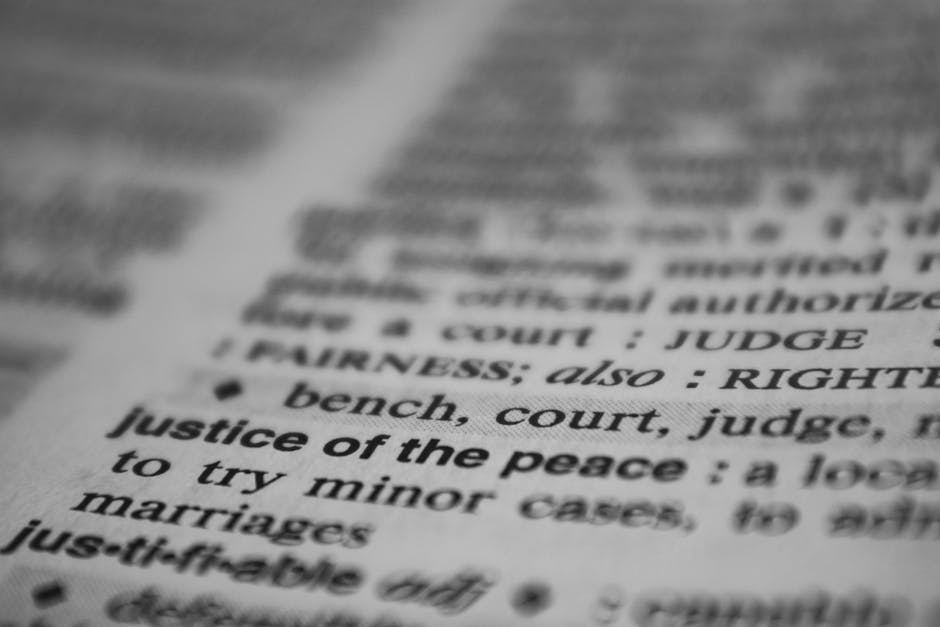
Photo by Nothing Ahead on Pexels
Where do laws come from? You'll typically encounter:
- Legislation: Laws passed by a governing body (like a parliament or congress). These are formal, written rules.
- Precedent (Case Law): Decisions made by judges in previous cases. When a higher court makes a ruling, lower courts often follow it in similar future cases. This is known as stare decisis ("to stand by things decided").
- Custom: Long-standing practices or traditions that a community accepts as binding. While less common in modern formal law, it plays a role in some legal systems, especially indigenous law.
- Doctrine/Legal Scholarship: The writings and interpretations of legal experts and academics. While not directly law, they influence how judges and lawyers think about and apply legal principles.
graph TD
    A["Societal Needs & Values"] --> B["Problem/Conflict Arises"]
    B --> C{"Legal System Responds"}
    C -- "Creates/Applies" --> D["Legislation"]
    C -- "Interprets/Develops" --> E["Case Law (Precedent)"]
    C -- "Acknowledges" --> F["Custom"]
    D & E & F --> G["Rule of Law (Formal Justice)"]
    G --> H["Outcome/Resolution"]
    H --> I{"Is Outcome Just?"}
    I -- "Yes" --> J["Societal Harmony/Order"]
    I -- "No" --> K["Critique/Reform"]
    K --> A
The Role of Legal Experience

Photo by RDNE Stock project on Pexels
Your "legal experience" isn't just about reading statutes. It's about seeing how law plays out in real life: in courtrooms, in contracts, in everyday interactions. It involves:
- Interpretation: How judges, lawyers, and individuals understand and apply the law to specific situations. Words in a statute aren't always clear-cut.
- Application: Using legal rules to solve real problems or resolve conflicts.
- Impact: Observing the effects of laws on individuals and society. Does a law achieve its intended purpose? Does it create unintended consequences?
3. Worked Example
Imagine a small town where a new factory is built. The factory operates 24/7 and creates a lot of noise. Local residents complain that the noise disrupts their sleep and daily lives.
- Societal Need/Problem: Residents' right to peace and quiet vs. the factory's right to operate and provide jobs.
- Initial Legal Foundation (Legislation): The town might have a noise ordinance (local law) that sets limits on noise levels, especially at night. This ordinance is a legislative act.
- Legal Experience (Application): Residents file a complaint. The town council or a court has to interpret the noise ordinance. Does "excessive noise" mean 50 decibels or 70 decibels? Does it apply to industrial areas?
- Pursuit of Justice:
- Formal Justice: If the factory's noise levels are technically below the ordinance's specified limit, a strictly formal application might say no violation occurred.
- Substantive Justice: However, if evidence shows that even below-limit noise is severely impacting residents' health and property values, a court might look for other legal avenues (like nuisance law, which is often based on case law/precedent) to achieve a fairer outcome. This could involve ordering the factory to install soundproofing, or even limiting its nighttime operations. The court balances the formal rules with the actual impact on people's lives to achieve a more just result.
- Impact/Reform: If the noise ordinance is found to be inadequate (e.g., its limits are too high for residential areas), the town might consider revising it, influenced by the residents' experiences and the court's interpretation.
4. Key Takeaways
- Law is a dynamic system arising from human interactions and societal needs, not just static rules.
- Justice, the core aim of law, involves balancing formal adherence to rules with achieving fair outcomes.
- Laws originate from various sources: legislation, judicial precedent, custom, and scholarly doctrine.
- Your legal experience is about interpreting, applying, and observing the real-world impact of laws.
-
Understanding the foundations helps you see how laws are shaped, evolve, and aim to address societal problems.
-
Common Mistakes to Avoid:
- Thinking of law only as a rigid set of black-and-white rules without considering its context.
- Assuming "justice" means the same thing to everyone in every situation.
- Neglecting the historical or social factors that influenced the creation of a particular law.
- Ignoring the practical impact of a law when evaluating its effectiveness or fairness.
5. Now Try It
Think about a current event or a news story involving a legal dispute (e.g., a debate over a new law, a court case). Identify what societal needs or values are at play, what sources of law might be relevant (legislation, precedent), and what kind of justice (formal vs. substantive) the parties involved seem to be seeking. Write a short paragraph (3-4 sentences) explaining your observations. Success looks like clearly identifying at least two distinct foundations discussed above in your chosen example.
Frequently asked about Foundations of Legal Experience and Justice
Study this next
Get the full Introduccion curriculum
Clone the complete plan to your dashboard for unlimited AI-generated notes, practice quizzes, and a personalised revision schedule.
Save this course free