Foundations of Human Civilization: Prehistory and Early Societies
From the World History curriculum
TL;DR
You'll learn how humans evolved from nomadic hunter-gatherers to settlers in complex societies, driven by key innovations like agriculture. This transition, from the Stone Age to early civilizations, laid the groundwork for everything we know today. Understanding this period helps explain why societies developed the way they did.
1. The Mental Model
Imagine humanity as a journey from small, mobile family groups to large, permanent cities. This transformation wasn't a sudden event but a slow, continuous development marked by critical changes in how people got food, lived, and organized themselves.
2. The Core Material
For most of human history, people lived as hunter-gatherers. They moved around, following food sources and living in small, egalitarian (everyone's equal) groups. Life was tough but generally required a broad knowledge of the natural world. This period, known as the Paleolithic Era (Old Stone Age), lasted for hundreds of thousands of years. Tools were simple: stone, bone, and wood.
Around 10,000 BCE, things started to change dramatically with the Neolithic Revolution (New Stone Age). This wasn't a single event but a gradual shift in several regions around the world. The big game-changer? Agriculture. People learned to cultivate plants and domesticate animals.
The Impact of Agriculture

Photo by kevin yung on Pexels
Agriculture led to profound changes:
* Sedentary Life: No need to constantly move; people built permanent settlements.
* Population Growth: A more reliable food supply could support more people.
* Food Surpluses: Producing more food than immediately needed allowed for specialization.
* Specialization of Labor: Not everyone had to farm. Some became artisans, builders, or leaders.
* Social Hierarchy: With specialization came different roles and statuses, leading to social classes.
* Technological Advancements: New tools for farming, pottery for storage, and weaving for textiles emerged.
* Complex Societies: Larger populations, organized labor, and shared resources eventually led to the first villages, towns, and then cities.
This transition from Paleolithic hunter-gatherers to Neolithic farmers and eventually to urban dwellers is a cornerstone of world history. It shows how environmental factors, human ingenuity, and social structures intertwined to create the first civilizations.
graph TD
    A["Paleolithic Era (Old Stone Age)"] --> B["Hunter-Gatherer Lifestyle"];
    B --> C["Small, Nomadic Groups"];
    C --> D["Simple Stone Tools"];
    D --> E{/Environmental Changes & Innovation/};
    E --> F["Neolithic Revolution (New Stone Age)"];
    F --> G["Development of Agriculture"];
    G --> H["Domesticated Plants & Animals"];
    H --> I["Sedentary Settlements (Villages)"];
    I --> J["Food Surpluses"];
    J --> K["Population Growth"];
    K --> L["Specialization of Labor"];
    L --> M["Social Hierarchy & Organization"];
    M --> N["Early Cities & Civilizations"];
    N --> O["Complex Technologies (Pottery, Metallurgy)"];
Characteristics of Early Civilizations
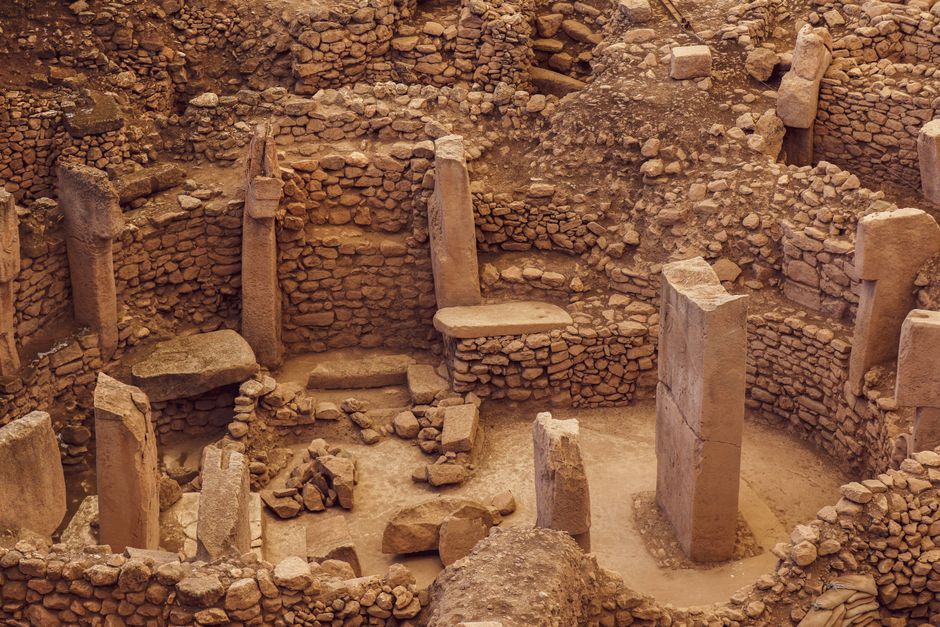
Photo by ÖMER ŞAHİN on Pexels
As societies grew and became more complex, they often shared several key features:
* Cities: Densely populated urban centers.
* Organized Government: Rulers, laws, and administrative structures.
* Complex Religions: Often with deities, rituals, and professional priests.
* Job Specialization: A wide array of roles beyond food production.
* Social Classes: Hierarchical structure from rulers to slaves.
* Arts and Architecture: Monumental buildings, sculptures, and decorative items.
* Public Works: Infrastructure like irrigation systems, roads, and defensive walls.
* Writing: Systems for record-keeping, laws, and literature (though not all early civs developed this early on).
The first civilizations typically arose in fertile river valleys (like Mesopotamia, Egypt, Indus Valley, China) because rivers provided water for irrigation, fertile soil, and transportation.
3. Worked Example
Let's look at a specific transition: the emergence of Uruk in Mesopotamia, one of the world's first true cities.
Before: Imagine a small Neolithic village along the Euphrates River. Maybe 500-1000 people. Most are farmers. A few might make pottery or simple tools. Decisions are likely made communally or by elders. There's a simple shrine.
The Shift: Over centuries, improved farming techniques (like irrigation) allowed for larger harvests. This surplus food meant more people could live in one place, and fewer people were needed just for farming. Some villagers started focusing solely on craftwork—making intricate pottery, bronze tools, or textiles. Others became full-time priests, managing elaborate temple complexes that grew larger and became central to the community's identity and economy (often owning land and receiving offerings). A ruling class emerged, perhaps initially from successful war leaders or temple administrators, who organized public works like massive city walls or extensive irrigation networks. Writing (cuneiform) developed to keep track of goods, labor, and taxes.
Result: By around 3000 BCE, Uruk was a city of 50,000-80,000 people. It had monumental temples, a clear social hierarchy from kings and priests to scribes, merchants, artisans, and farmers, and a complex system of governance and laws. This wasn't just a big village; it was a qualitatively different kind of society—a civilization.
4. Key Takeaways
- The Paleolithic Era was characterized by nomadic hunter-gatherer societies and simple stone tools.
- The Neolithic Revolution, marked by the development of agriculture, was the most significant turning point in early human history.
- Agriculture led to sedentary lifestyles, population growth, food surpluses, and specialized labor.
- Food surpluses were crucial for enabling some people to pursue non-farming activities, leading to social complexity.
- Early civilizations often developed in fertile river valleys due to reliable water and fertile soil.
- Key features of early civilizations include cities, organized government, job specialization, and social hierarchies.
- The shift from small, egalitarian groups to large, complex societies with stratification took thousands of years.
Common mistakes you should avoid:
- Don't confuse the Neolithic Revolution as a single, sudden event; it was a gradual process over millennia.
- Avoid thinking of hunter-gatherer life as inherently "primitive" or inferior; it was a highly adapted and successful way of life for a very long time.
- Don't assume all early civilizations developed identically or at the same pace; there was regional variation.
- Don't forget that environmental factors, like climate and geography, played a huge role in where and how civilizations developed.
5. Now Try It
Imagine you are an archaeologist uncovering a new settlement site. Based on the artifacts and structures you find, how would you determine if it was a Paleolithic hunter-gatherer camp, a Neolithic farming village, or an early urban civilization? List three distinct features you'd look for and explain what each feature would tell you.
What success looks like: You've clearly identified three distinct categories of evidence (e.g., specific tool types, types of buildings, evidence of food production) and explained how each points to a particular stage of societal development.
Frequently asked about Foundations of Human Civilization: Prehistory and Early Societies
Study this next
Get the full World History curriculum
Clone the complete plan to your dashboard for unlimited AI-generated notes, practice quizzes, and a personalised revision schedule.
Create Free Account