States of Matter and Particle Theory
From the https://www.scribd.com/document/541122992/Cupdf-com-Cambridge-Checkpoint-Science-Coursebook-7 curriculum
States of Matter and Particle Theory
TL;DR
Everything around you is made of tiny particles that are always moving. How these particles are arranged and how much they move determines if something is a solid, liquid, or gas. Understanding this "particle theory" helps explain why materials behave the way they do.
1. The Mental Model
Imagine everything is made of incredibly small LEGO bricks. How you connect these bricks (tightly, loosely, or not at all) and how much they jiggle explains the differences between solids, liquids, and gases.
2. The Core Material
You know that matter exists in three main states: solid, liquid, and gas. What makes them different? It all comes down to the tiny particles they're made of and how those particles behave. This is called particle theory.
Particle Arrangement and Movement
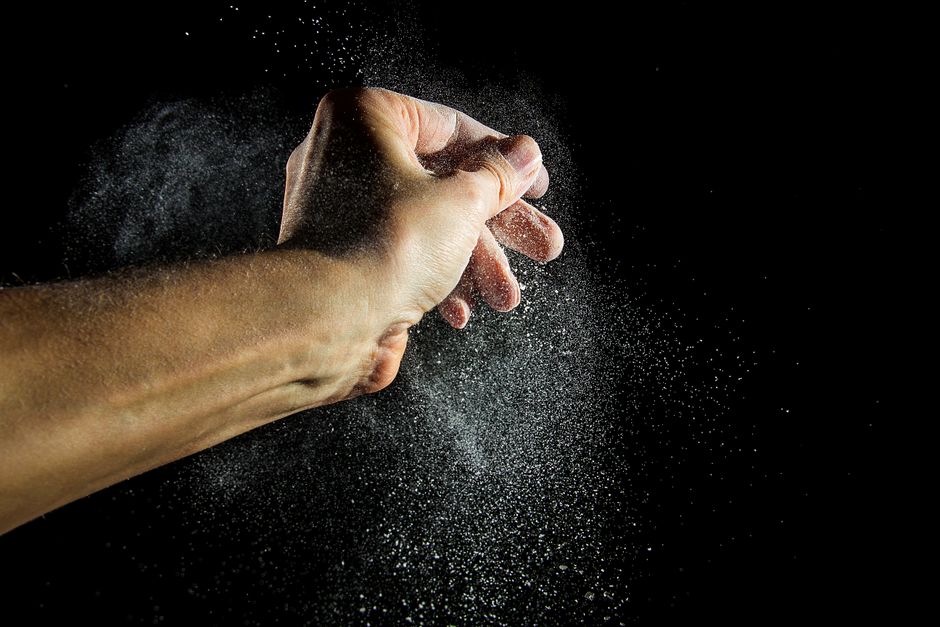
Photo by Herbert Götsch on Pexels
Think about the particles in each state:
- Solids: The particles are packed very closely together in a fixed pattern. They can only vibrate in their fixed positions. This is why solids have a definite shape and volume. They can't be easily squashed.
- Liquids: The particles are still close together, but they're not in a fixed pattern. They can slide past each other. This allows liquids to flow and take the shape of their container, but they still have a definite volume. They're also hard to squash.
- Gases: The particles are far apart and move randomly and quickly in all directions. There's a lot of empty space between them. This is why gases spread out to fill any container and can be easily compressed (squashed). They don't have a definite shape or volume.
Changing States: Melting, Freezing, Boiling, Condensing
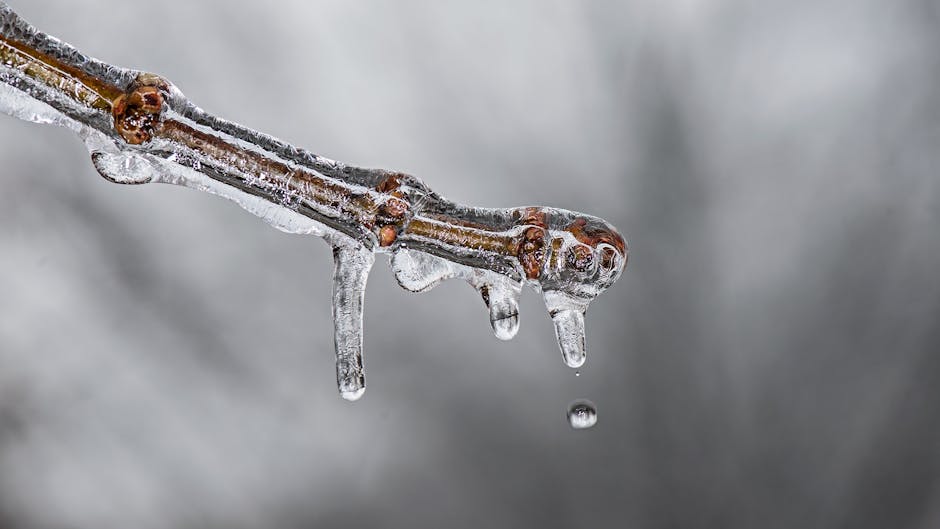
Photo by Pixabay on Pexels
You can change a substance from one state to another by adding or removing thermal energy (heat).
- Melting: When you heat a solid, its particles vibrate more vigorously. If you add enough energy, they break free from their fixed positions and start to slide past each other. The solid turns into a liquid. The temperature at which this happens is called the melting point.
- Freezing: This is the opposite of melting. When you cool a liquid, its particles slow down. If you remove enough energy, they settle into fixed positions, and the liquid turns into a solid. The temperature at which this happens is the freezing point, which is the same as the melting point for a pure substance.
- Boiling/Evaporating: When you heat a liquid, its particles move faster. If you add enough energy, some particles gain enough speed to escape completely from the liquid's surface and become a gas. This is evaporation (happens at any temperature). When boiling, bubbles of gas form within the liquid and rise to the surface. The temperature at which this vigorous escape happens throughout the liquid is the boiling point.
- Condensing: This is the opposite of boiling. When you cool a gas, its particles lose energy and slow down. If you remove enough energy, they come closer together and start to slide past each other, forming a liquid.
Here's a visual way to think about how energy and particle behavior link up:
graph LR
    A["Solid (Low Energy)"] -->|Add Thermal Energy| B["Liquid"]
    B -->|Add Thermal Energy| C["Gas (High Energy)"]
    C -->|Remove Thermal Energy| B
    B -->|Remove Thermal Energy| A

    A -- "Particles Vibrate in Fixed Positions" --> SubA["Fixed Shape & Volume"]
    B -- "Particles Slide Past Each Other" --> SubB["No Fixed Shape, Fixed Volume"]
    C -- "Particles Move Randomly & Far Apart" --> SubC["No Fixed Shape & Volume"]
3. Worked Example
Let's think about water (H₂O).
At -10°C, water is ice. The water particles are tightly packed in a repeating pattern, vibrating slightly. If you try to push on ice, it resists because its particles can't move much. This is a solid.
If you add thermal energy to the ice, its temperature rises. At 0°C, the ice starts to melt. The added energy allows the water particles to break free from their fixed positions and start sliding past each other. You now have liquid water and possibly some remaining ice. This is the melting point.
Continue adding thermal energy, and all the ice will turn into liquid water. The temperature will rise above 0°C. The liquid water particles are still close, but they're constantly moving and bumping into each other, allowing the water to flow and fill the bottom of a glass. This is a liquid.
Keep heating the liquid water. Its temperature rises until it reaches 100°C. At this point, the water starts to boil. The particles gain enough energy to completely separate from each other and move far apart, becoming water vapor. Bubbles form throughout the liquid and rise. This is the boiling point.
If you collect this water vapor and cool it down, the particles lose energy, slow down, and come back together, forming liquid water again. This is condensation.
4. Key Takeaways
- Everything is made of tiny particles that are always in motion.
- The state of matter (solid, liquid, gas) depends on how particles are arranged and how much they move.
- Solids have tightly packed, vibrating particles, giving them a fixed shape and volume.
- Liquids have closely packed particles that slide past each other, giving them a fixed volume but no fixed shape.
- Gases have widely spaced, rapidly moving particles, with no fixed shape or volume.
- Adding or removing thermal energy causes substances to change state (e.g., melting, boiling, freezing, condensing).
- Melting and freezing points, and boiling and condensing points, are specific temperatures for pure substances.
Common mistakes you should avoid:
- Thinking that particles in a solid aren't moving at all; they're always vibrating.
- Confusing evaporation (slow process at any temperature) with boiling (fast process at a specific temperature).
- Assuming that when a substance melts or boils, the temperature keeps rising; it stays constant at the melting/boiling point until the state change is complete.
- Believing there's a different "type" of particle for each state; it's the same particle, just behaving differently.
5. Now Try It
Choose a common substance like chocolate, butter, or candle wax. Describe in your own words what happens to its particles as you heat it from solid to liquid, and then what happens if you let it cool back down to solid. Focus on how the particle arrangement and movement change at each stage. What would you call the temperatures where these changes happen?
What success looks like: You'll be able to clearly explain the particle behavior at each stage (solid, liquid, and the transitions between them) using terms like "vibrating," "sliding past," "fixed positions," "lose energy," and correctly identify the phase change names.
Frequently asked about States of Matter and Particle Theory
Study this next
Get the full https://www.scribd.com/document/541122992/Cupdf-com-Cambridge-Checkpoint-Science-Coursebook-7 curriculum
Clone the complete plan to your dashboard for unlimited AI-generated notes, practice quizzes, and a personalised revision schedule.
Create Free Account