Mechanisms of Genetic Change
From the genetic variation curriculum
Mechanisms of Genetic Change
TL;DR
Genetic change, or variation, arises primarily from mutations and recombination events that alter an organism's DNA. These changes can be small, like a single base pair swap, or large, involving entire chromosome sections. Understanding these mechanisms is key to explaining evolution, disease, and individual differences.
1. The Mental Model
Think of your DNA as a vast instruction manual for building and running your body. Genetic change is like editing that manual. Sometimes it's a tiny typo, sometimes it's copying and pasting whole chapters in a new order, and sometimes it's even accidentally adding or removing entire pages.
2. The Core Material
Genetic variation is the raw material for evolution. Without it, populations wouldn't be able to adapt to changing environments. Let's break down the main ways this variation arises.
2.1. Mutation
Mutations are random changes to the DNA sequence. They can happen spontaneously during DNA replication or be induced by environmental factors (mutagens).
-
Point Mutations: These are changes at a single nucleotide base.
- Substitution: One base is swapped for another (e.g., A for G). This can be silent (no change in protein), missense (changes one amino acid), or nonsense (creates a premature stop codon).
- Insertion/Deletion (Indel): Adding or removing one or more nucleotides. If it's not a multiple of three, it causes a frameshift mutation, completely changing the downstream protein sequence.
-
Chromosomal Mutations: Larger scale changes involving whole chromosomes or large segments.
- Duplication: A segment of a chromosome is repeated.
- Deletion: A segment of a chromosome is lost.
- Inversion: A segment of a chromosome is reversed end-to-end.
- Translocation: A segment of one chromosome breaks off and attaches to another chromosome.
2.2. Recombination
Recombination is the process by which genetic material is exchanged between different chromosomes or different regions within the same chromosome. It shuffles existing alleles (different versions of a gene) into new combinations.
- Crossing Over: During meiosis (the cell division that produces sperm and egg cells), homologous chromosomes (one from mom, one from dad) pair up. Sections of these chromosomes can physically swap, creating new combinations of alleles on each chromatid. This is a major source of genetic diversity in sexually reproducing organisms.
- Independent Assortment: Also during meiosis, the homologous chromosomes align randomly before separating. This means that the combination of maternal and paternal chromosomes in the resulting gametes is highly variable, further scrambling the genetic deck.
2.3. Gene Flow
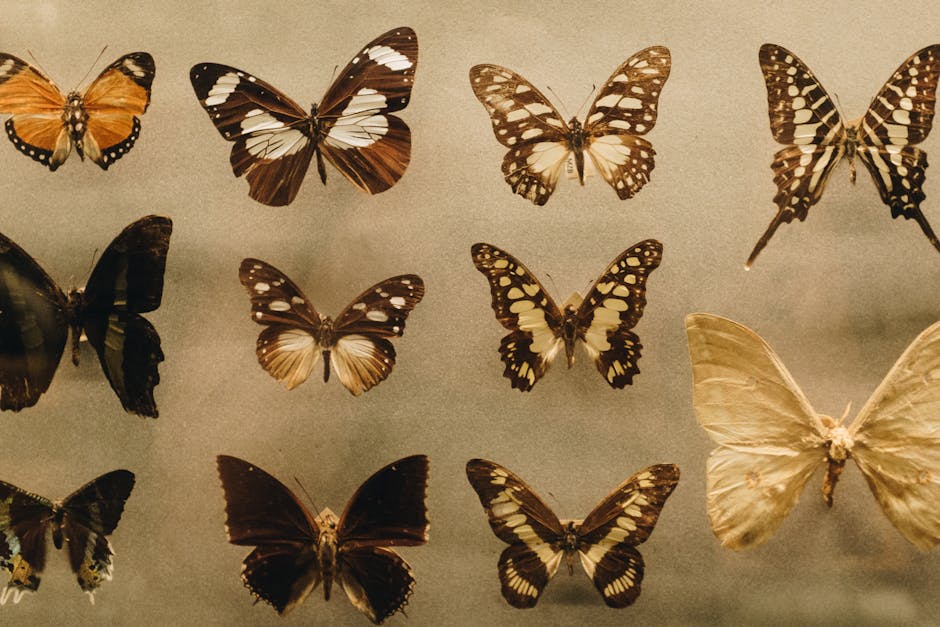
Photo by Cátia Matos on Pexels
Gene flow (or migration) is the transfer of genetic material from one population to another. If individuals move between populations and interbreed, they introduce new alleles or change the frequency of existing alleles in the recipient population, increasing its genetic diversity.
2.4. Genetic Drift

Photo by Google DeepMind on Pexels
Genetic drift is the change in allele frequencies in a population due to random chance. This effect is much more pronounced in small populations.
* Bottleneck Effect: A drastic reduction in population size (e.g., due to a natural disaster) can lead to a random subset of alleles surviving, reducing genetic diversity.
* Founder Effect: A small group of individuals breaks away from a larger population to establish a new one. The genetic makeup of the new population will reflect only the alleles present in the founders, often differing from the original population.
Here's how these mechanisms generally contribute to genetic variation:
graph TD
    A["Original DNA Sequence"] --> B["Mutation (e.g., Substitution, Indel)"]
    A --> C["Recombination (Crossing Over)"]
    A --> D["Recombination (Independent Assortment)"]
    E["Existing Population"] --> F["Gene Flow (Migration)"]
    E --> G["Genetic Drift (Random Chance)"]
    B --> H["Altered DNA Sequence / Allele"]
    C --> I["New Combination of Alleles"]
    D --> J["New Combination of Chromosomes"]
    F --> K["New Alleles / Frequencies in Population"]
    G --> L["Changed Allele Frequencies (especially in small populations)"]
    H & I & J & K & L --> M["Increased Genetic Variation"]
3. Worked Example
Imagine a gene that determines eye color, with two alleles: 'B' for brown and 'b' for blue.
Let's say a specific DNA sequence in the 'B' allele is ...TA**C**TGG... which codes for a protein that produces brown pigment.
-
Point Mutation (Substitution): During DNA replication, a mistake occurs, and the
CinTACTGGis accidentally replaced by anA. The new sequence becomes...TA**A**TGG.... If this new sequence leads to a non-functional protein, it might result in blue eyes (effectively 'b' allele). This is a new allele created by mutation. -
Crossing Over: Now, consider an individual who inherited one chromosome with the 'B' allele and another homologous chromosome with the 'b' allele. During meiosis, if crossing over happens between the gene for eye color and another nearby gene, say for hair color, new combinations (e.g., brown eyes with red hair, or blue eyes with black hair) can be passed on to the offspring, even if those specific combinations weren't present on either of the original chromosomes.
These two examples show how new genetic material can arise (mutation) and how existing material can be shuffled into new combinations (recombination).
4. Key Takeaways
- Genetic variation is essential for evolution and provides the diversity within and between species.
- Mutations are random changes to DNA sequences, creating new alleles, from single base changes to large chromosomal alterations.
- Recombination shuffles existing alleles into novel combinations through crossing over and independent assortment during meiosis.
- Gene flow introduces new alleles into a population through migration and interbreeding.
- Genetic drift causes random fluctuations in allele frequencies, especially impactful in small populations via bottleneck and founder effects.
- These mechanisms are independent but often act together to shape the genetic landscape of populations.
-
Not all genetic changes are beneficial; many are neutral or even harmful.
-
Common mistakes:
- Confusing mutation with recombination: Mutation creates new alleles; recombination shuffles existing ones.
- Thinking genetic drift is adaptation: Drift is random change, not driven by selection for beneficial traits.
- Underestimating the role of small populations: Genetic drift has a much stronger effect in smaller groups.
- Believing all mutations are bad: Many are neutral, and some are beneficial, providing raw material for evolution.
5. Now Try It
Take a common human trait, like blood type (A, B, O). Think about how each of the mechanisms of genetic change (mutation, recombination, gene flow, genetic drift) could have played a role in establishing and maintaining the diversity of blood types we see in human populations today. Write a short paragraph (5-7 sentences) for each mechanism explaining its potential contribution to blood type variation.
Success looks like: You've clearly connected each mechanism to a plausible scenario for how it could influence the prevalence or creation of A, B, or O alleles, demonstrating your understanding beyond just defining the terms.
Frequently asked about Mechanisms of Genetic Change
Study this next
Get the full genetic variation curriculum
Clone the complete plan to your dashboard for unlimited AI-generated notes, practice quizzes, and a personalised revision schedule.
Create Free Account