Consequence Assessment
From the API 580 curriculum
Consequence Assessment
TL;DR
Consequence assessment in API 580 helps you understand the potential impact of a failure, focusing on safety, environmental harm, and financial loss. It's a crucial step in risk assessment, as it quantifies "how bad" things could get if equipment fails. You'll primarily use established methodologies and company-specific data to estimate these impacts.
1. The Mental Model
Think of consequence assessment as figuring out the worst-case scenario (and then some less severe ones) if something goes wrong with your equipment. It's about answering "what if?" for safety, the environment, and your wallet, so you can make informed decisions about managing risks.
2. The Core Material
Consequence assessment is one half of the risk equation (Risk = Probability x Consequence). You're trying to quantify the negative outcomes if an equipment failure occurs. This isn't just about the immediate damage; it also includes secondary effects like business interruption or reputational harm.
API 580 primarily focuses on three main types of consequences:
2.1. Safety Consequences (Personnel Injury/Fatality)

Photo by Elif on Pexels
This evaluates the potential for harm to people. It considers factors like:
* Release amount and type: How much of a hazardous substance is released, and what are its properties (flammable, toxic, explosive)?
* Dispersion: How far and wide could the substance spread?
* Vulnerability of personnel: How many people could be exposed, and how close are they?
* Mitigation systems: What safety systems (e.g., fire suppression, alarms, emergency shutdowns) are in place to reduce harm?
You'll often use consequence modeling software or established tables to estimate injury potential or potential fatalities based on scenarios like fires, explosions, or toxic gas releases.
2.2. Environmental Consequences
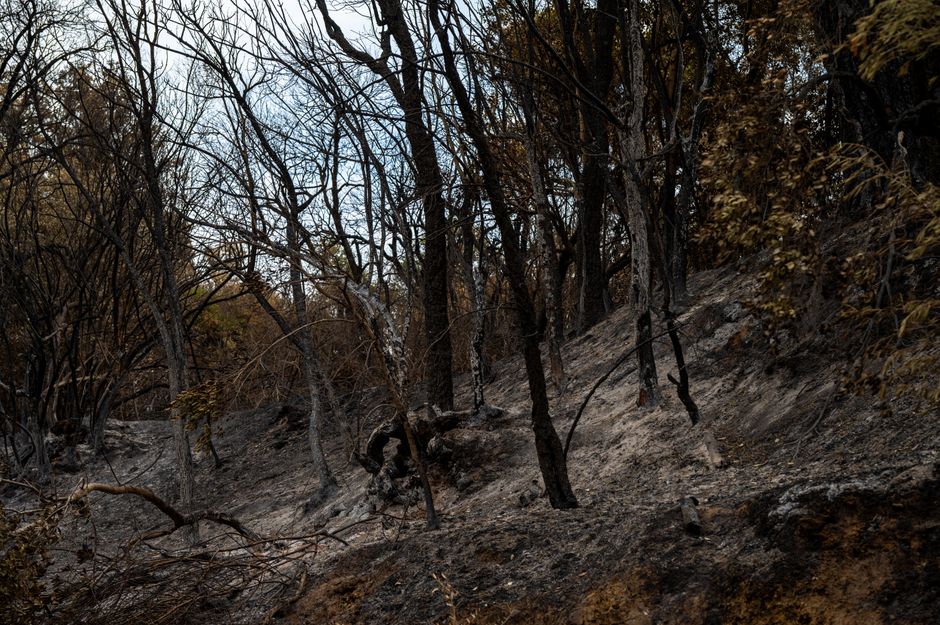
Photo by Christian Palau on Pexels
This assesses the potential damage to the environment, such as soil contamination, water pollution, or air quality degradation. Key considerations include:
* Type and quantity of release: Is it oil, chemicals, or other pollutants? How much?
* Environmental sensitivity: Is the area near sensitive ecosystems (e.g., wetlands, rivers, protected species habitats)?
* Cleanup costs: What would it cost to remediate the damage?
* Regulatory fines: What penalties could be imposed for environmental violations?
2.3. Financial Consequences (Business Interruption & Asset Damage)

Photo by Brett Jordan on Pexels
This covers the economic impact of a failure. It often includes:
* Repair/Replacement costs: What does it cost to fix or replace the damaged equipment?
* Production loss: How much revenue is lost due to downtime?
* Business interruption: Costs associated with delayed projects, lost contracts, or supply chain disruptions.
* Indirect costs: Legal fees, public relations, increased insurance premiums.
To systematically approach this, you typically follow a process:
graph TD
    A["Identify Failure Scenario (e.g., Leak, Rupture)"] --> B["Determine Hazardous Material & Conditions"];
    B --> C["Estimate Release Characteristics (Size, Rate, Duration)"];
    C --> D{"Assess Potential Impacts"};
    D --> D1["Safety (Personnel)"];
    D --> D2["Environmental"];
    D --> D3["Financial (Asset, Business)"];
    D1 --> E["Quantify Safety Consequence (e.g., Fatalities, Injuries)"];
    D2 --> F["Quantify Environmental Consequence (e.g., Cleanup Cost, Fines)"];
    D3 --> G["Quantify Financial Consequence (e.g., Repair Cost, Lost Production)"];
    E & F & G --> H["Combine/Summarize Consequences"];
2.4. Consequence Categories

Photo by Jan van der Wolf on Pexels
Many companies use consequence categories (e.g., "Minor," "Moderate," "Major," "Catastrophic") to simplify communication and decision-making. These categories are usually defined by specific thresholds for fatalities, environmental damage, or financial loss. For example, a "Major" safety consequence might be defined as 1-3 fatalities, while "Catastrophic" might be 4+ fatalities.
3. Worked Example
Let's consider a scenario: a small leak develops in a crude oil pipeline in a remote, unpopulated area.
- Failure Scenario: Small hole (e.g., 0.5-inch diameter) in a crude oil pipeline.
- Hazardous Material & Conditions: Crude oil, operating pressure 800 psi, temperature 60°F.
- Release Characteristics:
- Estimate a release rate: A 0.5-inch hole at 800 psi could release several barrels per hour. Let's assume 10 bbl/hr.
- Duration: If not detected immediately, it could release for several hours or days. Assume 24 hours before detection and isolation.
- Total release: 10 bbl/hr * 24 hr = 240 barrels (approx. 10,000 gallons).
-
Assess Potential Impacts & Quantify:
- Safety: The area is remote and unpopulated. The primary safety concern is for response personnel. Given crude oil's properties, flammability is a risk, but immediate public exposure is low. Safety Consequence: Low (potential injury to responders).
- Environmental: 240 barrels of crude oil released into soil. No immediate water bodies are impacted, but soil contamination is certain. Remediation will be required.
- Environmental Consequence: Medium (significant soil contamination, requires extensive cleanup).
- Financial:
- Repair cost for pipeline: $50,000 (welding, NDE).
- Cleanup cost: Excavation, soil treatment, disposal. Could easily be $250,000 - $1,000,000 depending on soil type and depth. Let's estimate $500,000.
- Lost production: Assume pipeline downtime of 48 hours for repair and initial assessment. If the pipeline moves 100,000 bbl/day at $70/bbl, lost revenue is 2 days * 100,000 bbl/day * $70/bbl = $14,000,000. (Note: this is lost revenue, not necessarily lost profit if production can be made up later, but it's a financial impact).
- Financial Consequence: High (significant cleanup costs, substantial lost production).
-
Summarize: This scenario, even with a small leak, presents a medium environmental consequence and a high financial consequence, primarily driven by cleanup costs and lost production. The safety consequence is relatively low due to the remote location.
4. Key Takeaways
- Consequence assessment quantifies the potential negative outcomes of an equipment failure, covering safety, environmental, and financial aspects.
- It's the "how bad can it get?" part of risk assessment.
- You consider the type and quantity of material released, its hazardous properties, and the vulnerability of people or the environment.
- Financial consequences include direct costs (repair, cleanup) and indirect costs (lost production, legal fees).
- Many companies categorize consequences (e.g., Minor, Major) to standardize risk communication.
- Mitigation systems (e.g., emergency shutdown) can significantly reduce potential consequences.
Common mistakes to avoid:
- Underestimating secondary impacts: Don't just focus on the immediate failure; consider business interruption, reputational damage, and long-term environmental effects.
- Ignoring low-probability, high-consequence events: Even if rare, these events can have devastating impacts and need proper assessment.
- Not considering all release types: A small leak has different consequences than a catastrophic rupture. Assess a range of credible scenarios.
- Using generic data when specific data is available: Always use facility-specific information (e.g., population density, environmental sensitivities, actual product values) where possible.
5. Now Try It
Pick a pressure vessel (e.g., a crude oil storage tank) at your facility. Briefly describe a plausible failure scenario (e.g., a tank bottom leak or an overflow). Then, list at least two potential safety, two environmental, and two financial consequences that could result from that failure. For each consequence, briefly explain why it's a concern in that scenario.
Success looks like: A clear description of the failure, followed by distinct, relevant consequences for each category (safety, environmental, financial) with a brief justification for each.
Frequently asked about Consequence Assessment
More from API 580
Get the full API 580 curriculum
Clone the complete plan to your dashboard for unlimited AI-generated notes, practice quizzes, and a personalised revision schedule.
Create Free Account