Damage Mechanisms and Failure Modes
From the API 580 curriculum
Damage Mechanisms and Failure Modes
TL;DR
Understanding damage mechanisms (DMs) and failure modes is crucial for predicting how equipment can fail and preventing it. DMs describe how material degrades, while failure modes describe how equipment ceases to perform its function. Identifying these helps you assess risks and develop effective inspection strategies.
1. The Mental Model
Think of it like a car. A "damage mechanism" is like rust forming on the frame. A "failure mode" is like a wheel falling off because that rust weakened the attachment point. One causes the other, and knowing both helps you keep the car safe.
2. The Core Material
In API 580, you'll extensively deal with Damage Mechanisms (DMs) and Failure Modes (FMs). They're distinct but interconnected concepts essential for Risk-Based Inspection (RBI).
What's a Damage Mechanism (DM)?
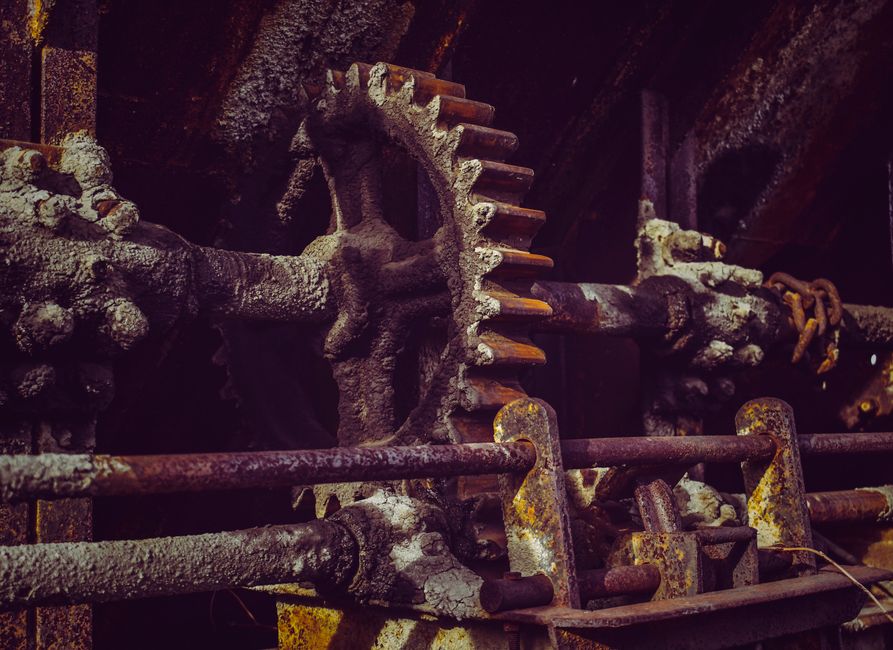
Photo by Chris F on Pexels
A DM is a process that causes material degradation, leading to a reduction in thickness, strength, or other useful properties of a component. These are the "enemies" of your equipment. Examples include:
- Corrosion: Uniform, pitting, crevice, erosion-corrosion.
- Cracking: Stress corrosion cracking (SCC), fatigue, brittle fracture.
- Metallurgical Changes: Hydrogen embrittlement, temper embrittlement.
- Mechanical Degradation: Creep, erosion, thermal fatigue.
You'll find detailed descriptions of many DMs in API 571, "Damage Mechanisms Affecting Fixed Equipment in the Refining Industry." This is your go-to resource for understanding the cause and nature of degradation.
What's a Failure Mode (FM)?

Photo by Ann H on Pexels
A failure mode describes how an item fails to perform its required function. It's the consequence of a damage mechanism reaching a critical point. A single DM can lead to multiple failure modes, and multiple DMs can contribute to a single failure mode. Examples include:
- Loss of containment: A pipe leaks or ruptures.
- Loss of structural integrity: A vessel collapses or deforms.
- Loss of function: A valve can no longer open or close properly.
- Reduced efficiency: A heat exchanger fouls excessively.
The Relationship: DM → FM

Photo by Gratisography on Pexels
It's a cause-and-effect relationship. A DM is the cause of degradation, and a failure mode is the effect or outcome when that degradation becomes critical. Identifying the potential DMs allows you to predict the likely FMs, which then informs your inspection planning.
Here's a simple flow of how you might think about them:
graph LR
    A["Operating Conditions (Temperature, Pressure, Media)"] --> B["Identify Potential Damage Mechanisms (e.g., Corrosion, Cracking)"]
    B --> C{"Severity & Rate of DM?"}
    C -- "High" --> D["Predict Consequence: Failure Mode (e.g., Loss of Containment)"]
    C -- "Low" --> E["Monitor DM (Inspection)"]
    D --> F["Assess Risk & Develop Mitigation/Inspection Plans"]
Criticality and Context

Photo by Markus Winkler on Pexels
The same DM can have different FMs depending on the component. For example, uniform corrosion on a pipe wall could lead to "loss of containment" (a leak), while on a structural support, it might lead to "loss of structural integrity" (a collapse). Always consider the specific component and its function when determining FMs.
3. Worked Example
Imagine you're assessing a carbon steel pipe carrying dilute sulfuric acid at ambient temperature.
- Identify Potential DMs: Based on API 571 and material compatibility charts, you'd likely identify general corrosion (acid attack) and possibly erosion-corrosion if flow rates are high or there are solids. If welding was poor, preferential weld corrosion might also be a concern.
- Select Most Likely DM: Let's focus on general corrosion as the primary concern for dilute sulfuric acid in carbon steel.
- Determine Failure Mode(s): For a pipe, general corrosion thinning its wall will most directly lead to loss of containment (leak or rupture) due to pressure. If the thinning is severe enough near a support, it could also contribute to loss of structural integrity if the pipe sags or collapses, though containment loss is usually the immediate concern for pressurized piping.
- Implication for RBI: Knowing this, you'd prioritize thickness measurements (e.g., ultrasonic testing) at locations prone to corrosion, such as downstream of elbows or low points, to detect thinning before a leak occurs.
4. Key Takeaways
- Damage mechanisms are the how material degrades; failure modes are the what happens when it fails.
- API 571 is your primary reference for understanding specific damage mechanisms.
- A single DM can cause multiple FMs, and multiple DMs can contribute to one FM.
- Always consider the component's function when defining its failure modes.
- Understanding this link is fundamental for accurate risk assessment and inspection planning.
- Your goal is to predict FMs based on DMs to prevent unexpected failures.
Common Mistakes to Avoid
- Confusing DMs and FMs: Don't use them interchangeably. "Corrosion" isn't a failure mode; "loss of containment" is.
- Ignoring operating conditions: Always link DMs to the specific environment and process.
- Overlooking secondary DMs: Focus on the most obvious, but don't forget less common ones that could still be relevant.
- Not considering all potential FMs: Think broadly about how a component's function could be impaired.
5. Now Try It
You're evaluating a stainless steel heat exchanger tube bundle exposed to chloride-containing cooling water on the shell side and clean process fluid on the tube side.
What to do:
1. List at least two likely damage mechanisms for the heat exchanger tubes, considering both the shell side and the tube side environments.
2. For each identified damage mechanism, describe the most probable corresponding failure mode for the heat exchanger tube.
3. Briefly explain why knowing these DMs and FMs helps you decide on inspection methods.
What success looks like: You've correctly identified specific DMs relevant to stainless steel in a chloride environment (e.g., chloride stress corrosion cracking, pitting) and linked them to failure modes like "loss of containment" or "intermixing of fluids," explaining that these insights guide selection of techniques like eddy current or visual inspection.
Frequently asked about Damage Mechanisms and Failure Modes
More from API 580
Get the full API 580 curriculum
Clone the complete plan to your dashboard for unlimited AI-generated notes, practice quizzes, and a personalised revision schedule.
Create Free Account