Introduction to Scientific Inquiry and the Nature of Science
From the SCIENCE curriculum
Introduction to Scientific Inquiry and the Nature of Science
TL;DR
Scientific inquiry is a systematic way of asking and answering questions about the natural world through observation and experimentation. It's not a rigid set of steps, but a flexible process driven by curiosity and evidence. Understanding its core principles helps you think critically and evaluate information effectively.
1. The Mental Model
Think of scientific inquiry as a detective story where you're trying to solve a mystery about how the world works. You gather clues (observations), form educated guesses (hypotheses), test those guesses, and refine your understanding based on what you find.
2. The Core Material
Scientific inquiry isn't just about memorizing facts; it's a dynamic process of discovery. It emphasizes observation, experimentation, and critical thinking. It's about building knowledge that's supported by evidence and open to revision.
The Scientific Method (A Flexible Framework)
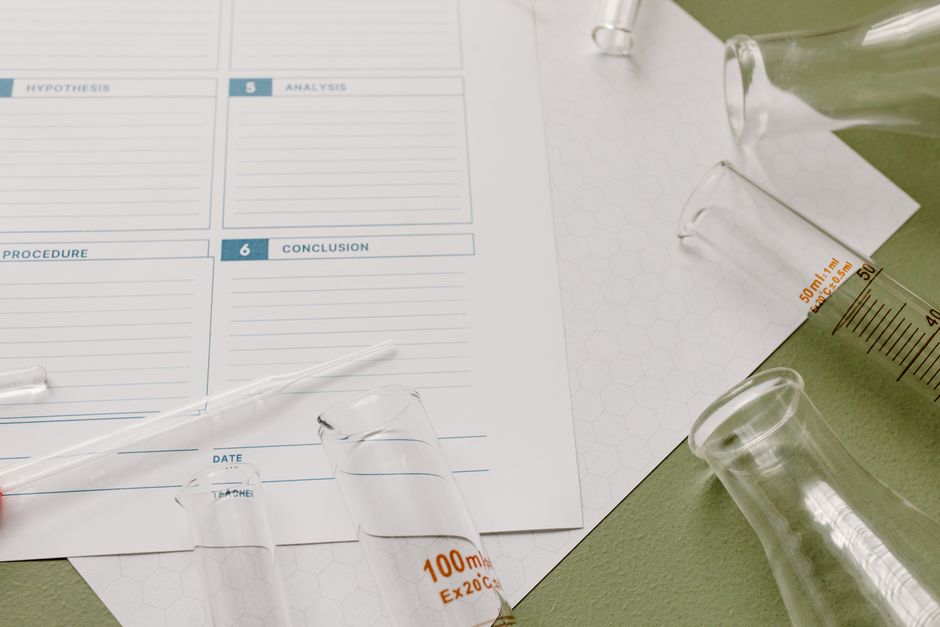
Photo by Tara Winstead on Pexels
While often presented as a linear set of steps, it's more accurate to think of the scientific method as a cycle of interconnected activities. You might jump back and forth between steps, or even start in the middle.
graph TD
    A["Ask a Question"] --> B["Do Background Research"];
    B --> C["Construct a Hypothesis"];
    C --> D["Test with an Experiment"];
    D --> E{"Analyze Data & Draw Conclusions"};
    E -- "Hypothesis Supported" --> F["Communicate Results"];
    E -- "Hypothesis Not Supported / Partially Supported" --> C;
    F --> G["Refine Question / New Questions"];
    G --> A;
- Ask a Question: This is where it all begins. It's usually a specific, testable question about a phenomenon. For example, "Does fertilizer 'X' make plants grow taller?"
- Do Background Research: Before experimenting, you'd look into what's already known about your question. This helps you understand existing theories and avoid repeating past mistakes.
- Construct a Hypothesis: A hypothesis is a testable explanation for your observation, often an "if-then" statement. For example, "If plants are given fertilizer 'X', then they will grow taller than plants not given fertilizer 'X'."
- Test with an Experiment: You design and conduct an experiment to see if your hypothesis is true. This involves careful control of variables to ensure your results are meaningful.
- Independent Variable: The thing you change (e.g., presence or absence of fertilizer 'X').
- Dependent Variable: The thing you measure (e.g., plant height).
- Controlled Variables: Everything else you keep the same (e.g., amount of water, sunlight, type of plant, soil).
- Analyze Data & Draw Conclusions: After collecting data from your experiment, you interpret it to see if it supports or refutes your hypothesis. This often involves charts, graphs, and statistical analysis.
- Communicate Results: Scientists share their findings through papers, presentations, and discussions. This allows others to review, replicate, and build upon the work.
- Refine Question / New Questions: Often, an experiment leads to more questions. Even if your hypothesis was supported, you might wonder why it was supported, leading to further investigation.
The Nature of Science
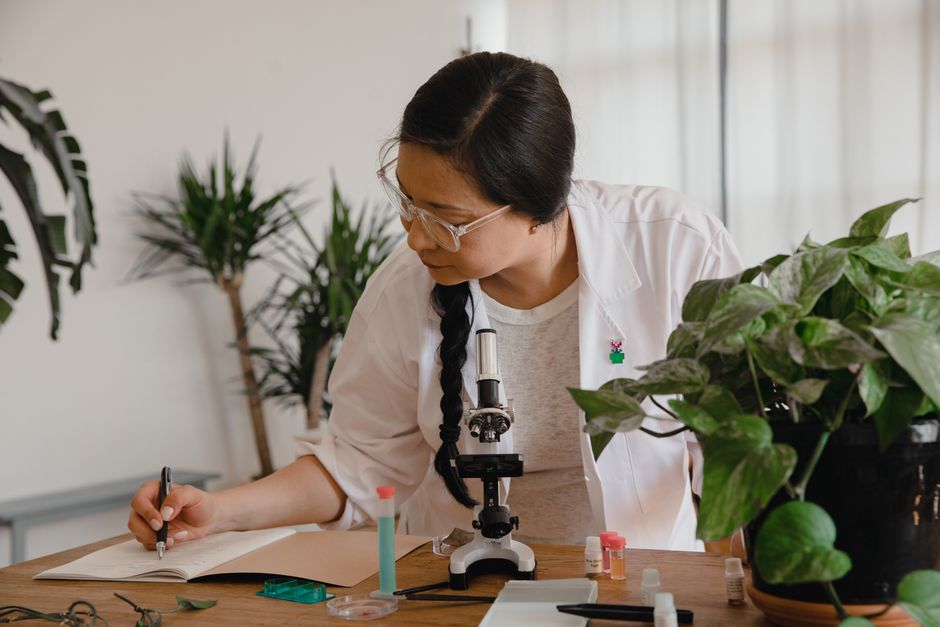
Photo by RDNE Stock project on Pexels
Science isn't about absolute truths, but about building the most reliable explanations based on current evidence.
* Empirical: Science relies on observable evidence.
* Testable: Scientific ideas (hypotheses, theories) must be testable through observation and experiment.
* Replicable: Experiments should be able to be repeated by other scientists with similar results.
* Falsifiable: A scientific hypothesis must be capable of being proven wrong. If there's no way to prove it false, it's not truly scientific.
* Tentative: Scientific knowledge is always subject to change and revision as new evidence emerges. It's never "proven" in an absolute sense, but rather "supported" by evidence.
* Objective (Aspires to be): While individual scientists have biases, the scientific process tries to minimize these through peer review, replication, and data-driven conclusions.
3. Worked Example
Let's say you notice your houseplant, a peace lily, seems to wilt faster when you put it near a sunny window compared to a shadier spot.
1. Ask a Question: Does direct sunlight make a peace lily wilt faster than indirect sunlight?
2. Background Research: You'd briefly look up peace lily care. You might find they prefer indirect light and can get "sunburn" from direct sun.
3. Construct a Hypothesis: "If a peace lily is placed in direct sunlight, then it will wilt faster than a peace lily placed in indirect sunlight."
4. Test with an Experiment:
* Get two identical peace lilies (as similar as possible in size, age, health).
* Give both the same amount of water, same soil, same pot size.
* Place one in direct sunlight (e.g., right next to a south-facing window).
* Place the other in indirect sunlight (e.g., in the middle of the room, away from direct rays).
* Observe both plants daily for a week, noting any wilting. You could even use a scale to measure water loss if you wanted to get more precise.
5. Analyze Data & Draw Conclusions:
* Observation: The plant in direct sunlight shows visible wilting by day 3, while the plant in indirect sunlight remains upright and firm.
* Conclusion: The experiment supports your hypothesis that direct sunlight causes peace lilies to wilt faster.
6. Communicate Results: You could tell a friend, "Hey, I figured out why my peace lily kept wilting!"
7. Refine Question / New Questions: Now you might wonder, "What is the ideal amount of light for a peace lily?" or "Does the temperature also play a role?"
4. Key Takeaways
- Scientific inquiry is a dynamic, iterative process, not a rigid checklist.
- It starts with a question and uses evidence to build understanding.
- Hypotheses are testable explanations, and experiments are designed to test them.
- Scientific knowledge is always open to revision based on new evidence.
- Controlling variables is crucial in experiments to ensure valid results.
- Falsifiability is a key characteristic of scientific claims; they must be able to be proven wrong.
- Replicating experiments helps ensure the reliability of findings.
Common Mistakes to Avoid:
* Confusing correlation with causation: Just because two things happen together doesn't mean one causes the other.
* Ignoring contradictory evidence: A good scientist always considers all data, even if it goes against their initial idea.
* Failing to control variables: If you change too many things in an experiment, you won't know what caused the outcome.
* Drawing conclusions without enough evidence: Don't jump to big statements based on one small experiment.
5. Now Try It
Think of a simple, everyday observation you've made (e.g., "My phone battery dies faster when I use certain apps," or "Some clothes dry faster on the clothesline than others"). Based on that observation, write down:
1. A specific, testable question.
2. A hypothesis (an "if-then" statement) that answers your question.
3. How you would briefly design an experiment to test your hypothesis, listing the independent, dependent, and at least two controlled variables.
Success looks like clearly identifying these three components for your chosen observation, demonstrating you understand the initial steps of scientific inquiry.
Frequently asked about Introduction to Scientific Inquiry and the Nature of Science
Study this next
Get the full SCIENCE curriculum
Clone the complete plan to your dashboard for unlimited AI-generated notes, practice quizzes, and a personalised revision schedule.
Create Free Account