Introduction to Biological Tissues and Homeostasis
From the Animal and plant biology curriculum
Introduction to Biological Tissues and Homeostasis
TL;DR
Biological tissues are groups of similar cells working together for a specific function. Your body maintains a stable internal environment, called homeostasis, despite external changes. This stability is crucial for your cells and tissues to function correctly.
1. The Mental Model
Think of your body as a highly organized apartment building. Different types of specialized "rooms" (tissues) are built for specific jobs, and the building's internal climate control system (homeostasis) keeps everything perfectly comfortable for all residents, no matter the weather outside.
2. The Core Material
You're made of trillions of cells, but they don't just float around randomly. They organize themselves into larger units called tissues. A tissue is a collection of similar cells that work together to perform a specific function. Your body has four main types of tissues:
2.1 Epithelial Tissue
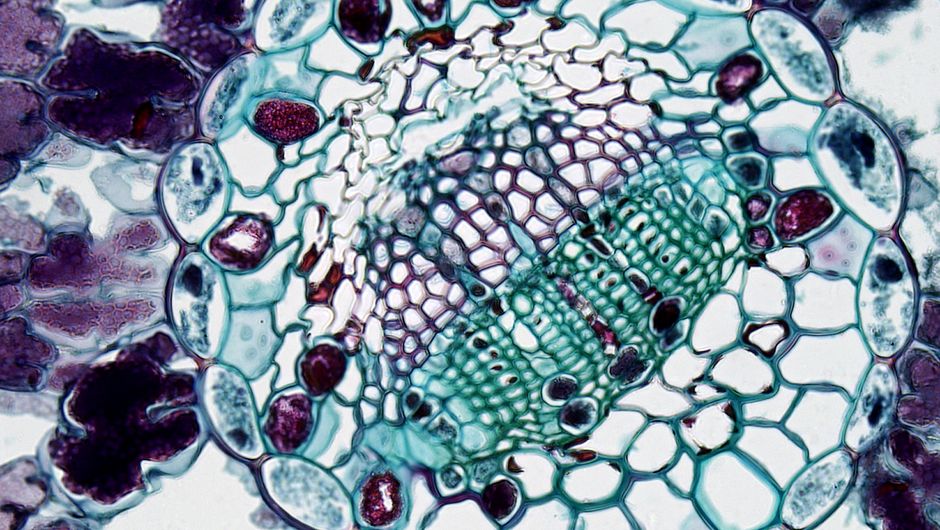
Photo by Fayette Reynolds M.S. on Pexels
This tissue forms linings and coverings. It protects you, secretes substances (like sweat or hormones), and absorbs nutrients. Think of your skin or the lining of your digestive tract. Epithelial cells are tightly packed, forming sheets.
2.2 Connective Tissue
Photo by Fayette Reynolds M.S. on Pexels
As the name suggests, this tissue connects, supports, and binds other tissues together. It's incredibly diverse, including bone, cartilage, blood, and fat. Connective tissue cells are often spread out in an extracellular matrix (a non-cellular material like collagen or fluid).
2.3 Muscle Tissue
Photo by Fayette Reynolds M.S. on Pexels
Responsible for movement, muscle tissue can contract. There are three types: skeletal muscle (moves your bones voluntarily), cardiac muscle (pumps blood in your heart, involuntarily), and smooth muscle (moves things through internal organs like your digestive tract, involuntarily).
2.4 Nervous Tissue
Photo by Fayette Reynolds M.S. on Pexels
This tissue is all about communication. It transmits electrical signals throughout your body, allowing you to sense, think, and react. Your brain, spinal cord, and nerves are all made of nervous tissue, primarily consisting of neurons.
2.5 Homeostasis
Beyond tissues, a fundamental concept in biology is homeostasis. This is your body's ability to maintain a stable internal environment despite external fluctuations. Imagine your body's internal temperature, blood sugar levels, or pH – these need to stay within narrow, healthy ranges for your cells to survive.
Most homeostatic control systems work using negative feedback. This means if a variable (like temperature) deviates from its set point, your body initiates responses that bring it back to normal.
Here's how a typical negative feedback loop works:
graph TD
    A["Stimulus (e.g., body temp rises)"] --> B["Receptor (e.g., skin/brain sensors)"]
    B --> C["Control Center (e.g., hypothalamus in brain)"]
    C --> D["Effector (e.g., sweat glands, blood vessels)"]
    D --> E["Response (e.g., sweating, vasodilation)"]
    E --> F["Variable returns to set point"]
    F --> A
2.6 Importance of Homeostasis
If homeostasis fails, your body can't function correctly, leading to illness or even death. For example, if your body temperature gets too high (hyperthermia) or too low (hypothermia), your enzymes won't work, and your cells will be damaged.
3. Worked Example
Let's consider how your body maintains normal blood glucose levels after you eat a sugary snack.
- Stimulus: You eat a candy bar, and your blood glucose levels rise above the normal range.
- Receptor: Specialized cells in your pancreas detect this increase.
- Control Center: The pancreas acts as both the receptor and the control center. It releases the hormone insulin.
- Effector: Insulin travels through your bloodstream to target cells (like liver and muscle cells). These cells respond by taking up glucose from the blood. The liver also converts excess glucose into glycogen for storage.
- Response: Blood glucose levels decrease as cells absorb glucose and the liver stores it.
- Return to set point: Blood glucose levels return to their normal, healthy range, signaling the pancreas to reduce insulin secretion. This is a classic negative feedback loop.
4. Key Takeaways
- Tissues are organized groups of similar cells working together for specific functions.
- The four main tissue types are epithelial, connective, muscle, and nervous tissue.
- Epithelial tissue covers and lines, connective tissue supports, muscle tissue moves, and nervous tissue communicates.
- Homeostasis is your body's ability to maintain stable internal conditions.
- Negative feedback loops are the primary mechanism for maintaining homeostasis.
- Maintaining stable internal conditions is vital for cell and organ function.
Common Mistakes to Avoid:
- Don't confuse an organ with a tissue; organs are made of multiple tissue types.
- Don't think of homeostasis as a static state; it's a dynamic equilibrium.
- Don't assume all feedback loops are negative; some (like childbirth) are positive feedback.
- Don't forget that blood is a type of connective tissue.
5. Now Try It
Think about how your body regulates its internal temperature when you step outside on a cold day. In 3-4 sentences, describe the stimulus, receptor, control center, effector, and response in this negative feedback loop. What would happen if this system failed?
Frequently asked about Introduction to Biological Tissues and Homeostasis
Study this next
Get the full Animal and plant biology curriculum
Clone the complete plan to your dashboard for unlimited AI-generated notes, practice quizzes, and a personalised revision schedule.
Create Free Account