Introduction to Scientific Inquiry and Measurement
From the Science curriculum
Introduction to Scientific Inquiry and Measurement
TL;DR
Scientific inquiry is a systematic way of exploring the world and answering questions, relying on observation, experimentation, and logical reasoning. Measurement is crucial in science because it provides objective data to test ideas and make accurate conclusions. Understanding both helps you approach problems like a scientist.
1. The Mental Model
Think of scientific inquiry as detective work: you observe something puzzling, form a guess about why it's happening, and then design ways to test your guess using evidence. Measurement is how you collect that precise evidence.
2. The Core Material
Scientific inquiry isn't just a set of steps; it's a way of thinking that helps you understand the natural world. It often starts with an observation that leads to a question.
The Scientific Method (Simplified)

Photo by Polina Tankilevitch on Pexels
You'll often hear about the "scientific method," but it's more of a general framework than a rigid set of rules. Here's a common sequence:
- Observation: You notice something interesting or a problem.
- Question: You ask "Why?" or "How?" about your observation.
- Hypothesis: You form a testable explanation or educated guess to answer your question. This isn't just any guess; it needs to be something you can prove or disprove.
- Prediction: Based on your hypothesis, you predict what will happen if your hypothesis is true.
- Experiment/Investigation: You design and conduct a way to test your prediction and hypothesis, often involving careful measurements.
- Analysis: You look at the data you collected and figure out what it means.
- Conclusion: You decide if your data supports or refutes your hypothesis.
It's important to know that this process isn't always linear. You might go back and refine your question or hypothesis based on your results.
graph TD
    A["Observe a Phenomenon"] --> B["Ask a Question"]
    B --> C["Form a Hypothesis"]
    C --> D["Make a Prediction (If...then...)"]
    D --> E["Design & Conduct Experiment"]
    E --> F["Analyze Data"]
    F --> G["Draw a Conclusion"]
    G --> H{{"Hypothesis Supported?"}}
    H -- "Yes" --> I["Communicate Results"]
    H -- "No" --> C
The Importance of Measurement
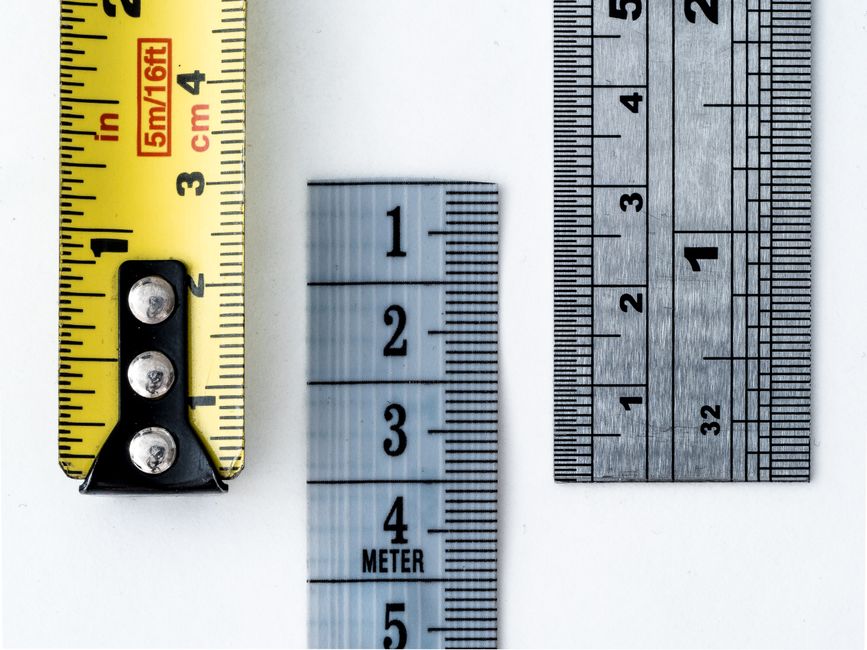
Photo by William Warby on Pexels
Measurement is how we turn observations into objective, quantifiable data. Without it, science would just be a collection of opinions. Good measurements allow you to:
- Be precise: Know exactly how much, how long, how hot, etc.
- Compare results: See if one thing is bigger or smaller than another, or if a change occurred.
- Test hypotheses: Use numbers to support or refute your ideas.
- Reproduce experiments: Others can repeat your work and get similar results if your measurements are clear.
Key Aspects of Measurement

Photo by RDNE Stock project on Pexels
- Units: Always use appropriate units (e.g., meters for length, seconds for time, grams for mass). The International System of Units (SI) is the standard in science.
- Accuracy vs. Precision:
- Accuracy is how close a measurement is to the true value.
- Precision is how close multiple measurements are to each other (even if they're all wrong). You want both!
- Uncertainty/Error: No measurement is perfect. There's always some uncertainty. Recognizing and reporting this is a sign of good scientific practice. For example, a measurement might be "$2.5 \pm 0.1$ cm."
3. Worked Example
Let's say you notice that your houseplant isn't growing as fast as you'd like (Observation). You ask, "Does giving my plant more light make it grow taller?" (Question).
Your hypothesis might be: "If I give my houseplant more light, then it will grow taller."
Your prediction is: "A plant exposed to 12 hours of light per day will grow more in a month than a plant exposed to 6 hours of light per day."
To test this, you'd design an experiment:
- Get two identical plants (let's call them Plant A and Plant B).
- Place Plant A under a grow light for 12 hours a day.
- Place Plant B under a grow light for 6 hours a day.
- Keep all other conditions (water, temperature, soil) the same for both plants.
- Measure the height of each plant daily for 30 days using a ruler.
After 30 days, you collect your data:
- Plant A (12 hours light): Started at 15 cm, ended at 20 cm. Growth = 5 cm.
- Plant B (6 hours light): Started at 15 cm, ended at 17 cm. Growth = 2 cm.
Analysis: Plant A grew 5 cm, and Plant B grew 2 cm.
Conclusion: Your data supports your hypothesis that more light leads to more growth in this specific plant under these conditions. You'd then communicate these results, perhaps noting the limitations (e.g., only two plants, one type of plant).
4. Key Takeaways
- Scientific inquiry is a systematic, evidence-based approach to understanding the world.
- The scientific method provides a flexible framework for investigation, starting with observations and leading to testable hypotheses.
- Measurement transforms qualitative observations into objective, quantifiable data.
- Always include appropriate units with your measurements, usually from the SI system.
- Accuracy refers to how close a measurement is to the true value, while precision is how repeatable measurements are.
- Recognize that all measurements have some degree of uncertainty or error.
Common Mistakes to Avoid

Photo by KATRIN BOLOVTSOVA on Pexels
- Confusing hypothesis with a guess: A hypothesis is an educated, testable explanation, not just a random guess.
- Ignoring units: A number without units is meaningless in science (e.g., "5" isn't helpful without "5 cm" or "5 kg").
- Making conclusions without data: Don't jump to conclusions before analyzing your measurements.
- Letting bias influence results: Try to remain objective when observing and measuring, even if you hope for a certain outcome.
5. Now Try It
Think of a simple, everyday observation you've made that sparked a question (e.g., "Why does ice melt faster in some drinks than others?"). Formulate a hypothesis and a prediction based on that observation. Then, outline a simple experiment you could do at home to test your prediction, making sure to identify at least one specific measurement you would take.
Success looks like: A clear observation, a testable hypothesis with a specific prediction, and a plan that includes a measurable outcome.
Frequently asked about Introduction to Scientific Inquiry and Measurement
Get the full Science curriculum
Clone the complete plan to your dashboard for unlimited AI-generated notes, practice quizzes, and a personalised revision schedule.
Create Free Account