Introduction to Cell Structure and Organelles
From the biol curriculum
Introduction to Cell Structure and Organelles
TL;DR
Cells are the basic building blocks of all living things, and they're broadly divided into prokaryotes (simple) and eukaryotes (complex). Inside eukaryotic cells, specialized compartments called organelles each perform specific jobs to keep the cell alive and functioning. Understanding these structures helps you grasp how biological systems work at their most fundamental level.
1. The Mental Model
Think of a cell like a tiny, bustling city. Each organelle is a different building or department within that city, all working together for the city's survival. Some make energy, some manage waste, and others handle communication or construction.
2. The Core Material
You'll encounter two main types of cells: prokaryotic and eukaryotic.
Prokaryotic Cells

Photo by turek on Pexels
These are the simplest and oldest forms of life, like bacteria. They're basically a single room with a few necessities. They don't have a nucleus (their genetic material, DNA, floats freely in an area called the nucleoid) and lack most of the specialized, membrane-bound organelles found in more complex cells. They do have a cell wall (for protection and shape), a cell membrane (controls what goes in and out), cytoplasm (the jelly-like filling), and ribosomes (for making proteins).
Eukaryotic Cells
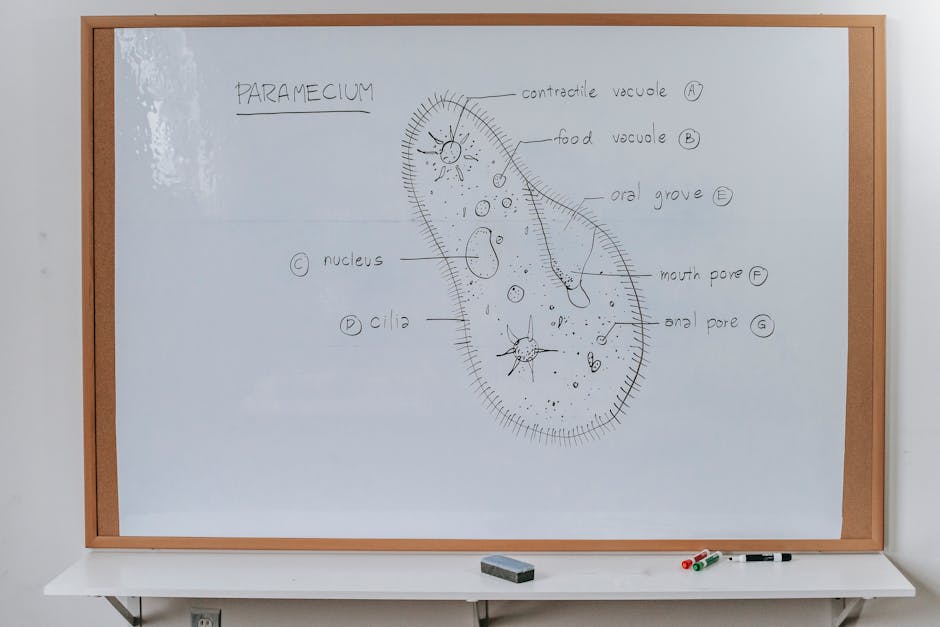
Photo by Katerina Holmes on Pexels
These are much more complex and include animal, plant, fungal, and protist cells. The defining feature is the presence of a true nucleus that houses the DNA, and many other membrane-bound organelles that specialize in different tasks.
Here's a breakdown of key eukaryotic organelles:
- Nucleus: The cell's command center. It contains your genetic material (DNA) organized into chromosomes. It controls cell growth, metabolism, and reproduction by directing protein synthesis.
- Mitochondria: The cell's power plants. These organelles generate most of the cell's supply of adenosine triphosphate (ATP), which is used as a source of chemical energy, through a process called cellular respiration. They have their own small circular DNA.
- Ribosomes: These aren't membrane-bound, but they're crucial. They're the protein factories, translating genetic information from RNA into proteins. You'll find them free in the cytoplasm or attached to the endoplasmic reticulum.
- Endoplasmic Reticulum (ER): A network of membranes involved in protein and lipid synthesis.
- Rough ER: Covered with ribosomes, it processes and folds proteins that are destined for secretion or insertion into membranes.
- Smooth ER: Lacks ribosomes, involved in lipid synthesis, detoxification of drugs and poisons, and storage of calcium ions.
- Golgi Apparatus (or Golgi Complex/Body): The cell's postal service. It modifies, sorts, and packages proteins and lipids made in the ER into vesicles for secretion or delivery to other organelles.
- Lysosomes: The recycling centers (primarily in animal cells). They contain digestive enzymes that break down waste materials, cellular debris, and foreign invaders.
- Peroxisomes: Small organelles that contain enzymes involved in metabolic reactions, producing hydrogen peroxide as a byproduct, which they then convert to water and oxygen.
- Vacuoles: Storage sacs (especially prominent in plant cells). In plants, a large central vacuole maintains turgor pressure, stores nutrients and waste, and performs similar digestive functions to lysosomes.
- Chloroplasts: Found only in plant cells and some algae. These are the sites of photosynthesis, converting light energy into chemical energy (sugars). Like mitochondria, they have their own DNA.
- Cell Wall: (Plants, fungi, some protists) A rigid outer layer that provides structural support, protection, and prevents excessive water uptake. Animal cells don't have one.
- Cytoskeleton: A network of protein filaments and tubules in the cytoplasm, giving the cell shape, enabling movement, and helping in intracellular transport. It includes microtubules, microfilaments, and intermediate filaments.
graph TD
    A["Cell Type"] --> B["Prokaryotic (e.g., Bacteria)"]
    A --> C["Eukaryotic (e.g., Animal, Plant, Fungi)"]

    B --> B1["No Nucleus"]
    B --> B2["DNA in Nucleoid"]
    B --> B3["Few Organelles (e.g., Ribosomes)"]
    B --> B4["Cell Wall (often)"]

    C --> C1["True Nucleus (DNA inside)"]
    C --> C2["Membrane-Bound Organelles"]

    C2 --> C2a["Mitochondria (Energy)"]
    C2 --> C2b["Endoplasmic Reticulum (Protein/Lipid synthesis)"]
    C2b --> C2b1["Rough ER (Ribosomes, Protein folding)"]
    C2b --> C2b2["Smooth ER (Lipids, Detox)"]
    C2 --> C2c["Golgi Apparatus (Modify, Sort, Package)"]
    C2 --> C2d["Lysosomes (Recycling - Animal)"]
    C2 --> C2e["Vacuoles (Storage, Turgor - Plant)"]
    C2 --> C2f["Chloroplasts (Photosynthesis - Plant)"]

    C1 --> C1a["Contains DNA"]
    C1a --> C1a1["Controls Cell Functions"]

    C --> C3["Ribosomes (Protein synthesis)"]
    C --> C4["Cytoskeleton (Shape, Movement)"]
    C --> C5["Cell Membrane (Outer Boundary)"]
    C --> C6["Cell Wall (Plant)"]
3. Worked Example
Imagine you're trying to figure out why a particular fungal cell isn't growing well in a lab culture. You observe that it has a cell wall and ribosomes, but its sugar production is very low, and it's accumulating a lot of waste products. Also, its internal structure seems a bit disorganized.
Based on what you know:
- Cell Wall and Ribosomes: These are normal for a fungal cell. Ribosomes mean it can make proteins.
- Low Sugar Production: Fungi don't perform photosynthesis; they absorb nutrients. So, the absence of chloroplasts (which is normal for fungi) isn't the issue.
- Accumulation of Waste Products: This immediately suggests a problem with the organelles responsible for waste management and recycling. In a fungal cell, while they don't have lysosomes exactly like animal cells, their vacuoles often take on similar roles, and the Golgi apparatus is involved in processing materials. A malfunction here could lead to waste buildup.
- Disorganized Internal Structure: This points to a potential issue with the cytoskeleton, which provides structural support and helps organize organelles within the cell.
So, your hypothesis would be that the fungal cell's vacuoles and/or Golgi apparatus aren't functioning correctly in waste processing, and its cytoskeleton might be compromised.
4. Key Takeaways
- Cells are fundamental: They're the basic units of life where all biological processes occur.
- Two main types: Prokaryotic cells are simple and lack a nucleus and most membrane-bound organelles, while eukaryotic cells are complex with a true nucleus and many specialized organelles.
- Organelles have specific jobs: Each organelle in a eukaryotic cell performs a unique function vital for the cell's survival, much like departments in a factory.
- Nucleus is the control center: It houses the DNA and directs cellular activities.
- Mitochondria are the powerhouses: They generate ATP, the cell's energy currency.
- Plastids (like chloroplasts) are unique to plants/algae: They perform photosynthesis.
- Cell walls provide structure: They're found in plants, fungi, and prokaryotes but not animal cells, offering external support and protection.
Common mistakes you should avoid:
- Forgetting that ribosomes are found in both prokaryotic and eukaryotic cells.
- Confusing the function of the smooth ER (lipid synthesis, detoxification) with the rough ER (protein processing).
- Thinking animal cells have cell walls or chloroplasts; they don't.
- Assuming all cells have a nucleus; prokaryotes do not.
5. Now Try It
Draw a simple diagram of an animal cell and a plant cell, labeling at least eight different organelles on each. For each labeled organelle, write a one-sentence description of its primary function. Then, list two key differences between your animal and plant cell diagrams.
What success looks like: You'll have two clearly labeled diagrams with correct organelle names and functions, and you'll correctly identify differences such as the presence/absence of a cell wall, chloroplasts, and a large central vacuole.
Frequently asked about Introduction to Cell Structure and Organelles
Get the full biol curriculum
Clone the complete plan to your dashboard for unlimited AI-generated notes, practice quizzes, and a personalised revision schedule.
Create Free Account