"course_name": "dsdfs",
From the history curriculum
TL;DR
Ancient Rome profoundly shaped modern society through its innovations in law, governance, architecture, and language. Many of our fundamental institutions and daily practices have direct roots in Roman civilization. Understanding Rome helps us see the long-term historical forces that still influence us today.
1. The Mental Model
Think of Ancient Rome as a massive, long-running project that laid down many of the foundational "operating systems" and "applications" we still use today, even if they've been updated or rebranded.
2. The Core Material
Ancient Rome, existing from roughly 753 BCE to 476 CE (Western Roman Empire), left an indelible mark on Western civilization and beyond. Its influence isn't just a historical curiosity; it's woven into the fabric of our everyday lives.
Law and Governance
One of Rome's most enduring legacies is its legal system. The Romans developed sophisticated concepts like:
* Rule of Law: The idea that everyone, even rulers, is subject to the law.
* Justice: Principles of fairness and equity.
* Innocent Until Proven Guilty: A cornerstone of many modern legal systems.
* Written Law: Codified laws like the Twelve Tables provided transparency and consistency, influencing later legal codes, including the Napoleonic Code, which in turn influenced many others.
In governance, Rome experimented with different forms: a monarchy, a republic, and an empire. The Roman Republic (c. 509–27 BCE) with its Senate, assemblies, and elected magistrates, directly inspired the framers of the United States Constitution and many other modern democracies. Concepts like checks and balances, separation of powers, and representative government can be traced back to Roman practices.
Architecture and Engineering
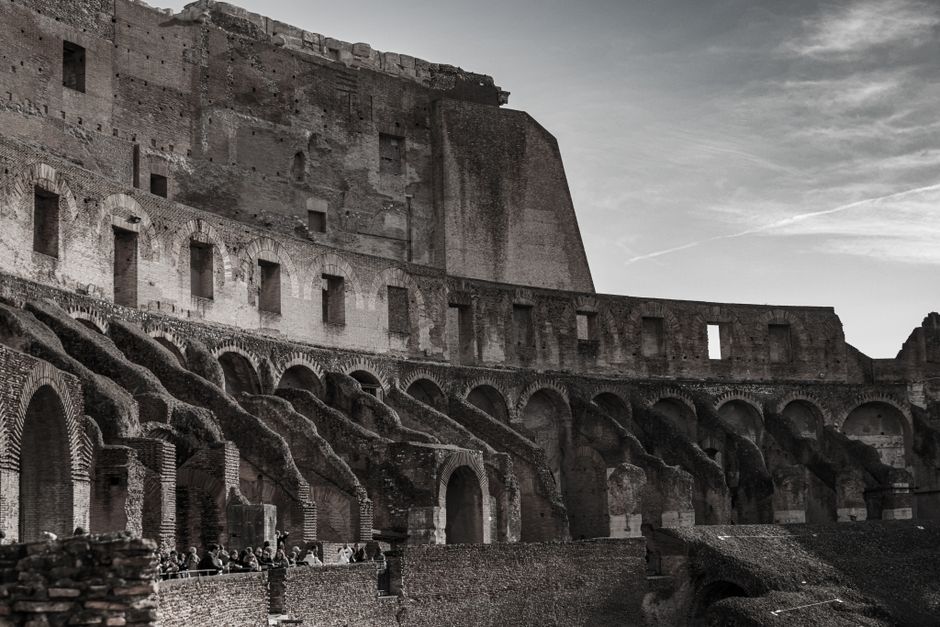
Photo by Magda Ehlers on Pexels
Roman architectural and engineering prowess was incredible. They were masters of:
* Concrete: A revolutionary building material that allowed for massive, durable structures. We still use concrete extensively today.
* Arches and Domes: These structural innovations allowed for larger unsupported spans, leading to structures like the Pantheon and the Colosseum.
* Roads: The famous Roman road network, built for military and trade purposes, was incredibly advanced and durable. Many modern European roads still follow ancient Roman routes.
* Aqueducts: Brilliant systems for transporting water to cities, showcasing advanced hydraulic engineering.
* Public Buildings: The idea of public baths, theaters, and amphitheaters as centers of community life.
Language and Literature

Photo by 🇻🇳🇻🇳 Việt Anh Nguyễn 🇻🇳🇻🇳 on Pexels
Latin, the language of the Romans, became the lingua franca of Europe for centuries. It's the direct ancestor of the Romance languages (French, Spanish, Italian, Portuguese, Romanian) and heavily influenced English. A vast percentage of English vocabulary has Latin roots, especially in legal, scientific, and academic terms. You'll find Latin phrases in law (habeas corpus, ad hoc) and daily life (e.g., i.e., et cetera).
Roman Cultural Diffusion
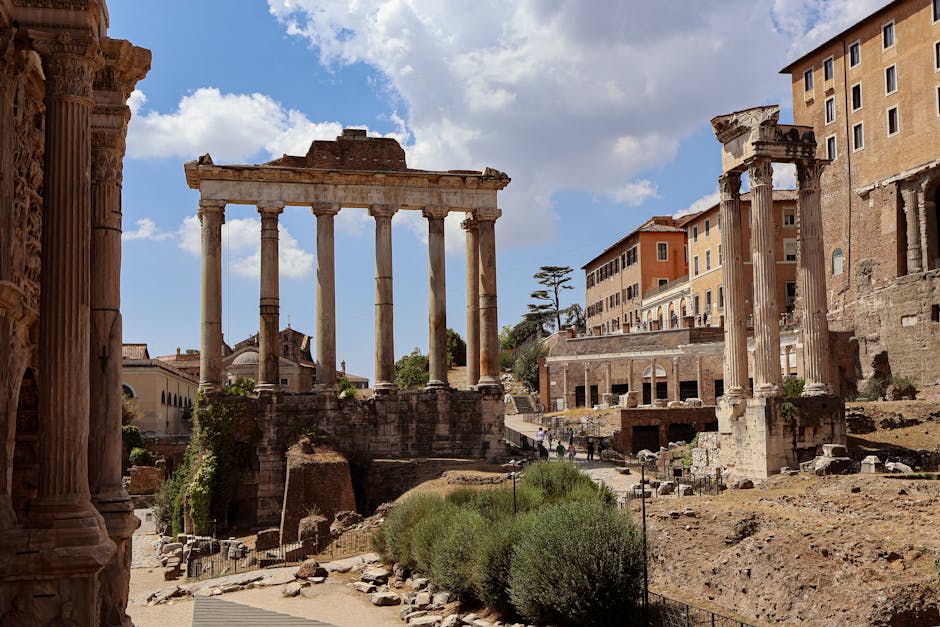
Photo by C1 Superstar on Pexels
The Roman Empire spread its culture, technologies, and ideas across a vast area. This process, often through conquest but also through trade and administration, led to a degree of cultural standardization that laid groundwork for later European development.
Here's a simplified view of how Roman contributions trickle down to us:
graph TD
    A["Ancient Rome"] --> B["Law (e.g., Twelve Tables)"]
    A --> C["Governance (e.g., Republic)"]
    A --> D["Architecture (e.g., Concrete, Arches)"]
    A --> E["Language (Latin)"]

    B --> B1["Modern Legal Systems (e.g., 'Innocent until proven guilty')"]
    C --> C1["Constitutional Republics (e.g., USA)"]
    D --> D1["Modern Infrastructure (e.g., Roads, Buildings)"]
    E --> E1["Romance Languages"]
    E --> E2["English Vocabulary"]

    B1 --> F["Modern Society"]
    C1 --> F
    D1 --> F
    E1 --> F
    E2 --> F
3. Worked Example
Think about a typical day. You wake up, maybe you hear a weather report that says "centigrade" (from Latin centum for 100, gradus for steps). You drive on a road that might still follow a Roman route if you're in Europe, or at least uses Roman-inspired engineering. You might use a calendar based on Julius Caesar's reforms (the Julian Calendar was the basis for our Gregorian calendar). In school or work, you might encounter legal terms like "pro bono" or "quid pro quo," both Latin. If you study science, terms like "radius" or "maximum" are Latin. If you're building something, you're probably using concrete. This isn't just a few isolated examples; it's a pervasive, often invisible, influence.
4. Key Takeaways
- Roman law established fundamental principles like the rule of law and "innocent until proven guilty" that underpin many modern legal systems.
- The Roman Republic's governmental structure, with its checks and balances, directly inspired the formation of modern constitutional republics.
- Roman innovations in concrete, arches, and road building laid the groundwork for much of our modern infrastructure and architecture.
- Latin is the root of Romance languages and heavily influences English vocabulary, particularly in academic and legal fields.
- The Roman calendar, with its names for months, is a direct predecessor to our current calendar system.
- Roman engineering of aqueducts and public works demonstrates advanced problem-solving that still informs urban planning.
- Understanding Rome helps us grasp the long historical continuity of Western civilization's core ideas.
Common Mistakes to Avoid:
* Don't think of Roman influence as just "old stuff"; recognize its active role in current systems.
* Avoid oversimplifying the fall of Rome; it wasn't a single event but a complex process with many causes.
* Don't confuse the Roman Republic with the Roman Empire; they were distinct phases with different governmental structures.
* Remember that while influential, Roman society had its flaws, like slavery and frequent warfare, which are also part of its legacy.
5. Now Try It
For 15 minutes, look around your home or community. Can you identify three distinct things (objects, words, institutions, or concepts) that you believe have a direct or indirect Roman origin? For each, briefly explain why you think it's Roman and how it impacts you today. Success looks like you identifying examples that extend beyond just a calendar and can articulate a logical connection back to Roman principles or innovations.
Frequently asked about "course_name": "dsdfs",
More from history
Get the full history curriculum
Clone the complete plan to your dashboard for unlimited AI-generated notes, practice quizzes, and a personalised revision schedule.
Save this course free