"subtopics": [
From the history curriculum
TL;DR
The Cold War was a decades-long geopolitical rivalry between the US and USSR without direct large-scale conflict, characterized by ideological struggle, military build-ups, and global proxy confrontations. Key elements included the Space Race, Arms Race, and significant events like the Berlin Wall, culminating in periods of eased tensions known as Détente. Understanding these components helps grasp the era's complex global impact.
1. The Mental Model
Think of the Cold War as a long, high-stakes chess match between two superpowers, played on a global board. They never directly attacked each other's "kings" (their home territories) but constantly maneuvered for influence, using other countries as "pawns" and showcasing their power through technological and military displays.
2. The Core Material
The Cold War (roughly 1947-1991) wasn't a "hot" war with direct fighting between the United States and the Soviet Union. Instead, it was an intense ideological and geopolitical struggle between two global superpowers and their respective allies. The US championed capitalism and democracy, while the USSR promoted communism and a command economy.
Proxy Wars
These were conflicts where the US and USSR supported opposing sides without directly engaging each other's forces. They armed, funded, and sometimes trained local combatants. This allowed them to extend their influence and weaken the opposing ideology without risking a full-scale, nuclear war.
- Examples: Korean War (1950-1953), Vietnam War (1955-1975), Soviet-Afghan War (1979-1989), various conflicts in Africa and Latin America.
Space Race

Photo by kaboompics on Pexels
This was a technological competition between the US and the USSR to achieve superior capabilities in spaceflight. It wasn't just about science; it was a powerful propaganda tool demonstrating each nation's scientific, economic, and military strength.
- Key Moments:
- 1957: Soviet Union launches Sputnik 1, the first artificial satellite. This shocked the US.
- 1961: Soviet cosmonaut Yuri Gagarin becomes the first human in space.
- 1969: US lands astronauts on the Moon (Apollo 11 mission), achieving a major victory.
Arms Race

Photo by Quentin Martinez on Pexels
This was a dangerous competition to build up larger and more powerful arsenals, especially nuclear weapons. Both sides believed that having more devastating weapons would deter the other from attacking, a concept known as "Mutually Assured Destruction" (MAD). The sheer destructive power meant a direct conflict would be catastrophic for everyone.
- Key Concepts:
- Nuclear Triad: Delivering nuclear weapons via strategic bombers, intercontinental ballistic missiles (ICBMs), and submarine-launched ballistic missiles (SLBMs).
- Deterrence: The idea that a powerful enough military prevents an attack.
graph TD
    A["US/Western Bloc"] --> B["Ideological Conflict"]
    B --> C["Proxy Wars (e.g., Vietnam)"]
    B --> D["Arms Race (Nuclear Weapons)"]
    B --> E["Space Race (Tech Dominance)"]
    F["USSR/Eastern Bloc"] --> B

    C --> G["Increased Global Tensions"]
    D --> H["Mutual Assured Destruction (MAD)"]
    E --> I["Propaganda & Prestige"]

    J["Berlin Wall (Physical Division)"] --> K["Symbol of Cold War Division"]
    K --> G
    H --> G
    I --> G

    L["Periods of Détente (Relaxed Tensions)"] --> M["Attempted Diplomacy"]
    M --> N["Arms Control Treaties (e.g., SALT)"]
    N --> L
    L --> G
Berlin Wall
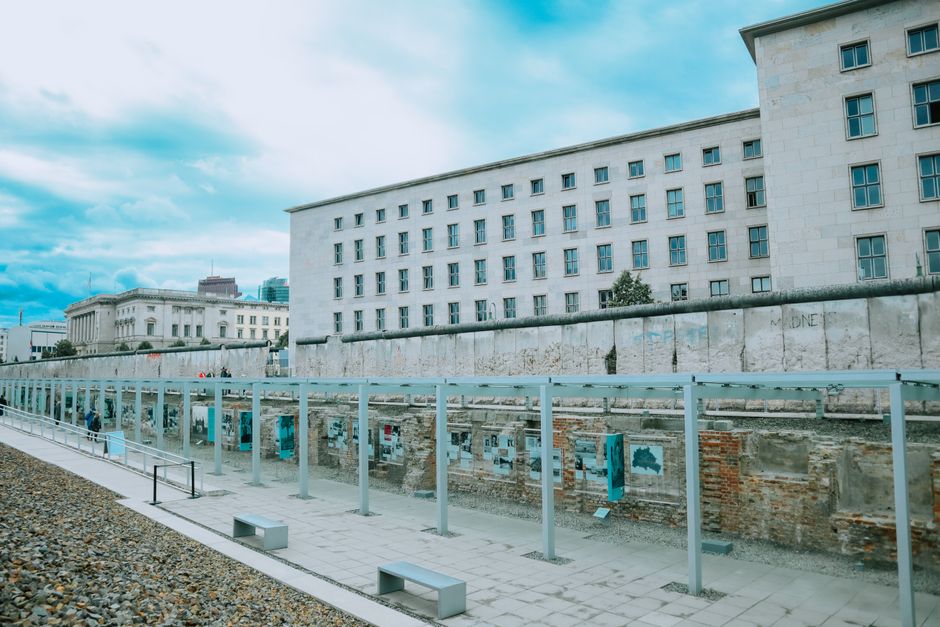
Photo by Pham Ngoc Anh on Pexels
Built by East Germany (with Soviet support) in 1961, the Berlin Wall physically divided East and West Berlin. It was a stark symbol of the "Iron Curtain" separating communist Eastern Europe from capitalist Western Europe, preventing East Germans from fleeing to the West. Its fall in 1989 was a major moment in the decline of Soviet power.
Détente
This term refers to a period of easing geopolitical tensions between the US and the USSR, primarily in the 1970s. Both sides recognized the dangers of the Arms Race and the economic drain of constant confrontation.
- Key Features:
- Increased diplomatic contact.
- Arms control treaties (e.g., Strategic Arms Limitation Treaties - SALT I and II).
- Cultural exchanges.
- However, underlying ideological differences and proxy conflicts often continued. Détente wasn't an end to the Cold War, but a shift in tactics.
3. Worked Example
Let's consider the Cuban Missile Crisis (1962). This was a prime example of the Cold War's dynamics. The USSR secretly placed nuclear missiles in Cuba, just 90 miles from the US coast. This was a direct challenge to US security. The US responded with a naval blockade, demanding the removal of the missiles.
This was a terrifying moment of the Arms Race pushed to the brink of nuclear war. Both sides were locked in a standoff, reflecting the MAD doctrine. Diplomacy eventually prevailed: the USSR agreed to remove the missiles, and the US secretly agreed to remove its missiles from Turkey and publicly promised not to invade Cuba. This wasn't a "hot" war, but a high-stakes confrontation managed through careful negotiation, showcasing the constant tension and the ever-present threat of escalation during the Cold War.
4. Key Takeaways
- The Cold War was a non-direct conflict between the US and USSR driven by ideological differences.
- Proxy wars allowed superpowers to fight indirectly by supporting opposing sides in other countries.
- The Space Race was a propaganda battle showcasing technological and economic superiority.
- The Arms Race fueled the development of nuclear weapons, leading to the doctrine of Mutually Assured Destruction.
- The Berlin Wall physically symbolized the division between communist East and capitalist West.
- Détente represented periods of reduced tensions and increased diplomatic efforts, particularly in the 1970s.
- The threat of nuclear annihilation was a constant, defining feature of the era.
Common mistakes you should avoid:
- Don't confuse the Cold War with a "hot" war involving direct military conflict between the US and USSR.
- Don't think that Détente meant the end of the Cold War; it was a shift in strategy, not a resolution.
- Avoid assuming that one side was purely "good" and the other purely "evil"; the reality was far more complex, with both superpowers making controversial decisions.
- Don't underestimate the global reach of the Cold War; its effects were felt in almost every corner of the world.
5. Now Try It
Imagine you are an analyst for the US State Department in 1975, during the height of Détente. Your task is to write a short memo (about 5-7 sentences) advising the President on the current state of US-Soviet relations. You need to acknowledge the positive aspects of Détente (e.g., arms control) but also briefly mention ongoing challenges or areas of concern (e.g., continued proxy conflicts or ideological differences).
Success looks like a memo that balances the positive developments of Détente with an awareness of the persistent underlying tensions and rivalries of the Cold War, demonstrating your understanding that Détente was a period of eased tensions, not an end to the conflict itself.
Frequently asked about "subtopics": [
More from history
Get the full history curriculum
Clone the complete plan to your dashboard for unlimited AI-generated notes, practice quizzes, and a personalised revision schedule.
Save this course free