The New Testament (part of the Christian Bible).
From the Testament curriculum
TL;DR
The New Testament is the second major part of the Christian Bible, focusing on the life and teachings of Jesus Christ, the early Christian church, and prophecies about the future. It comprises 27 books, including Gospels, historical accounts, letters, and an apocalyptic vision. Understanding its structure and key themes helps grasp Christian theology and history.
1. The Mental Model
Think of the New Testament as a collection of foundational documents for the Christian faith, detailing the arrival of God's promised Messiah, the establishment of His new covenant with humanity, and the spread of His message. It picks up where the Old Testament's prophecies leave off, revealing their fulfillment.
2. The Core Material
The New Testament is a collection of 27 books, written mostly in Koine Greek, which were compiled over several centuries. It's broadly divided into five sections:
The Gospels
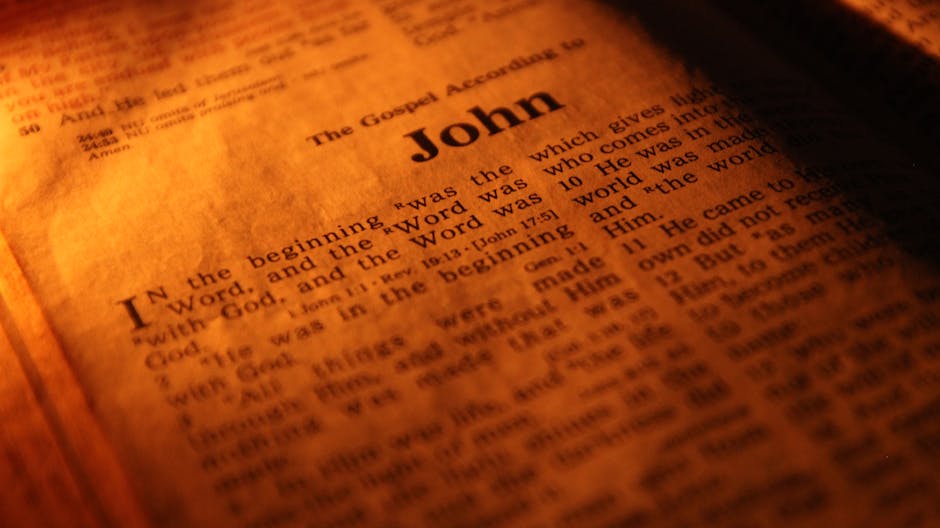
Photo by Joshua Hurricks on Pexels
These four books – Matthew, Mark, Luke, and John – are eyewitness accounts or carefully researched histories of Jesus's life, ministry, death, and resurrection. They present different perspectives but agree on the core events and teachings.
* Matthew: Often seen as linking Jesus to Old Testament prophecies, written for a Jewish audience.
* Mark: The shortest Gospel, fast-paced, highlighting Jesus's actions and power.
* Luke: A detailed historical account, emphasizing Jesus's compassion and ministry to all people, including outsiders.
* John: Focuses on Jesus's divine nature and significant theological discourses, distinct in style from the others.
History of the Early Church

Photo by Tuğba Kobal Yılmaz on Pexels
Acts of the Apostles is the sole book in this category. Written by Luke, it chronicles the spread of the Christian message from Jerusalem throughout the Roman Empire after Jesus's ascension, focusing on the ministry of key apostles like Peter and Paul.
The Epistles (Letters)

Photo by Pixabay on Pexels
This is the largest section, containing 21 letters written by apostles to various churches or individuals. These letters provide instruction on Christian doctrine, ethics, and practical living. They're often categorized into:
* Pauline Epistles: 13 letters attributed to the Apostle Paul (e.g., Romans, 1 & 2 Corinthians, Galatians, Ephesians). These address specific communities, clarifying theological points, correcting errors, and encouraging believers.
* General/Catholic Epistles: 8 letters written by other apostles (e.g., James, 1 & 2 Peter, 1, 2 & 3 John, Jude, Hebrews). These are addressed to a wider audience or specific individuals and cover similar themes of faith and conduct.
Prophecy
Revelation (also known as the Apocalypse of John) is the final book. It's a highly symbolic vision of future events, including Christ's return, the final judgment, and the establishment of God's eternal kingdom. It offers hope and encouragement to believers facing persecution.
Here's how the books are generally categorized:
graph TD
    NT["New Testament (27 Books)"] --> G["The Gospels (4)"]
    NT --> H["History (1)"]
    NT --> E["The Epistles (21)"]
    NT --> P["Prophecy (1)"]

    G --> Matthew
    G --> Mark
    G --> Luke
    G --> John

    H --> Acts["Acts of the Apostles"]

    E --> PE["Pauline Epistles (13)"]
    E --> GE["General Epistles (8)"]

    P --> Revelation
Key Themes
Across these books, several core themes emerge:
* Jesus Christ: His identity as the Son of God, Messiah, and Savior; His teachings on love, forgiveness, and the Kingdom of God; His sacrificial death and resurrection.
* Salvation: The idea that humanity is saved from sin and death through faith in Jesus Christ.
* The Holy Spirit: God's presence and power empowering believers and guiding the church.
* The Church: The community of believers, called to spread the Gospel and live according to Christ's teachings.
* Ethics and Morality: Guidance on how Christians should live, love others, and uphold justice.
* Eschatology: Teachings about the "last things" – Christ's second coming, resurrection of the dead, final judgment, and eternal life.
3. Worked Example
Let's consider Galatians. This is a Pauline Epistle. The church in Galatia was struggling with false teachers who insisted that Gentile (non-Jewish) Christians needed to follow Jewish laws, like circumcision, in addition to believing in Jesus. Paul writes this letter to correct this misunderstanding.
He argues passionately that salvation comes solely by grace through faith in Jesus Christ, not by works of the law. He recounts his own encounter with Christ and defends his apostleship, showing that his message came directly from God. He explains:
- The problem: "If righteousness could be gained through the law, Christ died for nothing!" (Galatians 2:21).
- The solution: "So in Christ Jesus you are all children of God through faith" (Galatians 3:26).
- The implication: "There is neither Jew nor Gentile, neither slave nor free, nor is there male and female, for you are all one in Christ Jesus" (Galatians 3:28).
So, Galatians isn't just an old letter; it's a foundational text explaining a core Christian doctrine: justification by faith. It directly addresses a practical problem in the early church with deep theological answers.
4. Key Takeaways
- The New Testament is made of 27 books, divided into Gospels, History, Epistles, and Prophecy.
- The Gospels provide accounts of Jesus's life, teachings, death, and resurrection.
- Acts of the Apostles documents the early church's growth and the spread of the Gospel.
- The Epistles are letters offering theological instruction and practical guidance for Christian living.
- Revelation is a book of symbolic prophecy concerning future events and Christ's ultimate victory.
- Key themes include Jesus's identity, salvation through faith, the Holy Spirit, and the nature of the Church.
- Understanding these books helps illuminate the foundations of Christian belief and practice.
Common mistakes to avoid:
- Don't assume the New Testament is one continuous narrative; it's a collection of diverse literary genres.
- Avoid interpreting prophetic books like Revelation literally without considering their symbolic nature.
- Don't read the Epistles as direct commands for all situations without understanding their original context.
- Don't neglect the connection between the Old Testament prophecies and their fulfillment in the New Testament.
5. Now Try It
Choose one of the Gospels (Matthew, Mark, Luke, or John) and read the first three chapters. As you read, make a short list of three key things you learn about Jesus's identity, His teachings, or the people around Him. For example, in Matthew, you might note His genealogy connecting Him to King David, or His teachings in the Sermon on the Mount. Success looks like you identifying specific details from the text that reveal something significant about the person or mission of Jesus, showing you're engaging with the text directly.
Frequently asked about The New Testament (part of the Christian Bible).
More from Testament
Get the full Testament curriculum
Clone the complete plan to your dashboard for unlimited AI-generated notes, practice quizzes, and a personalised revision schedule.
Save this course free