Exchange Rate Systems and Regimes
From the exchange rates note I live in Canada curriculum
TL;DR
Exchange rate systems define how a country's currency value is determined against others, ranging from entirely fixed by a government to freely floating by market forces. The chosen system significantly impacts economic stability, trade, and monetary policy. Canada uses a floating exchange rate, meaning the Canadian dollar's value is set by supply and demand.
1. The Mental Model
Think of an exchange rate system as the "rules of the game" for how a country's currency gets its value. Some countries like to tie their currency to another currency or a fixed value, while others let the market decide.
2. The Core Material
When we talk about exchange rate systems, we're discussing the framework a country uses to manage the value of its currency relative to other currencies. There are three main types, and then some variations in between.
2.1 Fixed Exchange Rate System

Photo by Atlantic Ambience on Pexels
In a fixed exchange rate system, a government or central bank sets and maintains the official exchange rate. This rate is usually pegged to another major currency (like the US dollar), a basket of currencies, or a commodity like gold. To maintain this peg, the central bank must intervene in the foreign exchange market.
- How it works: If the Canadian dollar were fixed to the US dollar at, say, 1 CAD = 0.80 USD, and market forces started pushing the CAD lower, the Bank of Canada would sell its foreign currency reserves (USD) and buy CAD to increase demand for the CAD and push its value back up to the peg. If the CAD became too strong, they'd buy foreign currency and sell CAD.
- Pros: Provides certainty for international trade and investment, helps control inflation.
- Cons: Limits independent monetary policy (the central bank can't easily change interest rates to manage the domestic economy without affecting the peg), requires large foreign currency reserves, vulnerable to speculative attacks if the peg seems unsustainable.
2.2 Floating Exchange Rate System
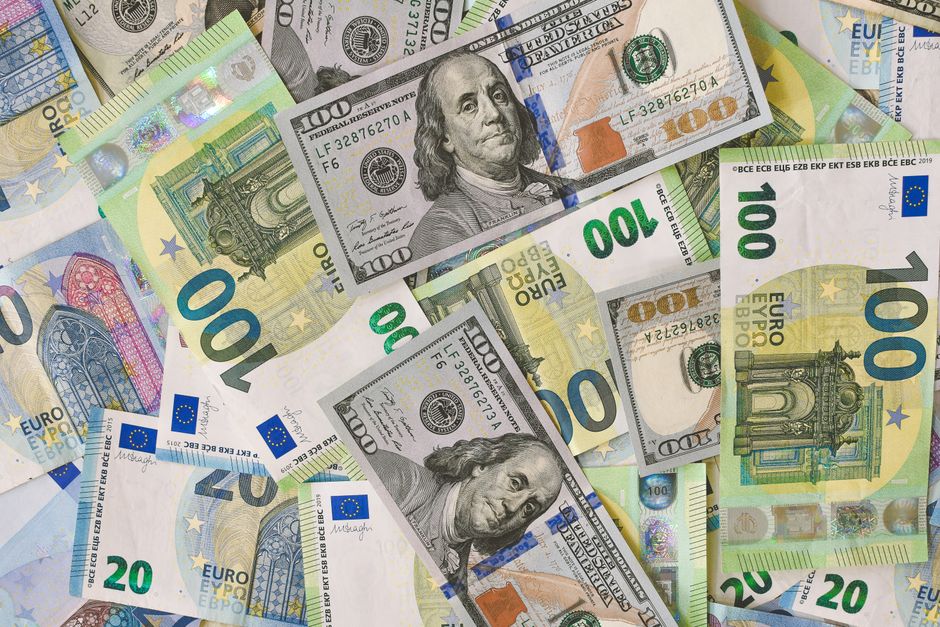
Photo by Ibrahim Boran on Pexels
A floating exchange rate system (like the one Canada uses) allows the currency's value to be determined freely by the forces of supply and demand in the foreign exchange market, with minimal government intervention.
- How it works: If more people want to buy Canadian goods and services, they'll need to buy Canadian dollars, increasing demand and making the CAD stronger. If Canadians want to buy more foreign goods, they'll sell CAD to buy foreign currency, increasing supply and making the CAD weaker.
- Pros: Allows for independent monetary policy (the Bank of Canada can set interest rates to manage inflation or economic growth without worrying about a peg), helps absorb economic shocks (a weaker CAD makes exports cheaper and imports more expensive, helping balance trade during a downturn).
- Cons: Can lead to currency volatility, which creates uncertainty for businesses involved in international trade and investment.
2.3 Managed Float (or Dirty Float)

Photo by Çağrı KANMAZ on Pexels
This system is a hybrid. It's primarily a floating system, but the central bank may occasionally intervene to smooth out excessive volatility or to guide the currency towards a desired direction without maintaining a strict peg.
- How it works: The Canadian dollar is generally allowed to float, but if there's a sudden, sharp movement that seems speculative or disruptive, the Bank of Canada might step in to buy or sell CAD to stabilize it temporarily. This is rare for Canada but an option.
graph TD
    A["Exchange Rate System"] --> B["Fixed"]
    A --> C["Floating"]
    A --> D["Managed Float"]

    B --> B1["Currency pegged to another (e.g., USD)"]
    B --> B2["Central Bank intervenes to maintain peg"]
    B --> B3["**Pro:** Stability, lower inflation"]
    B --> B4["**Con:** Loss of monetary independence, needs reserves"]

    C --> C1["Value determined by supply & demand"]
    C --> C2["Minimal Central Bank intervention"]
    C --> C3["**Pro:** Independent monetary policy (like Canada)"]
    C --> C4["**Con:** Volatility, uncertainty"]

    D --> D1["Primarily floating"]
    D --> D2["Central Bank intervenes selectively to smooth volatility"]
    D --> D3["**Pro:** Balances flexibility with some stability"]
    D --> D4["**Con:** Can be seen as lacking transparency"]
3. Worked Example
Let's look at Canada's floating exchange rate in action.
Suppose a major news report comes out indicating that Canadian oil exports are expected to rise significantly due to new pipelines and increased global demand.
- Increased Demand for CAD: International buyers of Canadian oil (e.g., from the U.S., Europe) will need to convert their local currencies (USD, EUR) into Canadian dollars to pay for the oil. This increases the demand for the Canadian dollar on the foreign exchange market.
- CAD Appreciates: With higher demand and no corresponding increase in supply, the value of the Canadian dollar strengthens (appreciates) relative to other currencies. For example, the exchange rate might move from 1 USD = 1.35 CAD to 1 USD = 1.30 CAD, meaning it now takes fewer Canadian dollars to buy one US dollar (or one Canadian dollar buys more US dollars).
- Bank of Canada's Role: In a true floating system like Canada's, the Bank of Canada typically does not intervene to prevent this appreciation. They let the market forces work. This appreciation might make Canadian exports (other than oil, which is still in high demand) more expensive for foreign buyers and imports cheaper for Canadians.
Conversely, if there was a sudden decline in global demand for Canadian natural resources, the demand for CAD would fall, leading to a depreciation of the Canadian dollar, again without direct intervention from the Bank of Canada.
4. Key Takeaways
- Exchange rate systems determine how a country's currency value is set globally.
- Fixed systems peg the currency, offering stability but sacrificing monetary independence.
- Floating systems (like Canada's) let market forces of supply and demand determine the value, allowing for independent monetary policy and shock absorption.
- Managed floats are a hybrid, mostly floating but with occasional central bank intervention to curb extreme volatility.
- Canada's floating exchange rate means economic events (like commodity price changes or trade shifts) directly impact the CAD's value.
- A stronger Canadian dollar makes Canadian exports more expensive and imports cheaper.
- A weaker Canadian dollar makes Canadian exports cheaper and imports more expensive.
Common mistakes to avoid:
- Confusing a stronger currency with a better economy; it depends on context (e.g., exporters prefer a weaker currency).
- Thinking that "floating" means the currency's value is random; it's still driven by economic fundamentals.
- Assuming a central bank in a floating system never intervenes; while rare for Canada, some "managed float" interventions happen elsewhere.
- Forgetting that all exchange rate systems have trade-offs; there's no universally "best" system.
5. Now Try It
Imagine you're the Bank of Canada. You receive news that global investors are suddenly pulling a lot of money out of Canada due to concerns about a potential housing market crash.
- Predict the immediate impact: What would happen to the Canadian dollar's exchange rate against the US dollar under Canada's current floating exchange rate system? Would it appreciate or depreciate? Why?
- Consider a different system: If Canada had a fixed exchange rate (say, 1 CAD = 0.80 USD), what actions would the Bank of Canada have to take to maintain that peg in this scenario?
Success looks like clearly explaining the currency's movement for both scenarios and correctly identifying the specific actions the central bank would be compelled to take (or not take) under each system.
Frequently asked about Exchange Rate Systems and Regimes
Study this next
Get the full exchange rates note I live in Canada curriculum
Clone the complete plan to your dashboard for unlimited AI-generated notes, practice quizzes, and a personalised revision schedule.
Save this course free