Social Science: History & Political Science
From the class 10 cbse curriculum
TL;DR
This note breaks down key concepts from Class 10 CBSE History and Political Science, helping you understand how societies, governments, and historical events are interconnected. We'll cover nationalism's rise in Europe and India, and explore power-sharing and federalism in India's political system. The goal is to see patterns in how past events shape our present and future.
1. The Mental Model
Think of History as a story about cause and effect – one event leads to another, shaping societies and ideas. Political Science, on the other hand, is about how societies organize themselves to make decisions, distribute power, and resolve conflicts.
2. The Core Material
The Rise of Nationalism in Europe

Photo by Emirhan Emiroğlu on Pexels
Nationalism is a feeling of strong loyalty and devotion to one's own nation. In 19th-century Europe, this idea transformed the continent, moving away from multi-ethnic empires towards nation-states, where the majority of people shared a common identity.
- French Revolution (1789): This was a big turning point. It spread ideas of "liberty, equality, and fraternity" and the idea that sovereignty (power) rests with the people, not a monarch. It introduced practices like a common flag, national anthem, and a uniform legal system.
- Napoleon Bonaparte: While he brought many reforms, his conquests also fueled resistance and a sense of shared national identity among the conquered peoples.
- Vienna Congress (1815): After Napoleon's defeat, European powers tried to restore monarchies and a balance of power, but couldn't suppress the nationalist feelings that had been ignited.
- Revolutions of 1848: Liberals and nationalists across Europe revolted, demanding constitutional governments and national unification.
- Unification of Germany and Italy: These were major achievements of nationalism.
- Germany: Otto von Bismarck, through a series of wars (with Denmark, Austria, and France), unified the German states under Prussian leadership.
- Italy: Giuseppe Mazzini, Giuseppe Garibaldi, and Count Camillo Cavour played key roles. Mazzini formed secret societies, Garibaldi led volunteers (Red Shirts), and Cavour, as Chief Minister of Piedmont-Sardinia, strategically allied with France to defeat Austria.
- Balkans: This region became a hotbed of nationalist tension and imperial rivalry, eventually contributing to World War I.
graph TD
    A["French Revolution (1789)"] --> B["Spread Ideas: Liberty, Equality, Fraternity"]
    B --> C["Concept: Sovereignty from People"]
    C --> D["New Symbols: Flag, Anthem, Uniform Laws"]
    D --> E["Napoleon's Conquests"]
    E --> F["Fueled Resistance & National Identity"]
    F --> G["Failed Suppression (Vienna Congress)"]
    G --> H["Revolutions of 1848"]
    H --> I["Drive for Nation-States"]
    I --> J["Unification of Germany & Italy"]
    J --> K["Rise of Extreme Nationalism & Imperial Rivalries"]
    K --> L["Balkan Tensions"]
Nationalism in India
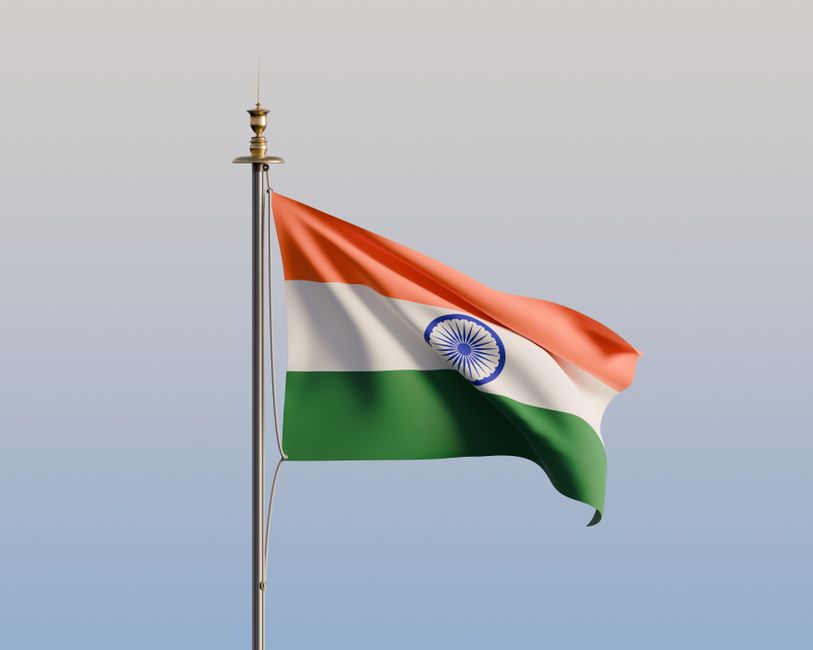
Photo by Shubham Dhage on Pexels
Indian nationalism developed under colonial rule. It wasn't about unifying existing states but about uniting diverse communities against a common foreign oppressor.
- Impact of World War I: India's involvement in WWI led to economic hardship (increased taxes, forced recruitment, price rises), which angered many Indians and fueled anti-British sentiment.
- Mahatma Gandhi's Arrival (1915): Gandhi introduced the idea of Satyagraha (truth force/non-violent resistance).
- Champaran (1917): Against oppressive indigo plantation system.
- Kheda (1917): For peasants demanding revenue relaxation due to crop failure.
- Ahmedabad (1918): For cotton mill workers demanding better wages.
- Rowlatt Act (1919): This act allowed the British to imprison anyone without trial, leading to widespread protests, including the Jallianwala Bagh Massacre.
- Non-Cooperation Movement (1920-22): Gandhi called for non-cooperation with British rule (boycotting foreign goods, schools, courts). It included the Khilafat Movement, uniting Hindus and Muslims against British policies. It was called off after the Chauri Chaura incident.
- Civil Disobedience Movement (1930-34): Launched with the Dandi March (Salt March), protesting the salt tax. People broke salt laws, boycotted foreign clothes, and picketed liquor shops. It was interrupted by the Gandhi-Irwin Pact but relaunched and eventually lost momentum.
- Sense of Collective Belonging: This was fostered through shared history, folklore, songs (like 'Vande Mataram' by Bankim Chandra Chattopadhyay), and iconic images (like Bharat Mata).
Power Sharing

Photo by RDNE Stock project on Pexels
Power sharing is about distributing power among different organs of government, levels of government, and social groups to prevent concentration of power and reduce conflict.
- Why Power Sharing is Desirable:
- Prudential reasons: Reduces the possibility of conflict between social groups. Ensures stability of political order.
- Moral reasons: The very spirit of democracy. People have a right to be consulted on how they are to be governed.
- Forms of Power Sharing:
- Horizontal Sharing (among organs of government): Power is shared among the legislature (makes laws), executive (implements laws), and judiciary (interprets laws). This is a system of checks and balances, ensuring no one organ has unlimited power. (e.g., India's Parliament, Cabinet, Supreme Court).
- Vertical Sharing (among levels of government): Power is shared between different levels of government, like the Union (Central) government, State governments, and local self-governments (Panchayats and Municipalities). This is called Federalism.
- Sharing among different social groups: For example, reserved constituencies for Scheduled Castes and Scheduled Tribes in India to ensure their representation. In Belgium, there's a 'Community Government' representing linguistic groups.
- Sharing among political parties, pressure groups, and movements: In a democracy, different parties compete for power. This competition ensures that power doesn't remain in one hand for too long. Pressure groups (like trade unions) and movements also influence government decisions.
Federalism
Federalism is a system of government where power is divided between a central authority and various constituent units of the country.
-
Key Features of Federalism:
- Two or more levels of government: (e.g., Union and State in India).
- Separate jurisdictions: Each level has its own specific areas of law-making, taxation, and administration.
- Constitutional guarantee: The powers and existence of each level of government are guaranteed by the constitution.
- No unilateral change: Neither level can unilaterally change the fundamental provisions of the constitution. Requires consent of both.
- Independent judiciary: Courts interpret the constitution and powers of different levels of government, acting as an umpire.
- Dual objectives: To safeguard and promote the unity of the country, while also accommodating regional diversity.
-
Types of Federations:
- "Coming Together" Federations: Independent states decide to come together on their own to form a larger unit. This increases their security and allows them to pool sovereignty while retaining identity (e.g., USA, Switzerland, Australia). They usually have equal power for constituent units.
- "Holding Together" Federations: A large country decides to divide its power between the constituent states and the national government. The central government tends to be more powerful (e.g., India, Spain, Belgium). Some units might have special powers (e.g., Jammu & Kashmir earlier, North-Eastern states in India).
-
Federalism in India: India is a "holding together" federation.
- Union List: Subjects of national importance (defence, foreign affairs, banking, communications, currency). Only Union government can make laws.
- State List: Subjects of state and local importance (police, trade, commerce, agriculture, irrigation). State governments make laws.
- Concurrent List: Subjects of common interest (education, forest, trade unions, marriage, adoption, succession). Both Union and State governments can make laws. If they conflict, Union law prevails.
- Residuary Subjects: Subjects not mentioned in any list (e.g., cyber security). Union government has power.
- Union Territories: Areas directly governed by the Union government due to their small size or strategic importance (e.g., Delhi, Chandigarh).
- Decentralisation: Third tier of government (Panchayats and Municipalities) created in 1992.
- Mandatory to hold regular elections.
- Reservation of seats for SCs, STs, and OBCs.
- One-third seats reserved for women.
- State Election Commission to conduct elections.
- State governments share some powers and revenue with local bodies.
3. Worked Example
Let's look at how the idea of a nation-state works by comparing pre-1871 Germany with post-1871 Germany.
Pre-1871 German Region: This area comprised many small, independent states, like Prussia, Bavaria, Saxony, etc. People in these different states often spoke different dialects, had local loyalties, and were ruled by different monarchs. They didn't necessarily feel a strong, single "German" identity that transcended their local state. A Bavarian would identify primarily as Bavarian, not broadly German.
Post-1871 Unified Germany: After the efforts of Bismarck and the Prussian wars, these states were unified into a single German Empire. Now, a common "German" identity was promoted. People began to see themselves as part of a larger nation. There was a single national government, a common currency, a unified legal system, and a shared sense of history and destiny. The fragmented local loyalties gave way to a broader national patriotism, creating a true nation-state.
4. Key Takeaways
- Nationalism in Europe led to the formation of nation-states, replacing multi-ethnic empires.
- The French Revolution significantly contributed to spreading nationalist ideas across Europe.
- India's nationalism grew as a response to colonial rule, uniting diverse groups against a common oppressor.
- Mahatma Gandhi's methods, like Satyagraha, were central to the Indian freedom struggle.
- Power sharing prevents conflict and is essential for a stable democracy.
- Horizontal power sharing ensures checks and balances among government organs.
- Vertical power sharing, or federalism, divides power between national and sub-national governments.
- Indian federalism includes three lists (Union, State, Concurrent) to define powers.
- Decentralisation strengthened local self-governance in India.
Common Mistakes to Avoid:
- Don't confuse "nation" with "state" or "country" – a nation is about shared identity, a state is a political entity.
- Misunderstanding the difference between "coming together" and "holding together"federations in federalism.
- Forgetting that the Jallianwala Bagh incident was a direct consequence of protests against the Rowlatt Act.
- Not recognizing the significance of the Dandi March in mobilising people during the Civil Disobedience Movement.
5. Now Try It
Imagine you are a reporter in 19th-century Europe. Choose either the unification of Germany or Italy. Write a short news report (around 150 words) describing one major event that led to its unification, explaining who was involved and what nationalist sentiments were driving it. Success looks like you clearly identifying key figures, the event, and connecting it to the broader idea of creating a unified nation-state, using at least two relevant terms from this note (e.g., nation-state, sovereignty, liberal, conservative).
Frequently asked about Social Science: History & Political Science
Study this next
Get the full class 10 cbse curriculum
Clone the complete plan to your dashboard for unlimited AI-generated notes, practice quizzes, and a personalised revision schedule.
Save this course free