DNA Replication: Duplicating the Genetic Code
From the DNA curriculum
TL;DR
DNA replication is the process where a cell makes an identical copy of its DNA before dividing, ensuring each new cell gets a complete set of genetic instructions. It's a semi-conservative process, meaning each new DNA molecule has one original strand and one newly synthesized strand. This intricate process involves several enzymes working together to unwind the DNA, synthesize new strands, and proofread for errors.
1. The Mental Model
Think of your DNA as a giant cookbook. Before you can give a copy of that cookbook to a friend, you need to make an exact duplicate of every recipe. DNA replication is like that copying process for the cell's genetic cookbook.
2. The Core Material
DNA replication is essential for cell division and ensures that all new cells have the correct genetic information. It's a complex dance of enzymes and proteins, but we can break it down into key steps.
A. Unwinding the Double Helix
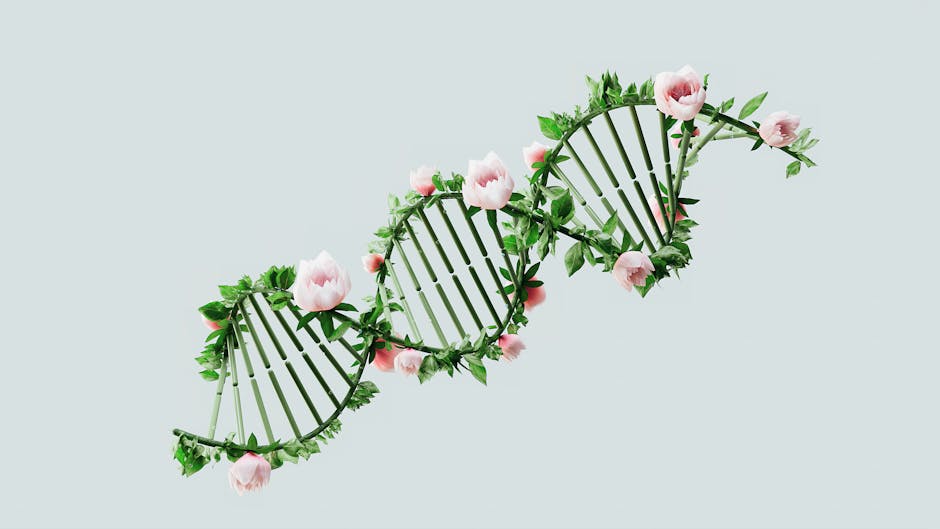
Photo by Google DeepMind on Pexels
The first step is to separate the two strands of the DNA double helix. Imagine trying to copy a zipper that's still zipped up—you'd have to unzip it first!
- Origin of Replication: Replication doesn't just start anywhere. Specific DNA sequences, called origins of replication, act as starting points. Eukaryotic chromosomes have multiple origins, while prokaryotes usually have just one.
- Helicase: This enzyme is the "unzipper." It unwinds the DNA double helix by breaking the hydrogen bonds between the complementary base pairs (A-T, G-C). This creates a replication fork, a Y-shaped structure where the DNA is being unwound.
- Single-Strand Binding Proteins (SSBs): Once the strands are separated, SSBs attach to them to prevent them from re-pairing and keep them stable so they can be used as templates.
- Topoisomerase (DNA Gyrase in bacteria): Unwinding the DNA creates tension further down the helix, like twisting a rubber band. Topoisomerase relieves this "supercoiling" by cutting, unwinding, and rejoining the DNA strands ahead of the replication fork.
B. Synthesizing New DNA Strands

Photo by Google DeepMind on Pexels
Once the strands are separated, new complementary strands can be built. DNA polymerase is the star player here, but it needs a little help to get started.
- Primase: DNA polymerase can't just start adding nucleotides from scratch. It needs a starting point. Primase synthesizes short RNA sequences called primers. These primers provide a 3'-hydroxyl group that DNA polymerase can extend from.
- DNA Polymerase: This is the main enzyme responsible for synthesizing new DNA strands. It moves along the template strand, adding complementary deoxyribonucleotides (A with T, G with C) in the 5' to 3' direction. This directionality is crucial.
The Leading and Lagging Strands
Because DNA polymerase only works in the 5' to 3' direction and the two template strands are antiparallel, DNA synthesis happens differently on each template:
- Leading Strand: This strand is synthesized continuously in the 5' to 3' direction, moving towards the replication fork. Only one primer is needed.
- Lagging Strand: This strand is synthesized discontinuously, in short fragments called Okazaki fragments. Because the overall direction of the replication fork is one way, but polymerase can only go 5' to 3', it has to constantly restart as new template DNA is exposed. Each Okazaki fragment requires a new primer.
C. Joining the Fragments and Proofreading
After the new DNA is synthesized, there are still a few cleanup steps.
- DNA Polymerase I (in prokaryotes) / RNase H (in eukaryotes): Removes the RNA primers.
- DNA Polymerase (different types): Fills in the gaps left by the removed primers with DNA nucleotides.
- DNA Ligase: Acts like a "molecular glue," forming phosphodiester bonds to join the Okazaki fragments (and the leading strand with the rest of the DNA) together, creating a continuous new strand.
- Proofreading and Repair: DNA polymerase has a built-in proofreading function, which allows it to check for incorrectly paired bases and correct them. This significantly reduces the error rate. If an error is missed, other repair mechanisms can fix it later.
Here's a diagram illustrating the key players and processes at the replication fork:
graph TD
    A["DNA Double Helix"] --> B["Origin of Replication"]
    B --> C["Helicase unwinds DNA"]
    C --> D["Replication Fork Forms"]
    D --> E["Single-Strand Binding Proteins stabilize strands"]
    E --> F{"Leading Strand"}
    E --> G{"Lagging Strand"}

    F --> F1["Primase adds RNA primer (once)"]
    F1 --> F2["DNA Polymerase synthesizes continuously (5'->3')"]

    G --> G1["Primase adds RNA primer for Okazaki fragment"]
    G1 --> G2["DNA Polymerase synthesizes Okazaki fragment (5'->3')"]
    G2 --> G3["DNA Pol I / RNase H removes primer"]
    G3 --> G4["DNA Pol fills gap"]
    G4 --> G5["DNA Ligase joins fragments"]
    G5 --> G1_restart["(Repeat for next Okazaki fragment)"]

    F2 --> H["New DNA (Leading Strand)"]
    G5 --> I["New DNA (Lagging Strand)"]

    H & I --> J["Proofreading & Repair"]
    J --> K["Two identical DNA molecules"]
3. Worked Example
Let's trace a small piece of DNA replication.
Imagine you have a short segment of a DNA template strand:
3'- T A G C T A G -5'
- Unwinding: Helicase unwinds the double helix, exposing this strand.
- Primer Synthesis: Primase comes along and adds a short RNA primer to the 3' end of the template (remember, DNA polymerase needs a 3'-OH to start). Let's say it adds a 3-nucleotide primer:
5'- A U C -3'on the template, so the primer sequence itself would be3'- C G A -5'. -
DNA Synthesis: DNA polymerase then binds to the 3' end of this primer and starts adding complementary DNA nucleotides in the 5' to 3' direction.
Template strand:
3'- T A G C T A G -5'
Primer:5'- A U C -3'
New DNA starts:3'- G A T C G A T C -5'(filling in based on the template)So, the newly synthesized strand segment would be:
5'- A T C G A T C -3'(after primer removal and replacement with DNA).
This process continues for millions of base pairs, with meticulous enzyme activity ensuring accuracy.
4. Key Takeaways
- DNA replication is semi-conservative, meaning each new DNA molecule consists of one old (template) strand and one newly synthesized strand.
- Helicase unwinds the DNA, creating replication forks.
- DNA polymerase synthesizes new DNA strands in the 5' to 3' direction, using the existing strands as templates.
- The leading strand is synthesized continuously, while the lagging strand is synthesized discontinuously in Okazaki fragments.
- Primase lays down short RNA primers to give DNA polymerase a starting point.
- DNA ligase joins the fragments on the lagging strand.
- The process includes proofreading to ensure high fidelity and minimize errors.
5. Now Try It
Take a piece of paper and draw a simplified replication fork. Label the template DNA strands (5' and 3' ends), the leading strand, and the lagging strand. Then, draw and label the key enzymes involved in their correct positions: Helicase, Primase, DNA Polymerase (for both leading and lagging strands), and DNA Ligase. Show the direction of synthesis for both new strands. Success looks like a clear, labeled diagram that correctly illustrates the antiparallel nature of DNA and the directional constraints of DNA polymerase.
Try it yourself: DNA double helix 3D model
Frequently asked about DNA Replication: Duplicating the Genetic Code
More from DNA
Get the full DNA curriculum
Clone the complete plan to your dashboard for unlimited AI-generated notes, practice quizzes, and a personalised revision schedule.
Save this course free