Blood Pressure Regulation and Gas Exchange
From the Homeostatis curriculum
TL;DR
Your body constantly adjusts blood pressure to ensure all tissues get enough oxygen and nutrients, a process called homeostasis. This regulation tightly links with gas exchange in your lungs, where oxygen enters the blood and carbon dioxide leaves. Together, these systems keep your cells happy and functioning.
1. The Mental Model
Think of your circulatory system as a complex irrigation network. Blood pressure is like the water pressure, ensuring every plant (cell) gets what it needs. Gas exchange is the fresh air intake and exhaust system for the entire network.
2. The Core Material
Blood pressure is the force of blood pushing against the walls of your arteries. It's crucial because it drives blood flow, delivering oxygen and nutrients while removing waste. Your body has sophisticated ways to keep it in a healthy range.
How Blood Pressure is Regulated
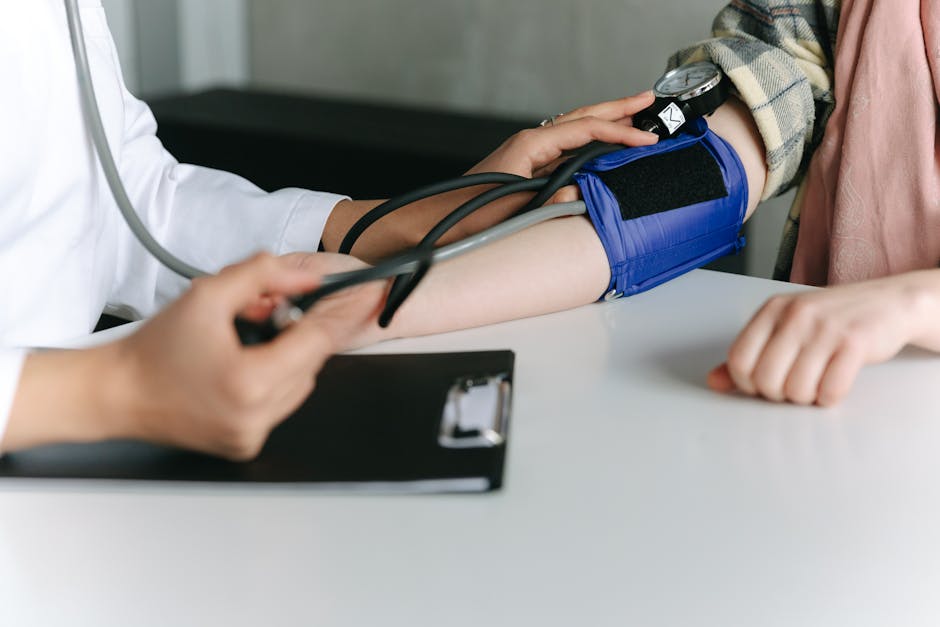
Photo by Thirdman on Pexels
Your body regulates blood pressure mainly through two feedback loops:
-
Short-term regulation: This is fast, happening in seconds or minutes, mostly thanks to your nervous system.
- Baroreceptors: These are special sensors in the walls of your major arteries (like the carotid arteries in your neck and the aortic arch near your heart). They detect changes in blood pressure.
- When pressure rises, baroreceptors send signals to your brain. Your brain then tells your heart to slow down and your blood vessels to relax (dilate), bringing pressure back down.
- When pressure drops, the opposite happens: your heart speeds up, and blood vessels constrict, increasing pressure.
-
Long-term regulation: This involves your kidneys and hormones, taking hours to days to adjust blood volume.
- Kidneys: They control how much water and salt your body retains or excretes. More water and salt retention increases blood volume, which raises blood pressure.
- Hormones: The Renin-Angiotensin-Aldosterone System (RAAS) is key here. When blood pressure or blood volume drops, your kidneys release renin. This triggers a cascade that ultimately leads to vasoconstriction (blood vessel narrowing) and increased water/salt retention by the kidneys, boosting blood pressure.
The Link to Gas Exchange
Gas exchange happens primarily in the alveoli of your lungs. Here, oxygen from the air you breathe diffuses into your blood, and carbon dioxide, a waste product, diffuses from your blood into the alveoli to be exhaled.
The efficiency of gas exchange directly impacts your body's oxygen levels. If oxygen delivery is poor (e.g., due to low blood pressure or lung problems), your tissues suffer. Conversely, proper blood pressure ensures that the oxygenated blood can reach every cell effectively.
Here's how these two processes are intertwined:
graph TD
    A["Baroreceptors detect Blood Pressure changes"] --> B{"Brain processes info"}
    B --> C{{"Short-term: Nervous System"}}
    C --> D["Heart Rate changes"]
    C --> E["Blood Vessel diameter changes"]

    F{"Kidneys & Hormones (RAAS)"} --> G{"Long-term: Blood Volume changes"}
    G --> H["Blood Pressure adjusts"]

    I["Gas Exchange in Lungs"] --> J["Oxygen enters blood"]
    J --> K["Oxygenated blood pumped by Heart"]
    K --> L["Tissues receive Oxygen"]

    H -- "Impacts blood flow to" --> L
    L -- "Needs adequate" --> H
    J -- "Affected by blood flow to lungs" --> I
Factors Affecting Blood Pressure

Photo by Gustavo Fring on Pexels
- Cardiac Output: How much blood your heart pumps per minute (Heart Rate x Stroke Volume). Higher cardiac output generally means higher blood pressure.
- Peripheral Resistance: How constricted or dilated your blood vessels are. Narrower vessels (vasoconstriction) increase resistance and pressure.
- Blood Volume: More blood volume means more pressure. This is where your kidneys play a big role.
3. Worked Example
Let's say you stand up quickly after lying down. Your blood pressure might temporarily drop because gravity pulls blood into your legs.
- Detection: Your baroreceptors in the carotid arteries and aortic arch detect this sudden drop in blood pressure.
- Nervous System Response: They immediately send signals to your brain.
- Brain's Command: Your brain quickly responds by sending signals to:
- Your heart: telling it to beat faster and with more force (increasing cardiac output).
- Your blood vessels: telling them to constrict (vasoconstriction), especially in non-essential areas like your skin and gut, diverting blood to your brain and muscles.
- Result: These rapid adjustments quickly raise your blood pressure back to a normal level, preventing you from feeling lightheaded or fainting. This entire process happens in a few seconds.
4. Key Takeaways
- Blood pressure is the force of blood against artery walls, essential for delivering oxygen and nutrients.
- Baroreceptors provide rapid, short-term blood pressure regulation via the nervous system.
- The kidneys and hormones (like the RAAS) handle long-term blood pressure control by adjusting blood volume.
- Efficient gas exchange in the lungs ensures blood is fully oxygenated, ready for delivery.
- Adequate blood pressure is crucial for effective oxygen delivery to all body tissues.
- Blood pressure is a balance of cardiac output, peripheral resistance, and blood volume.
Common mistakes to avoid:
- Confusing short-term and long-term regulation mechanisms; they work on different timescales and involve different systems.
- Underestimating the role of the kidneys in blood pressure control—they're central to long-term management.
- Forgetting that gas exchange isn't just about oxygen in, but also carbon dioxide out.
- Thinking blood pressure is static; it's constantly being adjusted to your body's needs.
5. Now Try It
Imagine you've just run up a flight of stairs. What immediate changes would your body make to your blood pressure and heart rate, and why? Then, consider how these changes support gas exchange to meet your muscles' increased demand for oxygen. Think through the steps, from detection to response, and what success looks like (not feeling completely out of breath or dizzy).
Try it yourself: Pressure: P = F/A
Frequently asked about Blood Pressure Regulation and Gas Exchange
More from Homeostatis
Get the full Homeostatis curriculum
Clone the complete plan to your dashboard for unlimited AI-generated notes, practice quizzes, and a personalised revision schedule.
Save this course free