Cell Structure and Function
From the Life Science curriculum
TL;DR
Cells are the basic building blocks of all living things, and their structure is perfectly adapted to perform specific functions essential for life. You'll learn about the main parts of cells (organelles) and how they work together, distinguishing between simpler prokaryotic and more complex eukaryotic cells. Understanding these fundamental units is key to grasping how entire organisms operate.
1. The Mental Model
Think of a cell as a tiny, highly organized factory. Each "machine" (organelle) within the factory has a specific job, and they all work together to keep the factory running smoothly, producing what's needed, managing waste, and protecting its internal environment.
2. The Core Material
Cells are typically divided into two main types: prokaryotic and eukaryotic.
Prokaryotic Cells
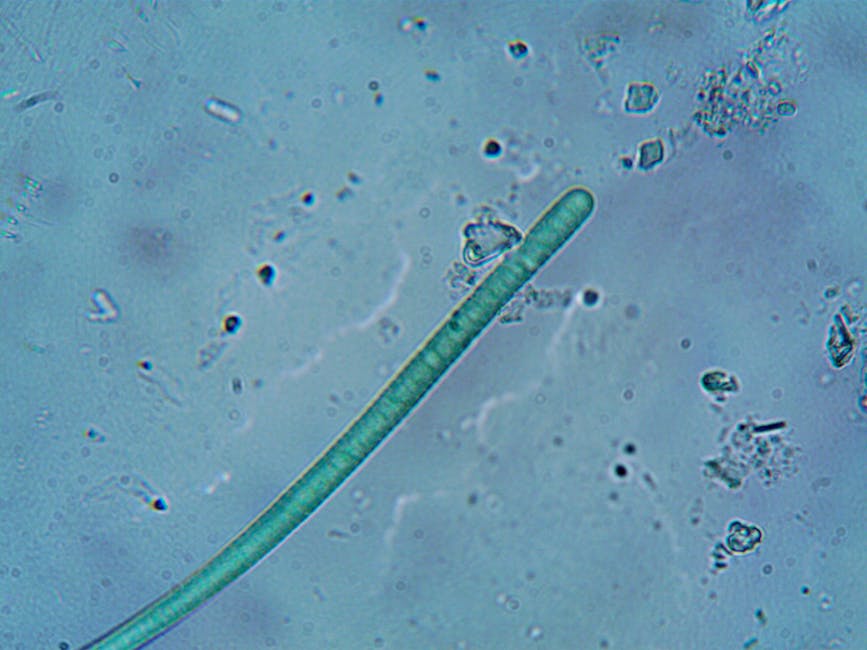
Photo by turek on Pexels
These are the oldest and simplest forms of life, like bacteria and archaea. Key features:
* No true nucleus: Their genetic material (DNA) is in a region called the nucleoid, but it's not enclosed by a membrane.
* No membrane-bound organelles: They lack structures like mitochondria or endoplasmic reticulum.
* Smaller size: Generally much smaller than eukaryotic cells.
* Cell wall: Most have a rigid cell wall outside the plasma membrane for protection and support.
* Ribosomes: They do have ribosomes for protein synthesis, but these are generally smaller than those in eukaryotes.
* Plasma membrane: Controls what enters and leaves the cell.
* Cytoplasm: The jelly-like substance filling the cell, where chemical reactions occur.
Eukaryotic Cells

Photo by Fayette Reynolds M.S. on Pexels
These are more complex and include animal, plant, fungal, and protist cells. Key features:
* True nucleus: Their DNA is enclosed within a double membrane called the nuclear envelope.
* Membrane-bound organelles: They contain many specialized compartments with specific functions.
* Larger size: Generally much larger than prokaryotic cells.
* Plasma membrane, cytoplasm, and ribosomes are also present, similar to prokaryotes but often more complex or larger.
Let's dive into the major organelles found in eukaryotic cells and their functions:
Key Eukaryotic Organelles and Their Functions
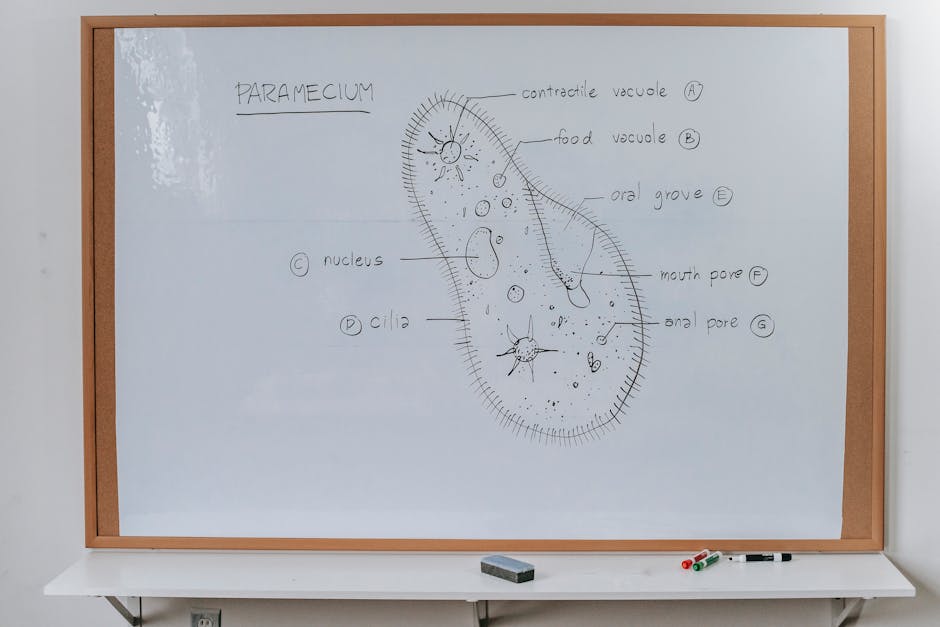
Photo by Katerina Holmes on Pexels
- Nucleus: The "control center" of the cell. It houses the cell's genetic material (DNA) organized into chromosomes. The nucleolus inside the nucleus is where ribosomes are made.
- Mitochondria: The "powerhouses" of the cell. They perform cellular respiration, converting glucose and oxygen into ATP (adenosine triphosphate), the main energy currency of the cell. They have their own small circular DNA.
- Endoplasmic Reticulum (ER): A network of membranes.
- Rough ER (RER): Has ribosomes attached to its surface. It's involved in synthesizing, folding, modifying, and transporting proteins that are destined for secretion, insertion into membranes, or delivery to other organelles.
- Smooth ER (SER): Lacks ribosomes. Involved in lipid synthesis (like hormones and oils), detoxification of drugs and poisons, and storage of calcium ions.
- Ribosomes: Tiny organelles responsible for protein synthesis (translating mRNA into protein). They are found free in the cytoplasm, attached to the RER, or inside mitochondria and chloroplasts.
- Golgi Apparatus (or Golgi complex/body): The "post office" of the cell. It modifies, sorts, and packages proteins and lipids from the ER into vesicles for secretion or delivery to other organelles.
- Lysosomes (mainly in animal cells): The "recycling centers." They contain powerful digestive enzymes that break down waste materials, cellular debris, and foreign invaders (like bacteria).
- Peroxisomes: Small organelles involved in metabolic processes, breaking down fatty acids and detoxifying harmful substances, often producing hydrogen peroxide as a byproduct, which they then convert to water and oxygen.
- Vacuoles: Membrane-bound sacs.
- Central Vacuole (in plant cells): A large, prominent vacuole that stores water, nutrients, and waste, helps maintain turgor pressure against the cell wall, and plays a role in cell growth.
- Small vacuoles (in animal cells): Can be involved in storage or transport.
- Chloroplasts (in plant cells and some protists): The "solar panels" of plant cells. They contain chlorophyll and are the sites of photosynthesis, converting light energy, carbon dioxide, and water into glucose and oxygen. Like mitochondria, they have their own DNA.
- Cell Wall (in plant cells, fungi, bacteria): A rigid outer layer providing structural support, protection, and preventing excessive water uptake. Absent in animal cells.
- Plasma Membrane: The selective barrier surrounding the cell, regulating the passage of substances into and out of the cell. Composed of a phospholipid bilayer with embedded proteins.
- Cytoskeleton: A network of protein filaments (microfilaments, intermediate filaments, microtubules) that provides structural support, facilitates cell movement, and helps transport materials within the cell.
Here's a diagram illustrating the flow of proteins through the endomembrane system:
graph TD
    A["Nucleus (DNA -> RNA)"] --> B["Ribosomes (on Rough ER)"]
    B --> C["Rough ER (Protein Folding/Modification)"]
    C --> D["Transport Vesicle (from ER)"]
    D --> E["Golgi Apparatus (Further Processing/Sorting)"]
    E --> F["Transport Vesicle (from Golgi)"]
    F --> G["Plasma Membrane (Secreted Protein)"]
    F --> H["Lysosome (Enzymes)"]
    F --> I["Other Organelles"]
3. Worked Example
Imagine a pancreatic cell, which produces and secretes digestive enzymes (proteins).
- DNA in the Nucleus contains the instructions for making a specific digestive enzyme. This instruction is transcribed into messenger RNA (mRNA).
- The mRNA leaves the Nucleus and travels to Ribosomes attached to the Rough Endoplasmic Reticulum (RER).
- The Ribosomes synthesize the enzyme protein, which then enters the lumen (inside) of the RER.
- Inside the RER, the enzyme protein undergoes folding and initial modifications.
- Once folded, the enzyme is packaged into a transport vesicle that buds off from the RER.
- This vesicle travels to and fuses with the Golgi Apparatus.
- Within the Golgi, the enzyme is further modified, sorted, and tagged for its specific destination.
- Finally, the processed enzyme is packaged into another secretory vesicle that buds off from the Golgi.
- This secretory vesicle moves to the Plasma Membrane, fuses with it, and releases the digestive enzyme outside the cell (secretion), where it can act in digestion.
This entire process relies on the coordinated action of the nucleus, ribosomes, ER, Golgi, and vesicles – a clear example of how cell structure enables its function.
4. Key Takeaways
- Cells are the fundamental units of life, categorized into simpler prokaryotic and more complex eukaryotic types.
- Prokaryotic cells lack a true nucleus and membrane-bound organelles, while eukaryotic cells possess both.
- Each organelle in a eukaryotic cell has a specialized structure that allows it to perform a unique and essential function.
- The endomembrane system (ER, Golgi, lysosomes, vesicles, plasma membrane) works together to synthesize, modify, transport, and secrete proteins and lipids.
- Mitochondria (and chloroplasts in plants) are crucial for energy production, highlighting the importance of energy flow in cells.
- The cell wall in plants, fungi, and bacteria provides essential structural support and protection, a feature absent in animal cells.
Common Mistakes to Avoid:
* Confusing prokaryotic and eukaryotic characteristics: Remember the key difference is the presence of a true nucleus and membrane-bound organelles in eukaryotes.
* Mixing up Rough ER and Smooth ER functions: RER is for protein processing and transport; SER for lipid synthesis and detoxification.
* Forgetting that ribosomes are found in both cell types: They're essential for protein synthesis in all life forms, just differing slightly in size.
* Assuming all cells have all organelles: Animal cells lack cell walls and chloroplasts; plant cells lack lysosomes.
* Underestimating the importance of the plasma membrane: It's not just a boundary; it's an active, selective gatekeeper.
5. Now Try It
Choose either an animal cell or a plant cell. On a blank piece of paper, draw a simple diagram of your chosen cell type. Label at least 8 key organelles we discussed. For each labeled organelle, write a one-sentence description of its primary function next to it. Once done, check your diagram against a reliable source. Success looks like accurately labeling and describing the functions of the organelles, and clearly showing the differences if you chose a plant cell (e.g., cell wall, central vacuole, chloroplasts) compared to an animal cell.
Try it yourself: Animal and plant cells in 3D
Frequently asked about Cell Structure and Function
Study this next
Get the full Life Science curriculum
Clone the complete plan to your dashboard for unlimited AI-generated notes, practice quizzes, and a personalised revision schedule.
Save this course free