"Pre-history and Roman presence",
From the netherlands curriculum
TL;DR
The Netherlands' pre-history saw hunter-gatherers and early farmers adapt to a watery landscape, establishing the first permanent settlements. Roman arrival brought significant changes, introducing advanced infrastructure and a distinct cultural influence, particularly in the south. However, the Romans never fully conquered the entire region, leaving the northern parts largely independent.
1. The Mental Model
Imagine the Netherlands as a dynamic, low-lying land constantly shaped by water, where early inhabitants were always adapting. Then, picture a powerful, organised empire arriving, bringing new technologies and ideas, but not quite managing to dominate every corner of this unique environment.
2. The Core Material
The history of the Netherlands before written records and the subsequent Roman period is a fascinating story of environmental adaptation and cultural exchange.
Early Inhabitants: Adapting to a Dynamic Landscape

Photo by Radoslaw Sikorski on Pexels
For thousands of years, the area we now call the Netherlands was a very different place.
- Paleolithic (Old Stone Age): The earliest traces, around 300,000 years ago, are from Neanderthals. They were nomadic hunter-gatherers, following herds and adapting to glacial periods. Evidence includes stone tools found in the south.
- Mesolithic (Middle Stone Age): As the ice retreated around 10,000 BC, the climate warmed, and forests grew. People became more sedentary, living near rivers and coasts, hunting smaller game, fishing, and gathering. The "Polderweg" site is a notable example, showing wooden trackways.
- Neolithic (New Stone Age): Around 5300 BC, agriculture arrived, bringing pottery and permanent settlements. The Funnelbeaker culture (c. 4300-2800 BC) is famous for building dolmens (hunebedden), large megalithic tombs found mainly in Drenthe. These indicate complex social structures and settled farming communities. Later, the Corded Ware culture and Bell Beaker culture introduced new pottery styles and burial practices, often associated with early metalworking.
The Roman Arrival and its Impact
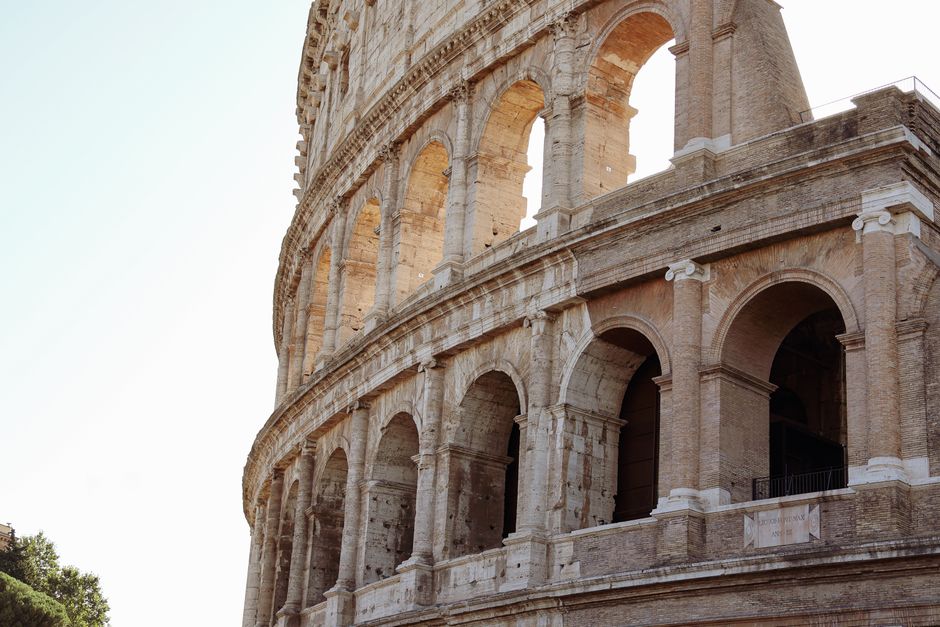
Photo by C1 Superstar on Pexels
The Romans arrived around 50 BC, reaching the Rhine River, which became a significant part of their northern frontier (the Limes).
- Conquest and Administration: The southern part of the Netherlands, south of the Rhine, became part of the Roman Empire, initially within the province of Germania Inferior. Key Roman settlements included Nijmegen (Noviomagus), Voorburg (Forum Hadriani), and Utrecht (Traiectum). These towns had Roman-style buildings, baths, temples, and organised street plans.
- Infrastructure: The Romans built roads, forts, and watchtowers along the Rhine, which served as a natural barrier and a crucial transport route. This infrastructure facilitated trade and military movements.
- Culture and Economy: Roman presence introduced new technologies (e.g., pottery wheels, improved metalworking), crops (like grapes and cherries), and currency. Local tribes, like the Batavians, initially served as auxiliary troops for the Romans, known for their equestrian skills. This relationship, however, wasn't always peaceful, leading to the Batavian Revolt in 69-70 AD.
- Northern Tribes: North of the Rhine, tribes like the Frisians largely remained outside direct Roman control. While there was trade and some cultural exchange, their societies retained more of their pre-Roman characteristics.
Here's a simplified view of the Roman influence in the region:
graph LR
    A["Roman Empire's Border (Rhine River)"] --> B["South of Rhine (Germania Inferior)"]
    B --> C["Roman Towns (Nijmegen, Utrecht)"]
    C --> D["Roman Law & Administration"]
    C --> E["New Technologies & Trade"]
    E --> F["Cultural Integration (Batavians)"]
    B --> G["Roman Military Presence (Forts, Roads)"]
    A --> H["North of Rhine (Independent Tribes)"]
    H --> I["Limited Roman Control"]
    H --> J["Cultural Exchange (Trade, some influence)"]
    J --> K["Maintained Local Traditions"]
The decline of the Roman Empire from the 3rd century AD onwards saw the Romans gradually withdraw, leading to a period known as the Migration Period, where new Germanic tribes moved into the region, marking the end of the Roman presence and the beginning of the early medieval period in the Netherlands.
3. Worked Example
Let's consider the impact of the Romans on a specific area: the region around Nijmegen. Before the Romans, this area would have been home to local Germanic tribes, living in relatively dispersed settlements, likely focused on agriculture and some trade. Their structures would have been primarily wooden, and their economy localised.
With the arrival of the Romans, Nijmegen became Noviomagus, a significant military and administrative centre. You'd see:
* Stone buildings: Temples, bathhouses, and administrative buildings, a stark contrast to local wooden huts.
* Organised street plans: Grids, unlike organic tribal settlements.
* Roads: Connecting Noviomagus to other Roman outposts and the heart of the empire, facilitating faster travel and trade.
* Specialised goods: Roman pottery (terra sigillata), coins, and tools would become commonplace.
* Military presence: Roman legions and auxiliary troops, like the Batavians, would be stationed there, influencing local politics and society.
* Cultural blend: Local people would adopt Roman customs, language (Latin), and perhaps even religious practices, creating a unique Romano-Germanic culture that persisted even after the official Roman withdrawal.
This transformation from a tribal settlement to a Roman urban hub demonstrates the profound, albeit limited, reach of Roman influence.
4. Key Takeaways
- The Netherlands' pre-history shows continuous human adaptation to a changing, water-rich environment.
- The Funnelbeaker culture's dolmens are crucial evidence of early settled agricultural societies.
- The Rhine River formed a key border for the Roman Empire, dividing their controlled territory from independent tribal lands.
- Roman presence introduced advanced infrastructure, urbanisation, and new cultural elements like writing and coinage.
- Local tribes, like the Batavians, played a complex role, serving the Romans but also rebelling against them.
- Northern parts of the Netherlands remained largely outside direct Roman control, maintaining more indigenous cultures.
- The end of Roman rule marked a period of transition as new Germanic tribes entered the region.
Common mistakes to avoid:
- Don't assume the entire Netherlands was Romanised; the north remained largely independent.
- Don't overlook the significance of water and environmental adaptation in pre-history.
- Don't confuse the Batavian's initial alliance with the Romans for complete submission; they maintained their distinct identity.
- Don't think Roman influence disappeared instantly after their withdrawal; aspects persisted for centuries.
5. Now Try It
Take 15 minutes to research one specific Roman artefact or structure found in the Netherlands (e.g., a specific fort, a type of pottery, or a particular road section). Explain what it tells us about Roman daily life or military strategy in the region. Success looks like you can describe the artefact/structure, its location, and at least two insights it provides into the Roman presence.
Frequently asked about "Pre-history and Roman presence",
More from netherlands
Get the full netherlands curriculum
Clone the complete plan to your dashboard for unlimited AI-generated notes, practice quizzes, and a personalised revision schedule.
Save this course free