Identifying Variables in Experiments
From the Science curriculum
TL;DR
When you design or analyze an experiment, you need to identify what you're changing, what you're measuring, and what you're keeping the same. These are the independent, dependent, and controlled variables, respectively, and understanding them is key to good science. Clearly defining these helps ensure your results are reliable and that you can make sense of your findings.
1. The Mental Model
Think of an experiment as a carefully controlled question-and-answer session. You change one specific thing (the question), see how something else responds (the answer), and make sure nothing else messes up your observation.
2. The Core Material
In any experiment, you're trying to figure out cause and effect. To do this properly, you need to pinpoint three main types of variables:
Independent Variable (IV)
This is the one thing you intentionally change or manipulate in your experiment. It's the "cause" you're testing. You have direct control over it.
- Tip: If you can choose its values (e.g., different amounts, different temperatures), it's likely your independent variable.
Dependent Variable (DV)
This is the thing you measure or observe in response to the changes you made to the independent variable. It's the "effect" you're looking for. It "depends" on the independent variable.
- Tip: This is usually the data you collect and record.
Controlled Variables (Constants)
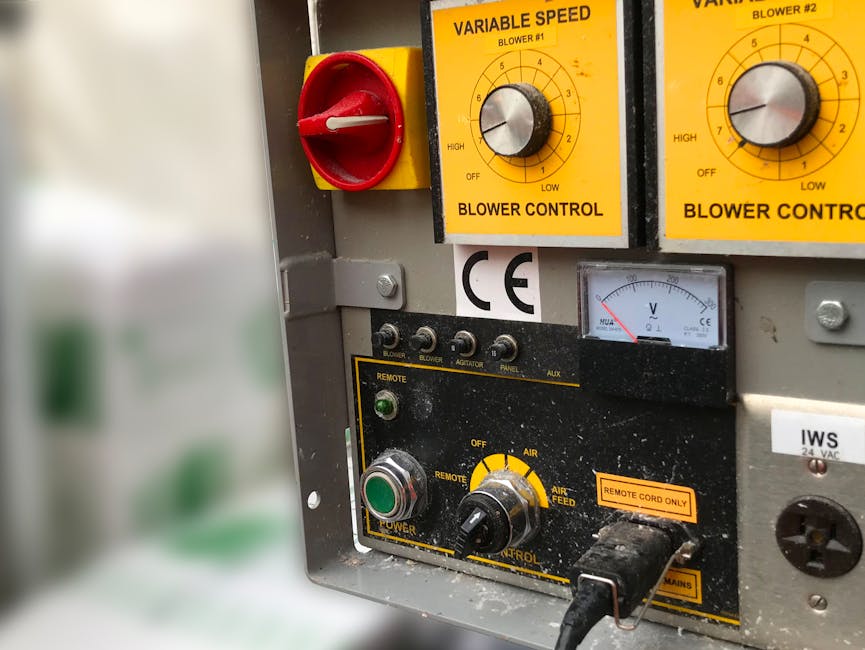
Photo by Guy Dwelly on Pexels
These are all the other factors that you keep exactly the same throughout the experiment. If you don't control them, they could also affect your dependent variable, making it hard to tell if your independent variable was truly the cause.
- Tip: Imagine what else could change the outcome if you weren't careful; those are your controlled variables.
Let's visualize the relationship between these:
graph TD
    A["You change this (Independent Variable)"] --> B["This responds/changes (Dependent Variable)"]
    subgraph "You keep these constant"
        C["Factor 1 (Controlled Variable)"]
        D["Factor 2 (Controlled Variable)"]
        E["Factor 3 (Controlled Variable)"]
    end
    C --> B
    D --> B
    E --> B
3. Worked Example
Let's say you want to find out if different types of fertilizer affect how tall a plant grows.
- Question: Does the type of fertilizer influence plant height?
- Hypothesis: If I use different types of fertilizer, then the plant height will vary.
- Independent Variable (IV): The type of fertilizer. You'd choose specific fertilizers (e.g., Fertilizer A, Fertilizer B, no fertilizer) and apply them.
- Dependent Variable (DV): The height of the plant. This is what you'd measure (e.g., in centimeters) after a set period.
- Controlled Variables:
- Amount of water: All plants get the same amount of water.
- Type of plant/seed: All plants are the same species, ideally from the same batch of seeds.
- Amount of sunlight/light source: All plants receive the same amount of light for the same duration.
- Type of soil: All plants are in the same type and amount of soil.
- Pot size: All plants are in pots of the same size.
- Temperature: All plants are kept at the same ambient temperature.
- Time frame: You measure height after the same number of days/weeks for all plants.
By identifying and controlling these variables, you can be more confident that any difference in plant height is actually due to the type of fertilizer and not something else.
4. Key Takeaways
- The independent variable is what you change on purpose.
- The dependent variable is what changes in response and what you measure.
- Controlled variables are everything else you keep constant to ensure a fair test.
- A well-designed experiment isolates the effect of the independent variable on the dependent variable.
- Clearly defining variables helps you predict outcomes and interpret results accurately.
- If you don't control variables, you can't be sure what caused your results.
Common Mistakes to Avoid:
- Confusing IV and DV: Remember, you manipulate the IV, and you measure the DV.
- Having multiple independent variables: In a simple experiment, you should only change one thing at a time. If you change two, you won't know which one caused the effect.
- Not controlling enough variables: Overlook something like different light exposure, and your results will be unreliable.
- Measuring the DV inconsistently: Make sure your measurement method is the same every time (e.g., always measure plant height from the soil line to the tallest leaf).
5. Now Try It
Imagine you want to test how the amount of salt in water affects the time it takes for an egg to float.
For this experiment, write down:
1. Your independent variable.
2. Your dependent variable.
3. At least three controlled variables you'd need to keep constant.
Success looks like you correctly identifying one factor you'd change, one factor you'd measure, and at least three factors you'd ensure stay the same to make your test fair.
Frequently asked about Identifying Variables in Experiments
Study this next
Get the full Science curriculum
Clone the complete plan to your dashboard for unlimited AI-generated notes, practice quizzes, and a personalised revision schedule.
Save this course free