Cognition, Language, and Intelligence
From the https://nationalueduph.sharepoint.com/:b:/s/INTRODUCTIONTOPSYCHOLOGYPSY268TF9AM-11AM/IQAXSO-RwCfnSKy8VfleGwmbAcQfifEy2vXmIBgXVOkLiGM curriculum
TL;DR
This topic explores how we think, use language, and what intelligence really means. You'll learn about different cognitive processes, how language shapes our world, and various theories and measurements of intelligence. Understanding these concepts helps you grasp the complexities of the human mind.
1. The Mental Model
Think of your mind like a powerful computer. Cognition is the software and processes it runs (thinking, remembering). Language is how that computer communicates and processes information in a structured way. Intelligence is its overall processing power and ability to adapt and solve problems.
2. The Core Material
Cognition: How We Think

Photo by Markus Winkler on Pexels
Cognition refers to all the mental activities associated with thinking, knowing, remembering, and communicating. It includes:
- Concepts: Mental groupings of similar objects, events, ideas, or people. We form these through prototypes (best examples) or exemplars (actual examples).
- Problem-Solving: Strategies we use to overcome obstacles.
- Algorithms: Step-by-step procedures that guarantee a solution but can be slow.
- Heuristics: Mental shortcuts that are faster but don't always guarantee a correct solution. Examples include the availability heuristic (judging likelihood based on how easily examples come to mind) and the representativeness heuristic (judging likelihood based on how well something matches a prototype).
- Decision-Making: The process of making choices. Often influenced by biases like confirmation bias (seeking out information that confirms our beliefs) and framing (how an issue is presented, which can influence decisions).
- Memory: How we encode, store, and retrieve information.
- Attention: Focusing mental effort on specific stimuli.
Language: How We Communicate
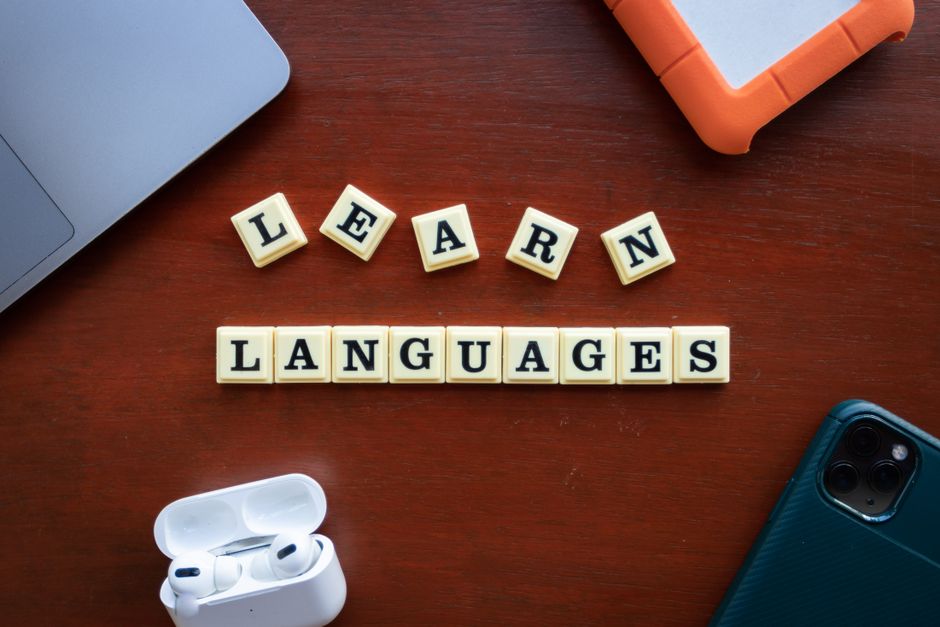
Photo by Ling App on Pexels
Language is a system of spoken, written, or signed words and the ways we combine them to communicate meaning. It has several key components:
- Phonemes: The smallest distinct sound units in a language (e.g., "ch," "a," "t" in "chat").
- Morphemes: The smallest units that carry meaning (e.g., "un-" "break"- "-able").
- Grammar: The rules for combining words into grammatically sensible sentences.
- Semantics: The set of rules for deriving meaning from sounds.
- Syntax: The set of rules for combining words into grammatically correct sentences.
Different theories explain language acquisition:
- Chomsky's Universal Grammar: Proposed that humans have an innate predisposition to learn language, a "language acquisition device."
- Skinner's Operant Conditioning: Suggested language is learned through association, imitation, and reinforcement.
- Whorf's Linguistic Determinism: The idea that language determines the way we think (strong version, often debated) or influences our thought (weaker version, more widely accepted).
Here's a simplified look at how language breaks down:
graph TD
    A["Language"] --> B["Components"]
    B --> C["Phonemes (Sounds)"]
    B --> D["Morphemes (Meaning Units)"]
    B --> E["Grammar (Rules)"]
    E --> F["Semantics (Meaning)"]
    E --> G["Syntax (Structure)"]
    A --> H["Theories of Acquisition"]
    H --> I["Chomsky (Innate)"]
    H --> J["Skinner (Learning)"]
    H --> K["Whorf (Influence on Thought)"]
Intelligence: Our Mental Capacity

Photo by MART PRODUCTION on Pexels
Intelligence is often defined as the ability to learn from experience, solve problems, and use knowledge to adapt to new situations.
- Theories of Intelligence:
- Spearman's General Intelligence (g): Proposed a single, general intelligence factor underlies all specific mental abilities.
- Thurstone's Primary Mental Abilities: Identified several distinct abilities (e.g., word fluency, spatial visualization) rather than one general factor.
- Gardner's Multiple Intelligences: Suggested eight or nine relatively independent intelligences (e.g., linguistic, logical-mathematical, musical, bodily-kinesthetic).
- Sternberg's Triarchic Theory: Proposed three intelligences: analytical (academic problem-solving), creative (novel ideas), and practical (everyday tasks).
- Assessing Intelligence:
- Intelligence Tests: Designed to assess mental aptitude.
- Achievement Tests: Measure what you've learned.
- Aptitude Tests: Predict future performance.
- IQ (Intelligence Quotient): Originally, mental age divided by chronological age, multiplied by 100. Now, it's typically a score relative to the average performance of others the same age (average is 100).
- Criteria for Good Tests:
- Standardization: Administering the test to a representative sample to establish norms.
- Reliability: The extent to which a test yields consistent results over time.
- Validity: The extent to which a test measures what it's supposed to measure.
3. Worked Example
Imagine you're trying to decide which route to take to a new restaurant.
- Cognition: You access your memory of past traffic patterns, use heuristics like "the main road is usually faster" or "avoid the highway during rush hour because I heard about a crash last week (availability heuristic)." You might also use problem-solving strategies like mentally simulating different routes. Your decision-making is then influenced by this information and any biases, like choosing a route you're familiar with even if it's not optimal (confirmation bias if you only look up traffic for that route).
- Language: As you navigate, you might use internal self-talk ("Okay, turn left here, then right") or follow GPS directions which rely on your understanding of semantics (what "turn left" means) and syntax (the order of words in the instruction). If you were discussing the route with a friend, you'd use shared language to describe landmarks or turns.
- Intelligence: Your practical intelligence comes into play as you adapt to unexpected road closures or quickly find an alternate route. Your analytical intelligence might help you compare the estimated travel times from different map apps, and your spatial intelligence (if we consider Gardner's theory) allows you to visualize the turns and map in your head.
4. Key Takeaways
- Cognition involves all our mental processes for thinking, knowing, remembering, and communicating, using tools like concepts and problem-solving strategies.
- Language is a structured system of communication made up of sounds (phonemes), meaningful units (morphemes), and rules (grammar, semantics, syntax).
- Theories like Chomsky's innate language ability and Skinner's learning through reinforcement offer different views on how we acquire language.
- Intelligence is our capacity to learn, solve problems, and adapt, with theories proposing single (Spearman), multiple (Gardner), or triarchic (Sternberg) forms.
- Good intelligence tests must be standardized, reliable (consistent), and valid (accurate).
Common Mistakes to Avoid

Photo by KATRIN BOLOVTSOVA on Pexels
- Don't confuse heuristics with algorithms; heuristics are quick shortcuts, algorithms are guaranteed step-by-step solutions.
- Don't think of linguistic determinism as saying language completely controls thought; it's more about language influencing or shaping thought.
- Avoid seeing intelligence as a single, fixed number; it's a complex, multifaceted capacity with various theories about its structure.
- Don't assume an intelligence test score is the sole measure of a person's abilities or potential.
- Confusing achievement tests (what you have learned) with aptitude tests (what you can learn).
5. Now Try It
Spend 15 minutes observing your own cognitive processes. When you're trying to solve a small problem (e.g., figuring out what to eat for dinner, planning your next study session), identify which cognitive tools you're using. Are you using a heuristic? Forming concepts? How does your internal language play a role? Afterward, reflect on which aspects of intelligence might be at play in how you approach and solve that problem.
Success looks like being able to identify at least one example of a heuristic, a concept, and how either language or a specific intelligence (e.g., practical, analytical) was involved in your brief problem-solving process.
Frequently asked about Cognition, Language, and Intelligence
More from https://nationalueduph.sharepoint.com/:b:/s/INTRODUCTIONTOPSYCHOLOGYPSY268TF9AM-11AM/IQAXSO-RwCfnSKy8VfleGwmbAcQfifEy2vXmIBgXVOkLiGM
Get the full https://nationalueduph.sharepoint.com/:b:/s/INTRODUCTIONTOPSYCHOLOGYPSY268TF9AM-11AM/IQAXSO-RwCfnSKy8VfleGwmbAcQfifEy2vXmIBgXVOkLiGM curriculum
Clone the complete plan to your dashboard for unlimited AI-generated notes, practice quizzes, and a personalised revision schedule.
Save this course free