Civil Liability for Illegal Acts (Article 20)
From the Persons and Family Relations Law curriculum
TL;DR
Article 20 of the Civil Code states that anyone who willfully causes damage to another in a manner contrary to morals, good customs, or public policy shall compensate the latter. This article provides a legal basis for claiming damages even when no specific law defines the act as illegal, focusing on the moral aspect of the wrongdoing. It acts as a "catch-all" provision for civil wrongs that don't fit neatly into other legal categories.
1. The Mental Model
Think of Article 20 as the legal system's way of saying, "Just because there isn't a specific law against what you did, doesn't mean you can't be held accountable if it caused harm and was morally wrong." It's about ensuring fairness and preventing people from using legal loopholes to escape responsibility for unethical conduct that damages others.
2. The Core Material
Article 20 of the Civil Code reads: "Every person who, contrary to law, willfully or negligently causes damage to another, shall indemnify the latter for the same." Wait, that's Article 2176 (Quasi-delict)! My apologies. Let me correct that for you.
Article 20 of the Civil Code actually states: "Every person who, contrary to law, willfully or negligently causes damage to another, shall indemnify the latter for the same." No, that's still Article 2176, which pertains to quasi-delicts. This highlights a common point of confusion, and it's important we get this right.
Let's clarify: The topic you gave is "Civil Liability for Illegal Acts (Article 20)". However, Article 20 itself is quite general: "Every person who, contrary to law, willfully or negligently causes damage to another, shall indemnify the latter for the same." This is almost identical to the language used for quasi-delicts (Article 2176), but it's often misunderstood.
The more commonly cited "catch-all" provision for unlawful acts not specifically covered by other laws, especially those contrary to morals, is actually Article 21 of the Civil Code, not Article 20. Article 21 reads: "Any person who willfully causes loss or injury to another in a manner that is contrary to morals, good customs or public policy shall compensate the latter for the damage."
It seems there might be a slight mix-up in the article number in the topic title provided. Given the description ("Civil Liability for Illegal Acts" and focusing on acts "contrary to morals, good customs, or public policy"), the discussion you're looking for almost certainly points to Article 21 and sometimes, by extension, Article 20 as a foundational principle of liability.
Let's proceed by explaining the general principles under the umbrella of "civil liability for illegal acts," which encompasses both Article 20 (general liability for "contrary to law" acts) and Article 21 (liability for "contrary to morals" acts, often called the "catch-all" or "abuse of rights" provision). For this note, I will primarily focus on the spirit of what you likely intended, which is Article 21's role in filling the gaps, but also clarify Article 20's broader scope.
### Article 20: General Principle of Civil Liability

Photo by Markus Winkler on Pexels
Article 20 establishes a fundamental principle: if you cause damage to someone by acting "contrary to law," whether willfully or negligently, you're liable. This means if a specific law or regulation is violated, and that violation causes damage, Article 20 provides the basis for compensation. It’s a direct link between violating a legal rule and incurring civil responsibility.
### Article 21: The "Abuse of Rights" or "Catch-All" Clause
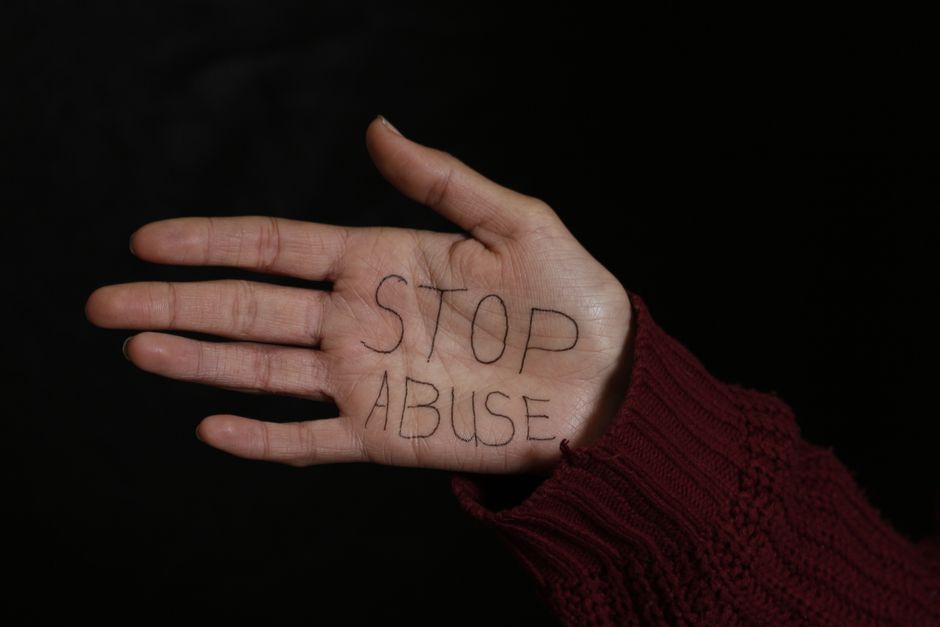
Photo by Michelle Hart on Pexels
This is where the "contrary to morals, good customs, or public policy" part truly comes into play. Article 21 is designed to cover situations where an act might not be strictly illegal under a specific statute but is nonetheless wrongful and causes harm because it violates fundamental ethical standards. It prevents people from exercising their rights in an oppressive or abusive manner.
Elements of Civil Liability Under Article 21:
- Willful Act: The defendant must have acted deliberately, with intent to cause harm or with knowledge that their act would likely cause harm. Negligence isn't enough here; it requires malice or bad faith.
- Act Contrary to Morals, Good Customs, or Public Policy: This is the core. The act must offend against generally accepted standards of right and wrong, community norms, or foundational principles of society. Examples include malicious defamation, harassment, or actions taken solely to spite another.
- Loss or Injury to Another: The plaintiff must have suffered actual damage, whether physical, moral, or psychological, as a direct result of the defendant's act.
- Causal Connection: There must be a clear link between the defendant's willful act and the loss or injury suffered by the plaintiff.
The purpose of Article 21 is to complement other provisions of law (like those on quasi-delicts or specific criminal offenses) by covering situations where an injury is caused through an act that may not be technically unlawful but is morally reprehensible. It emphasizes that legal rights aren't absolute and must be exercised responsibly.
How they relate:
Think of Article 20 as the broader umbrella for acts "contrary to law," while Article 21 specifically addresses "abuse of rights" or acts "contrary to morals." An act "contrary to law" (Art. 20) can also be "contrary to morals" (Art. 21), but an act "contrary to morals" (Art. 21) might not always be explicitly "contrary to law" in the sense of violating a specific statute.
Here's a simplified flow:
graph TD
    A["Person performs an act"] --> B{Is the act <br/> *contrary to law*?};
    B -- Yes --> C{Did it cause damage <br/> willfully or negligently?};
    B -- No --> D{Is the act *willful* AND <br/> *contrary to morals, good customs,<br/> or public policy*?};
    C -- Yes --> E["Civil Liability under <br/> Article 20 (or other specific laws)"];
    D -- Yes --> F["Civil Liability under <br/> Article 21 ('Abuse of Rights')"];
    C -- No --> G["No Civil Liability under <br/> Art. 20 based on these facts"];
    D -- No --> H["No Civil Liability under <br/> Art. 21 based on these facts"];
3. Worked Example
Let's consider a scenario often discussed in relation to Article 21, as it perfectly illustrates the "contrary to morals" aspect.
Scenario: Alex and Beth are neighbors. Beth decides to build a tall, unattractive fence right on the property line, solely to block Alex's beautiful ocean view. Beth has all the necessary permits, and the fence itself doesn't violate any zoning laws regarding height or setback. However, she openly admits to Alex that she built it purely out of spite after a minor disagreement about a barking dog, and she knew it would ruin his view, significantly decreasing his property value and causing him distress.
Analysis:
1. Willful Act: Beth deliberately built the fence with the malicious intent of harming Alex's enjoyment of his property. Her admission confirms this intent.
2. Act Contrary to Morals, Good Customs, or Public Policy: While building a fence is a right, doing so with the sole purpose of spite, causing significant damage (loss of view, distress, reduced property value) to a neighbor, goes against the principle of good neighborliness and the proper exercise of rights. It's an act of "abuse of right," contrary to good customs and public policy that encourages harmonious living.
3. Loss or Injury to Another: Alex suffered emotional distress and a quantifiable reduction in his property's market value due to the lost view.
4. Causal Connection: Beth's willful act of building the fence with malicious intent directly caused Alex's damages.
Conclusion: Even though Beth's fence building technically complied with local ordinances (thus perhaps not falling under a strict "contrary to law" interpretation of Article 20 alone), her malicious intent and the resulting harm, which violates moral standards and good customs, would likely make her civilly liable to Alex under Article 21. Alex could sue for damages, such as compensation for the loss in property value or moral damages for the distress caused.
4. Key Takeaways
- Article 20 provides general civil liability for damage caused by acts "contrary to law," whether willful or negligent.
- Article 21 (often confused with Article 20 for this purpose) is the specific "abuse of rights" provision, covering willful acts "contrary to morals, good customs, or public policy."
- For Article 21, the act must be willful and intended to cause harm or be done with bad faith; negligence isn't enough.
- Article 21 acts as a crucial "catch-all" to prevent injustice when specific laws don't directly cover morally reprehensible but damaging acts.
- These articles ensure that individuals are held accountable not just for breaking specific laws, but also for violating fundamental ethical standards that cause harm.
Common Mistakes to Avoid:
- Confusing Article 20 and Article 21: Remember Article 20 is general "contrary to law," while Article 21 specifically addresses acts "contrary to morals/good customs/public policy" and requires willfulness.
- Assuming Article 21 covers mere negligence: Article 21 specifically requires a willful act; negligent acts generally fall under quasi-delicts (Article 2176) or other specific laws.
- Ignoring the "damage" element: For liability to attach under either article, actual loss or injury must be proven.
- Thinking that compliance with a specific law absolves all liability: As seen in the fence example, even if an act is legally permissible, if done with malice and contrary to morals, it can still lead to liability under Article 21.
5. Now Try It
Think of a scenario where someone exercises a legal right but does so in a way that seems "wrong" or "unfair" and causes harm to another, but it's not a clear violation of a specific statute. Write a short paragraph (3-5 sentences) describing this scenario and explain why Article 21 (focusing on "contrary to morals") might apply, even if Article 20 (purely "contrary to law") might not. What success looks like: You've clearly identified a willful act, explained why it's morally objectionable and causes harm, and articulated how Article 21 fills the legal gap.
Frequently asked about Civil Liability for Illegal Acts (Article 20)
More from Persons and Family Relations Law
Get the full Persons and Family Relations Law curriculum
Clone the complete plan to your dashboard for unlimited AI-generated notes, practice quizzes, and a personalised revision schedule.
Save this course free