Introduction to Alcohols, Phenols, and Ethers
From the Alcohol phenol and ether curriculum
TL;DR
Alcohols, phenols, and ethers are organic compounds containing an oxygen atom, distinguished by how that oxygen is bonded to carbon. Alcohols have an -OH group attached to an aliphatic carbon, phenols have an -OH group attached directly to an aromatic ring, and ethers have an oxygen atom bonded to two alkyl or aryl groups. Understanding their unique structures helps predict their distinct physical and chemical properties.
1. The Mental Model
Imagine these three as different "flavors" of organic molecules that all contain oxygen, but the oxygen is connected in unique ways. These different connections are key to how they behave and react.
2. The Core Material
Alcohols, phenols, and ethers are incredibly important in organic chemistry, serving as solvents, reagents, and intermediates in many industrial processes. Let's break down their structures and how they differ.
What Makes Them Different? The Oxygen Connection
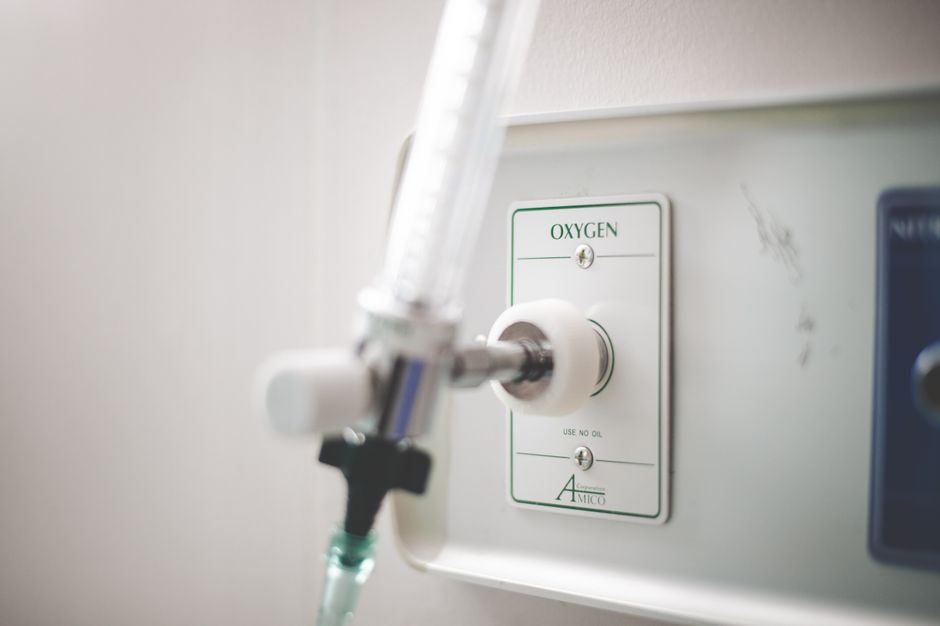
Photo by Stephen Andrews on Pexels
The defining feature of these compounds is the presence of an oxygen atom, but where that oxygen sits and what it's bonded to dictates whether it's an alcohol, a phenol, or an ether.
- Alcohols (R-OH): In alcohols, a hydroxyl group (-OH) is attached to an aliphatic (non-aromatic) carbon atom. Think of a simple carbon chain or ring where one hydrogen is replaced by an -OH.
- Examples: Methanol ($\text{CH}_3\text{OH}$), Ethanol ($\text{CH}_3\text{CH}_2\text{OH}$), Propan-2-ol ($\text{CH}_3\text{CH}(\text{OH})\text{CH}_3$).
- Phenols (Ar-OH): Phenols also have a hydroxyl group (-OH), but it's attached directly to an aromatic ring (usually a benzene ring). This direct attachment to the ring significantly changes its properties compared to alcohols.
- Examples: Phenol ($\text{C}_6\text{H}_5\text{OH}$), Resorcinol (1,3-Benzenediol).
- Ethers (R-O-R' or Ar-O-R or Ar-O-Ar'): Ethers feature an oxygen atom bonded to two alkyl groups, two aryl groups, or one alkyl and one aryl group. The oxygen acts as a bridge between two hydrocarbon fragments.
- Examples: Dimethyl ether ($\text{CH}_3\text{OCH}_3$), Diethyl ether ($\text{CH}_3\text{CH}_2\text{OCH}_2\text{CH}_3$), Anisole ($\text{C}_6\text{H}_5\text{OCH}_3$).
Key Differences in Properties

Photo by RDNE Stock project on Pexels
These structural differences lead to distinct physical and chemical properties:
- Hydrogen Bonding: Alcohols and phenols can form strong intermolecular hydrogen bonds due to the presence of the -OH group. This gives them higher boiling points and better solubility in water compared to ethers of similar molecular weight. Ethers cannot form hydrogen bonds with themselves because they lack a hydrogen directly bonded to oxygen.
- Acidity: Phenols are significantly more acidic than alcohols. This is because the aromatic ring can stabilize the phenoxide ion (the conjugate base of phenol) through resonance, spreading out the negative charge. Alcohols are very weakly acidic, similar to water. Ethers are generally not acidic.
- Reactivity: The hydroxyl group in alcohols and phenols is a site for many reactions, including oxidation, dehydration, and substitution. Ethers are generally less reactive, often used as inert solvents.
Here's a visual summary of their structural relationships:
graph TD
    A["Organic Compounds with Oxygen"] --> B["Oxygen bonded to Carbon"]

    B --> C["Oxygen bonded to one Carbon and one Hydrogen"]
    B --> D["Oxygen bonded to two Carbons"]

    C --> E["-OH on Aliphatic Carbon"]
    C --> F["-OH on Aromatic Carbon (Benzene Ring)"]

    E["-OH on Aliphatic Carbon"] --> Alcohols
    F["-OH on Aromatic Carbon (Benzene Ring)"] --> Phenols

    D["Oxygen bonded to two Carbons"] --> Ethers
Naming Conventions (Briefly)
- Alcohols: Replace the '-e' of the parent alkane with '-ol'. For example, methane becomes methanol.
- Phenols: Usually named as derivatives of phenol (the parent compound).
- Ethers: Name the two alkyl/aryl groups attached to the oxygen alphabetically, followed by "ether" (e.g., diethyl ether). Or, use the alkoxy prefix for the smaller group (e.g., methoxyethane for $\text{CH}_3\text{OCH}_2\text{CH}_3$).
3. Worked Example
Let's consider three compounds with similar molecular formulas to highlight the differences:
- Ethanol: $\text{CH}_3\text{CH}_2\text{OH}$ (Alcohol)
- Dimethyl Ether: $\text{CH}_3\text{OCH}_3$ (Ether)
- Phenol: $\text{C}_6\text{H}_5\text{OH}$ (Phenol, but much higher molecular weight, so let's stick to just the first two for a direct comparison)
Let's compare Ethanol and Dimethyl Ether. Both have the molecular formula $\text{C}_2\text{H}_6\text{O}$.
- Ethanol: The oxygen is part of a hydroxyl group (-OH) attached to an ethyl group. It can form hydrogen bonds with other ethanol molecules and with water. This gives it a relatively high boiling point (78 °C) and makes it miscible with water.
- Dimethyl Ether: The oxygen is bonded to two methyl groups, forming an -O- bridge. It lacks an -OH group, so it cannot form hydrogen bonds with itself. As a result, its boiling point is much lower (-24 °C) – it's a gas at room temperature. It's also less soluble in water than ethanol.
This example clearly shows how the arrangement of atoms, specifically the oxygen's bonding environment, dramatically affects physical properties, even for isomers with the same molecular formula.
4. Key Takeaways
- Alcohols have an -OH group on an aliphatic carbon.
- Phenols have an -OH group directly on an aromatic ring.
- Ethers have an oxygen atom bridging two hydrocarbon groups (R-O-R').
- Alcohols and phenols can form hydrogen bonds due to their -OH group, leading to higher boiling points and better water solubility than ethers of similar size.
- Phenols are more acidic than alcohols because the aromatic ring stabilizes the phenoxide ion through resonance.
- Ethers are generally less reactive and often used as inert solvents.
- The position and bonding of the oxygen atom are crucial for predicting a molecule's properties.
Common Mistakes to Avoid:
- Confusing an alcohol with a phenol: remember, the -OH must be directly on an aromatic ring for it to be a phenol.
- Assuming all oxygen-containing compounds can hydrogen bond: only those with an O-H or N-H bond can form intermolecular hydrogen bonds. Ethers can't.
- Underestimating the acidity difference between alcohols and phenols: phenols are significantly more acidic, a key distinction.
- Not recognizing that isomers (same molecular formula, different structure) can have drastically different properties, as shown with ethanol and dimethyl ether.
5. Now Try It
Take a look at the following three molecules:
1. $\text{CH}_3\text{CH}_2\text{CH}_2\text{OH}$
2. $\text{C}_6\text{H}_5\text{OCH}_3$
3. A molecule where an -OH group is attached to a carbon that's part of a cyclohexyl ring (a 6-carbon non-aromatic ring).
For each molecule, identify whether it's an alcohol, a phenol, or an ether, and briefly explain your reasoning based on the oxygen's bonding environment. What would you expect about the boiling point of molecule 1 compared to its isomer, ethyl methyl ether ($\text{CH}_3\text{OCH}_2\text{CH}_3$)?
Success looks like correctly classifying all three compounds and explaining the boiling point difference based on hydrogen bonding.
Frequently asked about Introduction to Alcohols, Phenols, and Ethers
Study this next
Get the full Alcohol phenol and ether curriculum
Clone the complete plan to your dashboard for unlimited AI-generated notes, practice quizzes, and a personalised revision schedule.
Save this course free