Real-World Applications of Forces and Motion
From the distance and time graph, simple machines, calculating acceleration, stopping distance, calculation forces, how wings cause lift, forces, balanced forces, flight, speeding cars curriculum
TL;DR
Forces and motion aren't just textbook concepts; they explain how everything around us moves, from flying planes to stopping cars. Understanding these principles helps us design safer vehicles and more efficient machines. We'll look at how forces lead to movement, how we calculate that movement, and what happens when we try to stop it.
1. The Mental Model
Think of forces as pushes or pulls that make things start moving, stop moving, or change direction. Motion is simply how an object's position changes over time. These two ideas are fundamentally linked: forces cause motion, and by understanding motion, we can infer the forces at play.
2. The Core Material
When we talk about forces, we're often talking about things like gravity, friction, or the push from an engine. A balanced force means all the forces on an object cancel each other out, resulting in no change in motion (either staying still or moving at a constant speed and direction). An unbalanced force means there's a net force, causing the object to accelerate (speed up, slow down, or change direction).
Calculating Acceleration

Photo by RDNE Stock project on Pexels
Acceleration is the rate at which an object's velocity changes. Velocity includes both speed and direction. We calculate acceleration (a) using the formula:
a = (final velocity - initial velocity) / time
For example, if a car speeds up from 0 m/s to 20 m/s in 5 seconds, its acceleration is (20 - 0) / 5 = 4 m/s².
Calculating Forces

Photo by Sean P. Twomey on Pexels
Newton's Second Law of Motion tells us that the force (F) acting on an object is equal to its mass (m) multiplied by its acceleration (a):
F = m * a
So, if that car has a mass of 1500 kg and accelerates at 4 m/s², the force from its engine is 1500 kg * 4 m/s² = 6000 Newtons (N).
Stopping Distance
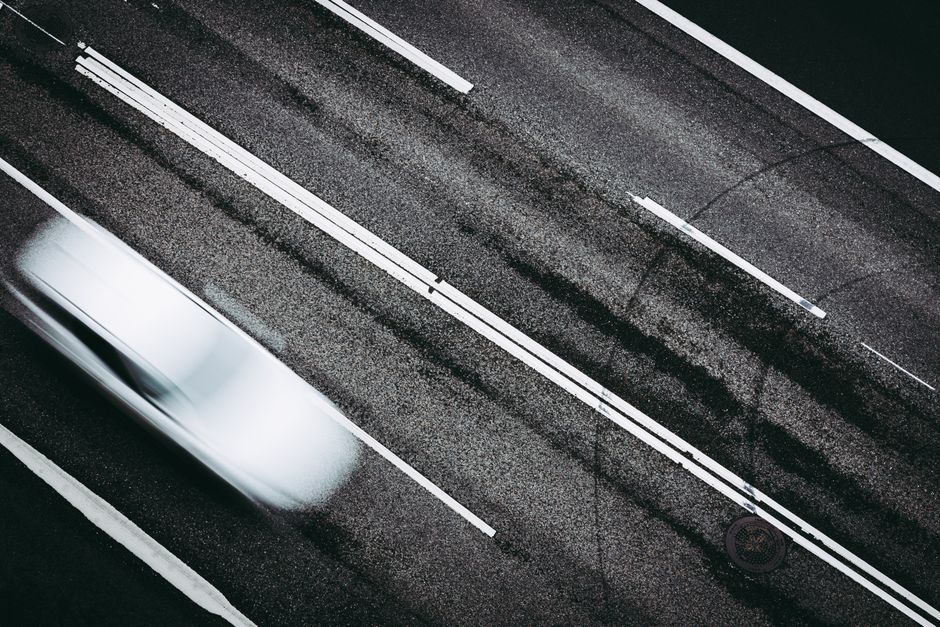
Photo by max laurell on Pexels
When you apply the brakes in a car, you're creating a force (friction between the tires and the road, and within the brakes) that causes negative acceleration, or deceleration. The stopping distance is the total distance a vehicle travels from when the driver perceives a hazard to when the vehicle comes to a complete stop. It has two parts:
- Reaction distance: The distance traveled during the driver's reaction time (the time it takes to see the hazard and apply the brakes).
- Braking distance: The distance traveled while the brakes are applied until the vehicle stops.
Factors like speed, road conditions, tire quality, and vehicle mass all affect stopping distance. Higher speed dramatically increases stopping distance.
How Wings Cause Lift (Flight)

Photo by photoGraph on Pexels
Flight is a fantastic example of balanced and unbalanced forces. For an airplane to fly, it needs an upward force called lift to overcome the downward force of gravity. It also needs a forward force called thrust (from engines) to overcome the backward force of drag (air resistance).
Lift is primarily generated by the shape of the wing (airfoil). Air flowing over the curved top surface travels faster than air flowing under the flatter bottom surface. This difference in speed creates a pressure difference, with lower pressure above the wing and higher pressure below, pushing the wing upward.
Here’s how these forces interact during flight:
graph TD
    A["Thrust (Engine)"] --> B["Forward Motion"]
    C["Drag (Air Resistance)"] --> D["Opposes Motion"]
    E["Lift (Wings)"] --> F["Upward Push"]
    G["Gravity (Earth)"] --> H["Downward Pull"]

    B --"Overcomes"--> D
    F --"Overcomes"--> H

    subgraph Forces in Action
        A
        C
        E
        G
    end
Simple Machines
Simple machines are devices that change the direction or magnitude of a force, making work easier. They don't reduce the amount of work done, but they can reduce the force needed over a longer distance. Examples include levers, pulleys, inclined planes, wedges, wheels and axles, and screws. For instance, a ramp (inclined plane) lets you push a heavy box up gradually with less force than lifting it straight up.
3. Worked Example
Let's imagine you're in a car traveling at 25 m/s. Suddenly, a deer runs onto the road. Your reaction time is 0.5 seconds, and your car can decelerate at 7 m/s². What's your total stopping distance?
-
Calculate reaction distance:
Distance = Speed × Time
Reaction distance = 25 m/s × 0.5 s = 12.5 meters -
Calculate braking distance:
We need to find the distance traveled while braking. We know:
Initial velocity (u) = 25 m/s
Final velocity (v) = 0 m/s (because you stop)
Acceleration (a) = -7 m/s² (negative because it's deceleration)We can use the kinematic equation:
v² = u² + 2as
Where 's' is the distance.0² = (25 m/s)² + 2 * (-7 m/s²) * s
0 = 625 - 14s
14s = 625
s = 625 / 14 ≈ 44.64 meters -
Calculate total stopping distance:
Total stopping distance = Reaction distance + Braking distance
Total stopping distance = 12.5 m + 44.64 m = 57.14 meters
You'd need approximately 57 meters to stop completely from the moment you see the deer.
4. Key Takeaways
- Forces are pushes or pulls that cause or prevent changes in motion.
- Balanced forces mean no change in motion; unbalanced forces cause acceleration.
- Acceleration is the rate of change of velocity, calculated as
a = Δv / t. - Force equals mass times acceleration:
F = m * a. - Stopping distance is the sum of reaction distance and braking distance, and it increases significantly with speed.
- Flight occurs when lift overcomes gravity and thrust overcomes drag.
- Simple machines make work easier by changing the force needed or its direction.
Common mistakes to avoid:
- Confusing speed with velocity; velocity includes direction.
- Forgetting that "acceleration" can mean slowing down (negative acceleration).
- Underestimating how much stopping distance increases with higher speeds.
- Ignoring the impact of friction on both motion and stopping.
5. Now Try It
Imagine you're designing a new, super-efficient bicycle. Think about the forces acting on a cyclist. Describe three design choices you'd make (e.g., frame material, tire type, gear system) that would either reduce drag, increase thrust (from the rider's effort translated to the wheels), or reduce the force needed to go uphill (like a simple machine). Explain how each choice applies a principle of forces and motion to improve the bike's performance or ease of use. What success looks like is clearly explaining the link between your design choice and the physics principle.
Frequently asked about Real-World Applications of Forces and Motion
Study this next
Get the full distance and time graph, simple machines, calculating acceleration, stopping distance, calculation forces, how wings cause lift, forces, balanced forces, flight, speeding cars curriculum
Clone the complete plan to your dashboard for unlimited AI-generated notes, practice quizzes, and a personalised revision schedule.
Save this course free