International Macroeconomics
From the basic macroeconomics curriculum
TL;DR
International macroeconomics looks at how economies interact globally through trade, finance, and exchange rates. It helps us understand why countries trade, how capital moves across borders, and what makes a currency's value change. This field is crucial for understanding economic policies in an interconnected world.
1. The Mental Model
Think of national economies not as isolated islands, but as connected ships in a global ocean. These ships constantly exchange goods, services, and money, and their values (exchange rates) fluctuate based on supply and demand in this vast marketplace.
2. The Core Material
International macroeconomics broadly covers three main areas: international trade, international finance, and exchange rates.
International Trade: Why Countries Trade

Photo by RDNE Stock project on Pexels
Countries trade because it benefits them. The key ideas here are comparative advantage and absolute advantage.
* Absolute Advantage: A country has an absolute advantage if it can produce a good more efficiently (using less input) than another country.
* Comparative Advantage: This is more important. A country has a comparative advantage if it can produce a good at a lower opportunity cost than another country. Even if a country is better at producing everything, it still benefits from specializing in what it's relatively best at and trading. This leads to increased overall production and consumption for everyone involved.
International Finance: Capital Flows
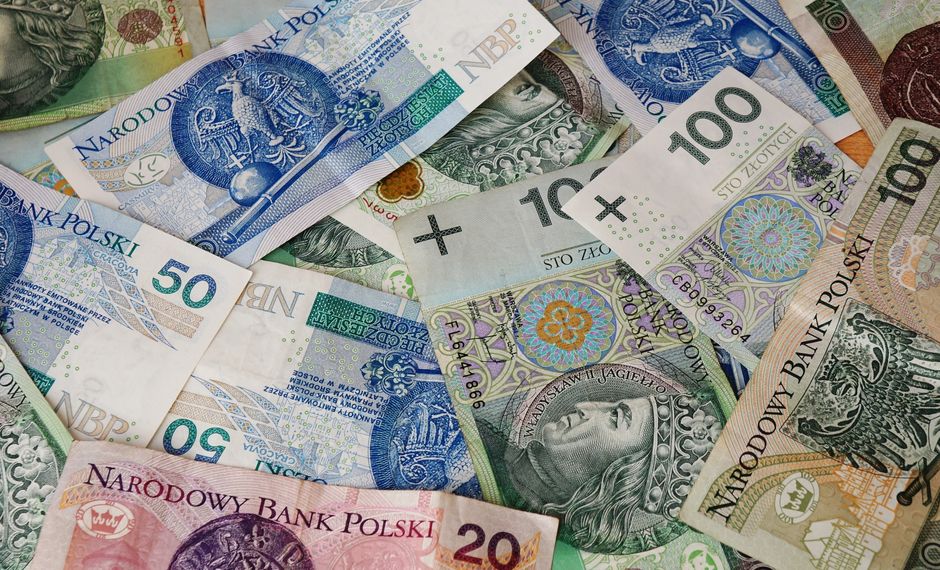
Photo by Gosia K on Pexels
Beyond goods and services, money also moves across borders. This is called international capital flows.
* Foreign Direct Investment (FDI): When a company invests directly in another country, like building a factory.
* Portfolio Investment: When investors buy stocks or bonds in foreign markets.
These flows are driven by differences in interest rates, expected returns, and risk. When capital flows into a country, it can boost investment and growth, but it can also make the economy more vulnerable to global shocks.
Exchange Rates: The Price of Foreign Currency

Photo by Atlantic Ambience on Pexels
An exchange rate is simply the price of one currency in terms of another. For example, if 1 US dollar buys 0.90 Euros, that's the exchange rate.
* Appreciation: When a currency's value rises (e.g., $1 used to buy €0.90, now buys €1.00). This makes imports cheaper and exports more expensive.
* Depreciation: When a currency's value falls (e.g., $1 used to buy €0.90, now buys €0.80). This makes imports more expensive and exports cheaper.
Exchange rates are determined by supply and demand in the foreign exchange market, influenced by factors like:
* Interest Rate Differentials: Higher interest rates in a country can attract foreign capital, increasing demand for its currency.
* Inflation: Higher inflation tends to depreciate a currency.
* Current Account Balance: A country running a large trade deficit (importing more than it exports) needs to sell its currency to buy foreign goods, putting downward pressure on its value.
* Economic Growth & Stability: Strong, stable economies tend to attract investment, increasing demand for their currency.
graph LR
    A["Factors Influencing Exchange Rates"] --> B["Interest Rate Differentials"]
    A --> C["Inflation Rates"]
    A --> D["Current Account Balance (Trade)"]
    A --> E["Economic Performance & Stability"]

    B --> F["Demand for Currency (Higher IR = Higher Demand)"]
    C --> G["Supply of Currency (Higher Inflation = Lower Demand)"]
    D --> H["Supply/Demand (Deficit = Higher Supply of Domestic Currency)"]
    E --> I["Demand for Currency (Strong Growth = Higher Demand)"]

    F --> J["Exchange Rate Fluctuations"]
    G --> J
    H --> J
    I --> J
Policy Challenges

Photo by Mike van Schoonderwalt on Pexels
Governments face a "trilemma" (or "impossible trinity") when managing international macroeconomic policy: they can only achieve two out of three goals:
1. Fixed Exchange Rate: Keeping the currency's value stable against another currency.
2. Free Capital Mobility: Allowing money to flow freely in and out of the country.
3. Independent Monetary Policy: Setting interest rates to manage the domestic economy (inflation, growth).
If you fix the exchange rate and allow free capital movement, you lose control over your interest rates (monetary policy has to support the fixed rate). If you want an independent monetary policy and free capital mobility, your exchange rate has to float.
3. Worked Example
Let's consider two hypothetical countries, Alpha and Beta, that produce cheese and wine.
| Country | Output per Worker per Day (Cheese) | Output per Worker per Day (Wine) |
|---|---|---|
| Alpha | 10 units | 5 units |
| Beta | 2 units | 4 units |
Absolute Advantage:
* Alpha has an absolute advantage in cheese (10 units vs. 2 units).
* Beta has an absolute advantage in wine (4 units vs. 5 units for Alpha – wait, Alpha produces 5, Beta produces 4, so Alpha has absolute advantage in both! This example needs to show Beta having absolute advantage in wine. Let's fix Beta's wine production.)
Let's adjust Beta's wine production to make it clearer for absolute advantage.
| Country | Output per Worker per Day (Cheese) | Output per Worker per Day (Wine) |
|---|---|---|
| Alpha | 10 units | 5 units |
| Beta | 2 units | 8 units |
Absolute Advantage (Corrected):
* Alpha has an absolute advantage in cheese (10 units > 2 units).
* Beta has an absolute advantage in wine (8 units > 5 units).
Both countries are better at producing one good than the other.
Comparative Advantage (Opportunity Cost):
* Alpha:
* To produce 1 unit of cheese, Alpha gives up 0.5 units of wine (5 wine / 10 cheese).
* To produce 1 unit of wine, Alpha gives up 2 units of cheese (10 cheese / 5 wine).
* Beta:
* To produce 1 unit of cheese, Beta gives up 4 units of wine (8 wine / 2 cheese).
* To produce 1 unit of wine, Beta gives up 0.25 units of cheese (2 cheese / 8 wine).
Comparison:
* Alpha's opportunity cost for cheese (0.5 wine) is lower than Beta's (4 wine). So, Alpha has a comparative advantage in cheese.
* Beta's opportunity cost for wine (0.25 cheese) is lower than Alpha's (2 cheese). So, Beta has a comparative advantage in wine.
Conclusion: Alpha should specialize in cheese, and Beta should specialize in wine. They can then trade, and both will end up with more cheese and wine combined than if they tried to produce both themselves without trade.
4. Key Takeaways
- Countries trade due to comparative advantage, allowing them to specialize and increase overall production.
- Capital flows (like FDI) move money across borders, influencing investment and growth, but also creating potential vulnerabilities.
- Exchange rates are the price of one currency in terms of another, constantly shifting due to interest rates, inflation, trade balances, and economic stability.
- An appreciating currency makes imports cheaper and exports more expensive; a depreciating currency makes imports more expensive and exports cheaper.
- The impossible trinity shows that countries can't simultaneously have a fixed exchange rate, free capital mobility, and an independent monetary policy.
- Understanding international macroeconomics is key to analyzing global economic events and policy choices.
- Global economic integration means domestic policies often have international repercussions.
Common Mistakes to Avoid:
- Confusing absolute advantage with comparative advantage; comparative advantage is the true basis for mutually beneficial trade.
- Thinking that a strong currency is always good; while it makes imports cheaper, it hurts exporters.
- Ignoring the impact of capital flows on exchange rates and domestic interest rates.
- Assuming a country with high inflation can maintain a fixed exchange rate without severe economic consequences.
5. Now Try It
Imagine the Eurozone suddenly experiences much higher interest rates than the US.
1. Describe what would likely happen to capital flows between the US and the Eurozone.
2. Explain how these capital flows would affect the demand and supply for the Euro and the US Dollar in the foreign exchange market.
3. Predict what would happen to the Euro/Dollar exchange rate (e.g., would the Euro appreciate or depreciate against the Dollar?).
4. Briefly mention one potential consequence of this exchange rate change for European exporters.
Success looks like a clear, concise explanation of the chain of events from higher interest rates to capital flow, then to changes in currency supply/demand, the resulting exchange rate movement, and a relevant impact on trade.
Frequently asked about International Macroeconomics
More from basic macroeconomics
Get the full basic macroeconomics curriculum
Clone the complete plan to your dashboard for unlimited AI-generated notes, practice quizzes, and a personalised revision schedule.
Save this course free