Algorithm Implementation
From the introduction to algorithm curriculum
TL;DR
Algorithm implementation is taking a designed algorithm and writing it as working code. It involves translating abstract steps into a specific programming language, focusing on correctness, efficiency, and readability. You'll choose appropriate data structures and refine your code through testing and debugging.
1. The Mental Model
Think of it like following a recipe: you have a plan (the algorithm) and now you're actually cooking (implementing it in code). You're translating the high-level steps into precise instructions your computer can understand and execute.
2. The Core Material
Implementing an algorithm means translating its logical steps into a chosen programming language. This isn't just typing; it involves understanding how the algorithm's parts map to language constructs and selecting the best tools for the job.
Choosing Data Structures
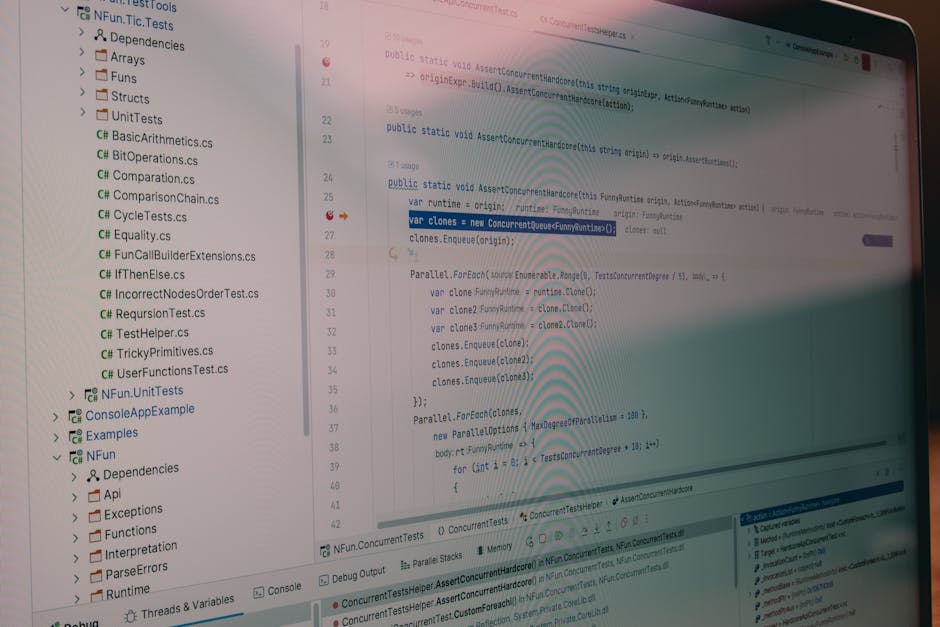
Photo by Daniil Komov on Pexels
One of the most crucial steps is picking the right data structures. The algorithm might specify abstract data types (like a "list" or "dictionary"), but you need to choose the concrete implementation available in your language (e.g., Python's list or dict, C++'s std::vector or std::map). This choice significantly impacts your code's performance and readability.
For example, if your algorithm frequently needs to look up items by a key, a hash map (like Python's dict) is usually much faster than searching through a list. If you need ordered elements and frequent insertions/deletions at specific positions, a linked list might be better than an array.
Writing Clean, Correct, and Efficient Code

Photo by Mikhail Nilov on Pexels
Beyond just getting the algorithm to run, you want your implementation to be:
* Correct: It produces the right output for all valid inputs.
* Readable: Others (and future you!) can easily understand what the code does. Use clear variable names, comments where necessary, and consistent formatting.
* Efficient: It uses resources (time and memory) effectively. This often ties back to your data structure choices and avoiding unnecessary computations.
Testing and Debugging

Photo by cottonbro studio on Pexels
No implementation is perfect on the first try. You'll need to:
1. Write test cases: Create specific inputs and know what the expected output should be.
2. Run your code: Execute your implementation with the test cases.
3. Debug: If the output doesn't match, use debugging tools or print statements to understand where your code went wrong and fix it.
Here's a flowchart showing the general process:
graph TD
    A["Understand Algorithm Design"] --> B["Choose Data Structures"];
    B --> C{"Write Code (Function/Class)"};
    C --> D["Implement Core Logic"];
    D --> E["Test Cases (Inputs/Expected Outputs)"];
    E --> F{"Run Code & Test"};
    F -- "Output matches" --> G["Refine/Optimize (Optional)"];
    F -- "Output doesn't match" --> H["Debug (Find & Fix Errors)"];
    H --> C;
    G --> I["Finalize Implementation"];
3. Worked Example
Let's implement a simple algorithm: finding the maximum element in a list of numbers.
Algorithm Design (Pseudocode):
1. Initialize max_value to the first element of the list.
2. Iterate through the rest of the list.
3. If the current element is greater than max_value, update max_value.
4. Return max_value.
Python Implementation:
def find_max_element(numbers):
    # Handle edge case: empty list
    if not numbers:
        return None

    # 1. Initialize max_value to the first element
    max_value = numbers[0]

    # 2. Iterate through the rest of the list
    # We start from index 1 because we already handled index 0
    for i in range(1, len(numbers)):
        current_element = numbers[i]

        # 3. If the current element is greater than max_value, update
        if current_element > max_value:
            max_value = current_element

    # 4. Return max_value
    return max_value

# Test cases
print(f"Max in [1, 5, 2, 8, 3]: {find_max_element([1, 5, 2, 8, 3])}") # Expected: 8
print(f"Max in [-10, -1, -5]: {find_max_element([-10, -1, -5])}")   # Expected: -1
print(f"Max in [7]: {find_max_element([7])}")                       # Expected: 7
print(f"Max in []: {find_max_element([])}")                         # Expected: None
In this example, we directly translated the pseudocode steps into Python. We used a Python list as our data structure, which is appropriate for sequential access. We also added an edge case check for an empty list, demonstrating good implementation practice.
4. Key Takeaways
- Always start by understanding the algorithm's logic before you write any code.
- Choose appropriate data structures, as they heavily influence performance and code clarity.
- Write clear, readable code with meaningful variable names and comments.
- Thoroughly test your implementation with various inputs, including edge cases.
- Be prepared to debug; errors are a normal part of the development process.
- Strive for correctness first, then focus on efficiency and optimization.
- Consider the constraints of the problem (e.g., memory limits, time limits) when implementing.
Common Mistakes to Avoid:
- Not handling edge cases (e.g., empty lists, single-element inputs).
- Choosing inefficient data structures for the algorithm's operations.
- Writing complex, unreadable code when a simpler solution exists.
- Skipping thorough testing and assuming your code works.
5. Now Try It
Implement an algorithm to reverse a given list of numbers without using any built-in reverse() functions.
What to do:
1. Define a function, say reverse_list(numbers).
2. Inside the function, create a new empty list or modify the input list in place.
3. Iterate through the original list and add elements to the new list (or swap elements in place) such that they end up in reverse order.
4. Return the reversed list.
What success looks like:
Your function reverse_list([1, 2, 3, 4, 5]) should return [5, 4, 3, 2, 1], and reverse_list([]) should return [].
Frequently asked about Algorithm Implementation
More from introduction to algorithm
Get the full introduction to algorithm curriculum
Clone the complete plan to your dashboard for unlimited AI-generated notes, practice quizzes, and a personalised revision schedule.
Save this course free