Introduction to Ionic Bonding and Solids
From the structure of ionic solids curriculum
TL;DR
Ionic bonding happens when atoms completely transfer electrons, creating charged ions that attract each other strongly. These ions arrange themselves into a repeating, three-dimensional structure called an ionic solid. This strong electrostatic attraction and ordered arrangement give ionic solids their characteristic properties.
1. The Mental Model
Imagine atoms as tiny individuals. Some really want to get rid of an electron (metals), and others really want to gain one (non-metals). When they meet, there's a complete electron handover, making both atoms charged. These oppositely charged "individuals" then stick together like tiny magnets, forming a stable, repeating crowd.
2. The Core Material
Ionic bonding is fundamentally about achieving a stable electron configuration, usually a full outer shell like noble gases. This is most common between metals and non-metals.
How Ionic Bonds Form

Photo by Ron Lach on Pexels
- Electron Transfer: A metal atom (which tends to lose electrons easily, forming a positive ion or cation) transfers one or more electrons to a non-metal atom (which tends to gain electrons, forming a negative ion or anion).
- Electrostatic Attraction: The oppositely charged ions are then strongly attracted to each other due to electrostatic forces. This attraction is what we call an ionic bond.
For example, sodium (Na), a metal, has 1 valence electron it wants to lose. Chlorine (Cl), a non-metal, has 7 valence electrons and wants to gain 1. Na transfers its electron to Cl, forming Na$^+$ and Cl$^-$. These ions then attract.
What is an Ionic Solid?
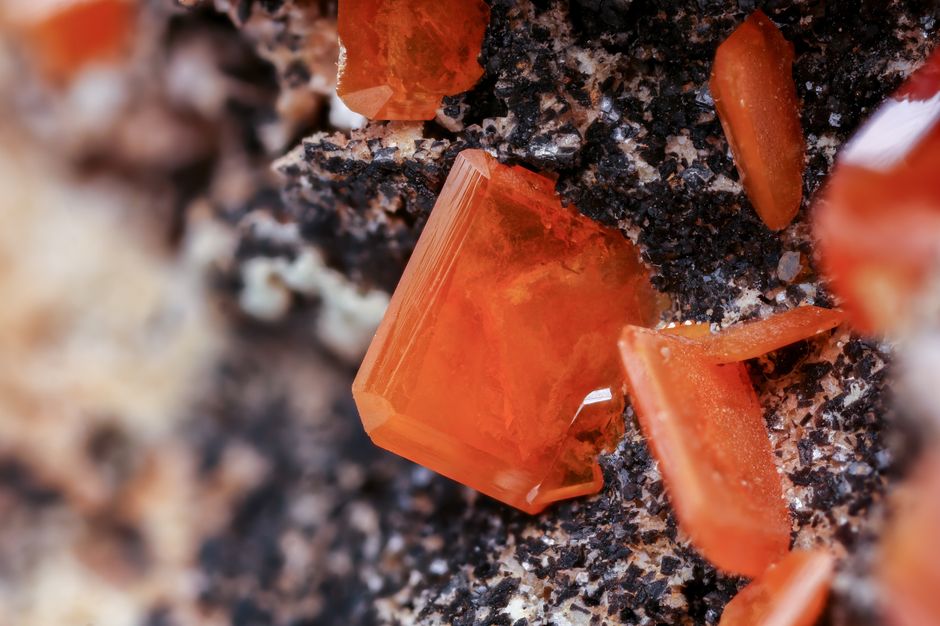
Photo by Глеб Коровко on Pexels
An ionic solid isn't just one cation and one anion. Due to the strong, non-directional electrostatic forces, each ion is attracted to all nearby ions of opposite charge. This leads to a highly ordered, repeating, three-dimensional arrangement of ions called a crystal lattice.
Think of it like building with LEGO bricks: each brick (ion) has specific connection points (charges), and you build a large, structured object by fitting them together in a regular pattern.
Characteristics of Ionic Solids
Photo by Глеб Коровко on Pexels
The strong ionic bonds and crystal lattice structure explain many properties:
* High Melting and Boiling Points: A lot of energy is needed to overcome the strong electrostatic forces holding the lattice together.
* Hard and Brittle: The strong bonds make them hard. However, if you apply enough force to shift the layers, like-charged ions align, causing strong repulsion and the crystal to cleave or shatter (brittle).
* Conductivity:
* Solid state: Don't conduct electricity because the ions are fixed in the lattice and can't move.
* Molten (liquid) or dissolved in water: Conduct electricity because the ions become mobile and can carry charge.
* Solubility in Water: Many ionic compounds dissolve in polar solvents like water because water molecules can surround and separate the individual ions from the lattice.
Here's a simplified view of the formation of an ionic solid:
graph TD
    A["Metal Atom (e.g., Na)"] --> B{Electron Transfer};
    C["Non-metal Atom (e.g., Cl)"] --> B;
    B --> D["Cation (e.g., Na+)"];
    B --> E["Anion (e.g., Cl-)"];
    D --> F{Electrostatic Attraction};
    E --> F;
    F --> G["Ionic Bond"];
    G --> H["Crystal Lattice (Ionic Solid)"];
    H --> I["High Melting Point"];
    H --> J["Brittle"];
    H --> K["Conducts When Molten/Dissolved"];
3. Worked Example
Let's consider the formation of Magnesium Oxide (MgO).
1. Magnesium (Mg): A Group 2 metal. It has 2 valence electrons. To achieve a stable electron configuration, it tends to lose 2 electrons to become Mg$^{2+}$.
2. Oxygen (O): A Group 16 non-metal. It has 6 valence electrons. To achieve a stable configuration, it tends to gain 2 electrons to become O$^{2-}$.
3. Electron Transfer: One Mg atom transfers its two valence electrons to one O atom.
4. Ionic Bonding: The resulting Mg$^{2+}$ cations and O$^{2-}$ anions are strongly attracted to each other by ionic bonds.
5. Ionic Solid Formation: These ions then arrange themselves into a crystal lattice, forming solid Magnesium Oxide. This strong attraction and crystal structure give MgO a very high melting point (around 2852 °C) and make it a very hard material.
4. Key Takeaways
- Ionic bonds form via the complete transfer of electrons between atoms, typically metals and non-metals.
- This transfer creates positively charged cations and negatively charged anions.
- Oppositely charged ions are held together by strong electrostatic forces in a repeating 3D structure called a crystal lattice.
- The crystal lattice structure explains why ionic solids have high melting points, are hard and brittle.
- Ionic solids don't conduct electricity as solids but do when molten or dissolved because their ions become mobile.
Common Mistakes to Avoid:
- Don't confuse electron sharing (covalent bonding) with electron transfer (ionic bonding).
- Don't think of an ionic compound as individual molecules; it's a continuous lattice.
- Remember that ionic solids are neutral overall, even though they're made of charged ions.
- Don't forget that ions need to be mobile to conduct electricity.
5. Now Try It
Think about Calcium Fluoride (CaF$_2$).
1. Identify the metal and non-metal.
2. Determine how many electrons each atom will lose or gain to achieve a stable configuration.
3. Explain how many of each ion you'd need to balance the charges and form a neutral compound.
4. Describe two properties you would expect CaF$_2$ to have, based on it being an ionic solid.
What to do: Write down your answers for each step.
What success looks like: You correctly identify Ca as the metal and F as the non-metal. You determine Ca will lose 2 electrons to form Ca$^{2+}$ and F will gain 1 electron to form F$^{-}$. You recognize you need one Ca$^{2+}$ for every two F$^{-}$ ions. You correctly predict properties like high melting point and brittleness.
Frequently asked about Introduction to Ionic Bonding and Solids
Study this next
Get the full structure of ionic solids curriculum
Clone the complete plan to your dashboard for unlimited AI-generated notes, practice quizzes, and a personalised revision schedule.
Save this course free