Advanced Legal Concepts for Policing
From the Policing curriculum
TL;DR
You'll need a solid grasp of advanced legal concepts to effectively and lawfully perform your policing duties, especially concerning evidence, rights, and proper procedures. Understanding these concepts helps you make sound decisions, build strong cases, and avoid legal challenges. This knowledge empowers you to protect the public while upholding the rule of law.
1. The Mental Model
Think of these advanced concepts as your legal toolkit: each tool has a specific purpose for handling complex situations. Knowing when and how to use each tool ensures your actions are lawful and your evidence stands up in court. It's about precision and foresight in every interaction.
2. The Core Material
As a police officer, your daily work is governed by laws that extend far beyond basic criminal statutes. Understanding these advanced legal concepts is crucial for effective, lawful policing and for building strong, defensible cases.
Probable Cause vs. Reasonable Suspicion

Photo by RDNE Stock project on Pexels
These two standards dictate when you can lawfully interfere with a person's liberty or property.
- Reasonable Suspicion: This is a lower standard than probable cause. It's based on specific, articulable facts that, combined with rational inferences, lead you to believe criminal activity "may be afoot." It allows for brief detentions (Terry stops) and limited pat-downs for weapons if there's a belief the person is armed and dangerous.
- Probable Cause: This is a higher standard, requiring facts and circumstances that would lead a reasonable and prudent person to believe a crime "has been committed" or "is about to be committed" and that the person to be arrested committed it, or that evidence of a crime exists in the place to be searched. This is required for arrests and full searches.
Warrants and Exceptions

Photo by Ellie Burgin on Pexels
Generally, arrests and searches require a warrant issued by a neutral magistrate. However, there are crucial exceptions you'll encounter frequently.
- Arrest Warrants: Issued upon probable cause. You can arrest someone named in an active warrant.
- Search Warrants: Issued upon probable cause, specifying the place to be searched and the items to be seized.
- Warrant Exceptions (Searches):
- Exigent Circumstances: An emergency situation requiring immediate action to prevent danger, escape, or destruction of evidence (e.g., hot pursuit, imminent destruction of evidence, risk to life).
- Search Incident to Lawful Arrest (SILA): You can search the person arrested and the area within their immediate control (their "lunge" or "grab" area) to prevent weapon access or evidence destruction.
- Automobile Exception: If you have probable cause to believe a vehicle contains evidence of a crime, you can search it without a warrant due to its inherent mobility.
- Plain View: If you are lawfully in a position to see an item, and its incriminating character is immediately apparent, you can seize it without a warrant.
- Consent: If a person with authority voluntarily gives permission to search, you can do so. Consent must be freely given, not coerced.
- Inventory Search: Lawful searches of impounded vehicles or property to document contents, protect owner's property, and protect the police from claims. Must be conducted according to standardized police department policy.
The Exclusionary Rule and Its Exceptions
Photo by Jan van der Wolf on Pexels
The Exclusionary Rule prevents evidence obtained in violation of a suspect's constitutional rights (e.g., Fourth Amendment unreasonable search and seizure) from being used against them in a criminal trial. This is a critical deterrent against unlawful police conduct.
- Exceptions to the Exclusionary Rule:
- Good Faith Exception: If you act in objectively reasonable reliance on a search warrant that is later found to be invalid (e.g., a clerical error by the court), the evidence may still be admissible.
- Independent Source Doctrine: Evidence discovered from a lawful source, separate from an illegal search, is admissible.
- Inevitable Discovery Doctrine: If the evidence would have been inevitably discovered through lawful means, even if initially found through an illegal search, it can be admissible.
- Attenuation Doctrine: Evidence that is far enough removed (attenuated) from the initial illegal conduct may be admissible if the connection is sufficiently weakened.
Miranda Rights
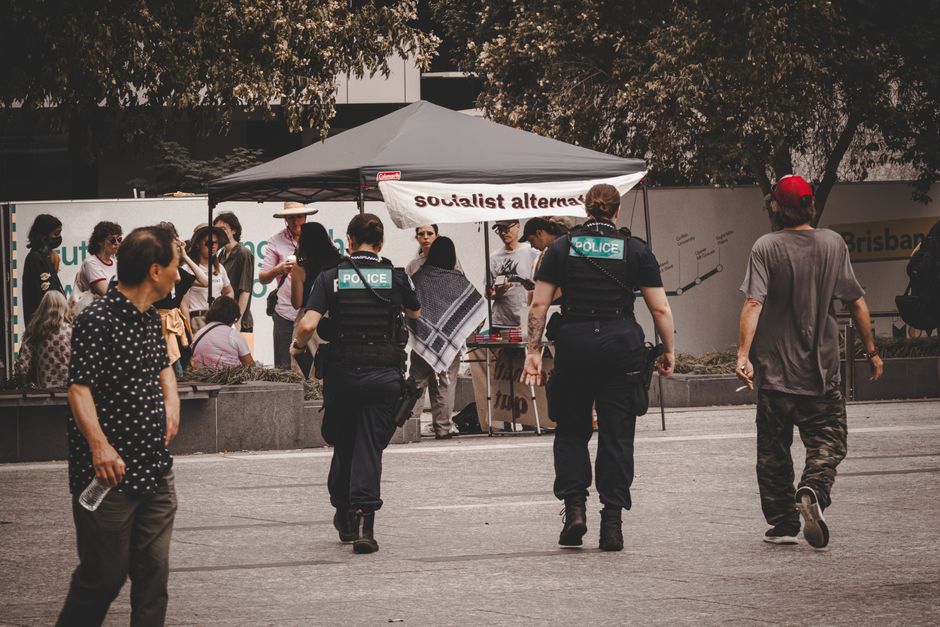
Photo by Samantha Gilmore on Pexels
Before conducting a custodial interrogation, you must inform a suspect of their Miranda Rights: the right to remain silent, and the right to an attorney.
- Custody: A reasonable person would not feel free to leave.
- Interrogation: Express questioning or any words or actions by the police (other than those normally attendant to arrest and custody) that the police should know are reasonably likely to elicit an incriminating response.
If both custody and interrogation are present, and Miranda warnings aren't given (or rights aren't waived), any statements made by the suspect are generally inadmissible in court.
graph TD
    A["Officer observes suspicious activity / information"] --> B{Is there Reasonable Suspicion?};
    B -- Yes --> C["Can conduct Terry Stop (brief detention)"];
    C -- Yes (belief armed/dangerous) --> D["Can conduct Pat-Down (for weapons)"];
    B -- No --> E["No detention allowed"];

    A --> F{Is there Probable Cause?};
    F -- Yes (for arrest) --> G["Can make Arrest (warrant preferred, or exigent circumstances)"];
    G --> H["Miranda Warnings (if custodial interrogation)"];
    H --> I["Interrogation / Booking"];

    F -- Yes (for search) --> J{Is there a Warrant?};
    J -- Yes --> K["Execute Search Warrant"];
    J -- No --> L{Does a Warrant Exception Apply?};
    L -- Yes (e.g., Exigent, SILA, Auto, Plain View, Consent, Inventory) --> K;
    L -- No --> M["No search allowed"];

    K --> N["Seize Evidence"];
    N --> O{Was evidence obtained lawfully?};
    O -- Yes --> P["Evidence Admissible"];
    O -- No (e.g., no PC, no warrant/exception, Miranda violation) --> Q{Does Exclusionary Rule Exception Apply?};
    Q -- Yes (e.g., Good Faith, Independent Source, Inevitable Discovery, Attenuation) --> P;
    Q -- No --> R["Evidence Inadmissible (Exclusionary Rule)"];
3. Worked Example
Let's consider a scenario: You respond to a 911 call about a home invasion. As you approach, you see a man running from the back of the house, clutching a backpack.
- Initial Encounter: You shout, "Police! Stop!" The man looks back, drops the backpack, and keeps running. This provides you with reasonable suspicion for a Terry stop due to his flight from a crime scene and suspicious behavior.
- Pursuit & Apprehension: You pursue and apprehend him a block away. At this point, the combination of the 911 call, his flight, and dropping the backpack likely elevates your suspicion to probable cause for an arrest for burglary.
- Search Incident to Arrest: You handcuff him. You can now perform a search incident to lawful arrest on his person to check for weapons or evidence he might try to destroy.
- The Backpack: You return to the dropped backpack. Since you have probable cause to believe the backpack contains evidence from the home invasion, and it was abandoned during flight from a crime, you can conduct a search under the exigent circumstances (preventing destruction or removal of evidence) or potentially the automobile exception (if dropped from a car and linked to a vehicle, or if considered abandoned property, thus losing Fourth Amendment protection). Inside, you find stolen jewelry and a pry bar. This evidence is admissible.
- Interrogation: You take him to the station. Before questioning him about the home invasion, you must read him his Miranda Rights because he is in custody and you intend to interrogate him. If he invokes his right to silence or an attorney, you must cease questioning.
4. Key Takeaways
- Probable cause is for arrests and full searches; reasonable suspicion is for brief detentions and pat-downs.
- Warrants are generally required for arrests and searches, but numerous exceptions exist for specific circumstances.
- The Exclusionary Rule prevents unlawfully obtained evidence from being used in court, but it also has critical exceptions.
- Always give Miranda warnings before any custodial interrogation to ensure statements are admissible.
- Careful documentation of your observations and actions is vital to justify your legal steps.
- When in doubt about a legal standard, err on the side of caution or seek supervisory guidance.
- Understanding these concepts helps you build legally sound cases and protect constitutional rights.
Common Mistakes to Avoid:
- Confusing reasonable suspicion with probable cause, leading to unlawful arrests or searches.
- Failing to articulate the specific facts that support your level of suspicion or probable cause.
- Conducting a full search during a Terry stop without independent probable cause or an exception.
- Forgetting or improperly delivering Miranda warnings before a custodial interrogation.
- Assuming consent to search is valid without ensuring it was freely and voluntarily given.
- Not understanding when a warrant exception truly applies, leading to illegal searches.
5. Now Try It
For the next 15 minutes, imagine you're patrolling and witness a person quickly placing a small bag under a park bench and then walking away swiftly when they see your patrol car. No crime has been reported in the area.
Your task is to mentally walk through your immediate actions and legal justifications. Ask yourself:
1. Do you have reasonable suspicion to stop this person? If so, why?
2. Do you have probable cause to arrest them or search the bag immediately? Why or why not?
3. What specific actions would you take regarding the person and the bag, and what legal concept (e.g., abandonment, plain view, Terry stop) would justify each step?
Success looks like clearly articulating the legal standard (reasonable suspicion, probable cause) for each step you take and justifying your actions with specific legal concepts from the notes above.
Frequently asked about Advanced Legal Concepts for Policing
Study this next
Get the full Policing curriculum
Clone the complete plan to your dashboard for unlimited AI-generated notes, practice quizzes, and a personalised revision schedule.
Save this course free