"subtopics": [
From the W he;p curriculum
TL;DR
Calculus is the study of continuous change, providing tools to understand rates of change and accumulation. It's built on two main ideas: differentiation (finding slopes/rates) and integration (finding areas/totals). Mastering these concepts unlocks a deeper understanding of how things evolve in the real world.
1. The Mental Model
Imagine you're trying to understand how fast something is moving at an exact moment, or how much space is under a curvy path. Calculus gives you the special glasses to see these things, moving beyond simple averages or straight lines to deal with constant flux.
2. The Core Material
Calculus fundamentally deals with limits, which let us get arbitrarily close to a value without necessarily reaching it. This idea underpins both differentiation and integration.
Derivatives: Measuring Instantaneous Change

Photo by Rômulo Queiroz on Pexels
Differentiation is all about finding the instantaneous rate of change of a function. Think of it as finding the precise steepness (slope) of a curve at a single point, rather than the average slope over an interval.
- How it works: You take a function, say
f(x), and find its derivative, usually written asf'(x)ordy/dx. This new functionf'(x)tells you the slope off(x)at any givenx. - Common Derivatives (Power Rule):
- If
f(x) = c(a constant), thenf'(x) = 0. (A flat line has no slope.) - If
f(x) = x^n, thenf'(x) = nx^(n-1). (Bring the power down, reduce the power by 1.)
- If
Integrals: Measuring Accumulation
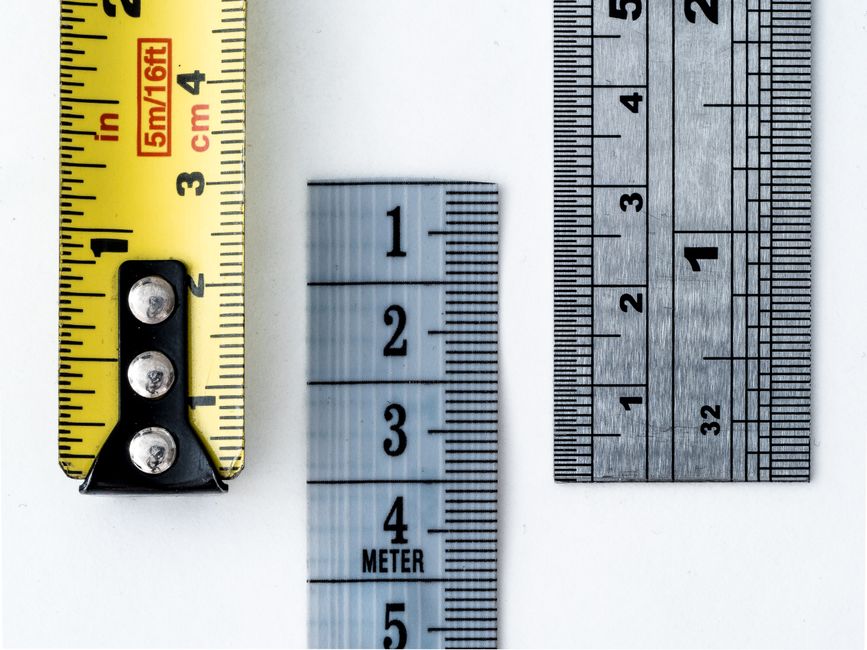
Photo by William Warby on Pexels
Integration is the opposite of differentiation. It's about finding the total accumulation or the area under a curve.
- How it works: You take a function
f(x)and find its integral, often written as∫f(x)dx. This gives you a new function (the antiderivative) which, when differentiated, would give youf(x)back. - Types of Integrals:
- Indefinite Integral: Finds the general antiderivative, often including a "+ C" (constant of integration) because the derivative of any constant is zero.
- Definite Integral: Calculates the exact area under the curve between two specific points (limits of integration).
The Fundamental Theorem of Calculus
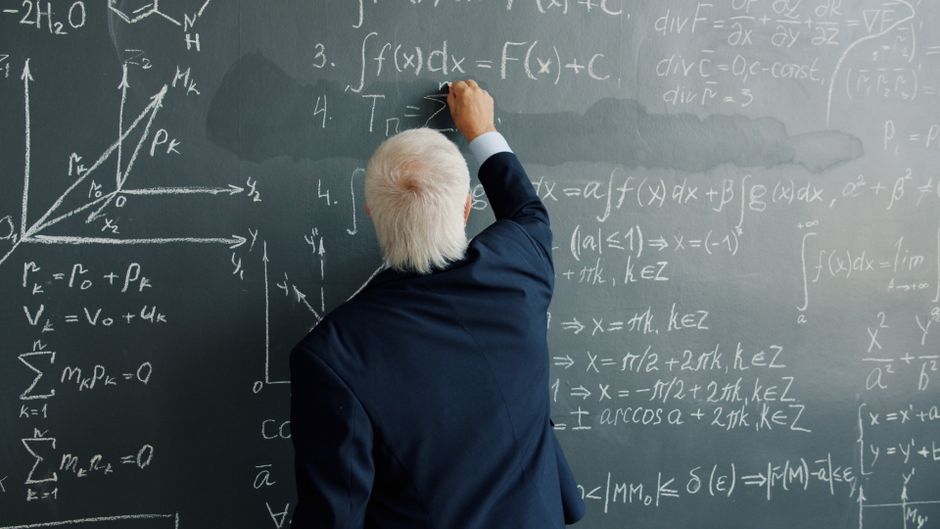
Photo by Vitaly Gariev on Pexels
This theorem connects derivatives and integrals, showing they are inverse operations. It states that if you know the antiderivative of a function, you can find the definite integral by evaluating the antiderivative at the upper and lower limits and subtracting.
graph TD
    A["Function f(x)"] --> B{Want Instantaneous Rate?};
    B -- Yes --> C["Differentiate (find derivative f'(x))"];
    B -- No --> D{Want Total Accumulation/Area?};
    D -- Yes --> E["Integrate (find integral ∫f(x)dx)"];
    C --> F["Result: Slope at a point, Velocity, Marginal Cost"];
    E --> G["Result: Area under curve, Total Distance, Volume"];
    F & G --> H["Applications in Physics, Engineering, Economics"];
3. Worked Example
Let's find the derivative and indefinite integral of the function f(x) = 3x^2.
1. Differentiation:
Using the power rule nx^(n-1):
f'(x) = d/dx (3x^2)
f'(x) = 3 * (2x^(2-1))
f'(x) = 6x^1
f'(x) = 6x
So, the derivative of 3x^2 is 6x. This means the slope of 3x^2 at any point x is 6x.
2. Integration:
To integrate 6x to get back 3x^2 (or something close), or to integrate 3x^2 for its antiderivative:
Using the reverse power rule (add 1 to the power, then divide by the new power):
∫(3x^2)dx = 3 * (x^(2+1) / (2+1)) + C
∫(3x^2)dx = 3 * (x^3 / 3) + C
∫(3x^2)dx = x^3 + C
So, the indefinite integral of 3x^2 is x^3 + C. The + C is there because if you differentiate x^3 + 5, x^3 - 100, or x^3, you'd always get 3x^2.
4. Key Takeaways
- Calculus is the math of change, built on understanding limits.
- Differentiation finds instantaneous rates of change (slopes of curves).
- The power rule (
x^n->nx^(n-1)) is fundamental for derivatives. - Integration finds total accumulation or the area under a curve.
- The power rule in reverse is key for integrating polynomials.
- The Fundamental Theorem of Calculus links differentiation and integration as inverse operations.
- Derivatives help us understand speed, acceleration, and how functions are changing.
- Integrals help us calculate total distance, volume, and total quantities.
Common Mistakes to Avoid:
- Forgetting the + C for indefinite integrals.
- Confusing when to differentiate versus when to integrate.
- Applying the power rule incorrectly (e.g., subtracting 1 from the power for integration).
- Not understanding that dy/dx is a single notation for the derivative, not dy divided by dx.
5. Now Try It
Exercise: Given the function g(x) = 5x^3 - 2x, perform two tasks:
- Find the derivative,
g'(x). - Find the indefinite integral,
∫(g(x))dx.
What success looks like: You should have two new functions: one representing the instantaneous rate of change of g(x) and another representing its antiderivative (don't forget the + C!).
Frequently asked about "subtopics": [
More from W he;p
Get the full W he;p curriculum
Clone the complete plan to your dashboard for unlimited AI-generated notes, practice quizzes, and a personalised revision schedule.
Save this course free