Introduction to Numbers and Operations
From the slope and 7A math curriculum
TL;DR
This topic introduces the different types of numbers we use in math and the basic operations (add, subtract, multiply, divide) that help us work with them. Understanding these building blocks is crucial for all future math concepts. We'll also touch on order of operations to ensure everyone gets the same answer every time.
1. The Mental Model
Think of numbers as different categories of things you can count or measure, like whole apples, half apples, or even debt. Operations are the actions you take with those things, like combining them, taking some away, or grouping them.
2. The Core Material
Number Types
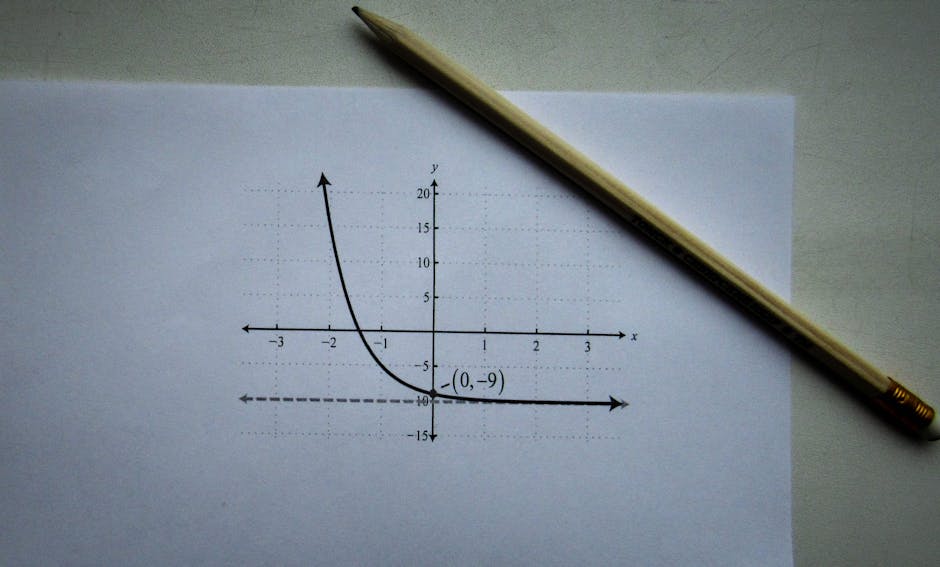
Photo by Sergey Meshkov on Pexels
Numbers come in different flavors, and it's helpful to know them:
- Natural Numbers: These are the numbers you use for counting: 1, 2, 3, 4, ...
- Whole Numbers: Just like natural numbers, but they include zero: 0, 1, 2, 3, ...
- Integers: Whole numbers and their negative counterparts: ..., -3, -2, -1, 0, 1, 2, 3, ...
- Rational Numbers: Any number that can be written as a fraction (a/b), where 'a' and 'b' are integers and 'b' is not zero. This includes integers, as you can write 5 as 5/1. Examples: 1/2, -3/4, 7 (which is 7/1). When expressed as decimals, they either terminate (0.5) or repeat (0.333...).
- Irrational Numbers: Numbers that cannot be written as a simple fraction. Their decimal representation goes on forever without repeating. The most famous example is Pi (π ≈ 3.14159...). Another common one is the square root of 2 (√2 ≈ 1.414).
- Real Numbers: This is the big umbrella that covers all rational and irrational numbers.
Basic Operations

Photo by Anatolii Grytsenko on Pexels
You're probably familiar with these, but it's good to review:
- Addition (+): Combining quantities. Example: 3 + 5 = 8
- Subtraction (-): Finding the difference between quantities or taking one away from another. Example: 8 - 3 = 5
- Multiplication (x or *): Repeated addition. Example: 3 x 5 = 15 (which is 3 + 3 + 3 + 3 + 3)
- Division (÷ or /): Splitting a quantity into equal parts. Example: 15 ÷ 3 = 5
Order of Operations (PEMDAS/BODMAS)

Photo by setengah lima sore on Pexels
When you have several operations in one problem, you need a specific order to get the correct answer. This is often remembered by the acronym PEMDAS or BODMAS.
- Parentheses (or Brackets)
- Exponents (or Orders/Powers)
- Multiplication and Division (from left to right)
- Addition and Subtraction (from left to right)
Here's how it works:
flowchart TD
    Start["Start Calculation"] --> P["1. Parentheses/Brackets"]
    P --> E["2. Exponents/Orders"]
    E --> MD["3. Multiplication & Division (Left to Right)"]
    MD --> AS["4. Addition & Subtraction (Left to Right)"]
    AS --> End["End Calculation"]
3. Worked Example
Let's calculate: 5 + 3 * (8 - 2) / 2
- Parentheses first:
8 - 2 = 6
The expression becomes:5 + 3 * 6 / 2 - No Exponents.
- Multiplication and Division (left to right):
- First,
3 * 6 = 18
The expression becomes:5 + 18 / 2 - Next,
18 / 2 = 9
The expression becomes:5 + 9
- First,
- Addition and Subtraction (left to right):
- Finally,
5 + 9 = 14
- Finally,
So, 5 + 3 * (8 - 2) / 2 = 14.
4. Key Takeaways
- Natural numbers are for counting, whole numbers add zero, and integers include negatives.
- Rational numbers can be written as fractions, while irrational numbers cannot.
- Real numbers encompass all rational and irrational numbers you'll encounter in 7th-grade math.
- The four basic operations are addition, subtraction, multiplication, and division.
- Always follow the order of operations (PEMDAS/BODMAS) to get the correct result.
- Multiplication and division have equal priority; do them from left to right.
- Addition and subtraction also have equal priority; do them from left to right.
Common mistakes to avoid:
- Forgetting that 0 is a whole number but not a natural number.
- Performing operations out of order, especially mixing up multiplication/division with addition/subtraction.
- Thinking all decimals are rational; irrational numbers have non-repeating, non-terminating decimals.
- Confusing the priority of multiplication/division or addition/subtraction, always go left to right for those pairs.
5. Now Try It
Take the numbers 7, 3, 10, and 2. Use each number exactly once, along with any of the four basic operations (+, -, *, /) and parentheses, to create an expression that equals 25.
What success looks like: You'll have a single mathematical expression using all four numbers and some operations/parentheses that, when calculated using the order of operations, results in 25. There might be more than one correct answer!
Frequently asked about Introduction to Numbers and Operations
Study this next
Get the full slope and 7A math curriculum
Clone the complete plan to your dashboard for unlimited AI-generated notes, practice quizzes, and a personalised revision schedule.
Save this course free