Introduction to Process Costing and Cost Flows
From the MANAGERIAL ACCOUNTING curriculum
TL;DR
Process costing is used when identical units are produced in a continuous flow, averaging costs across all units in a production department. It tracks how manufacturing costs (direct materials, direct labor, and manufacturing overhead) move through different departments. Understanding these cost flows helps you manage expenses and price products effectively.
1. The Mental Model
Imagine a juice factory: all apples go into the "washing" department, then all move to the "slicing" department, and finally all go to the "bottling" department. Process costing tracks the cost of the apples, labor, and machinery as they flow from one department to the next, getting blended together.
2. The Core Material
Process costing is a costing system used by companies that produce large numbers of identical units in a continuous, uniform production process. Think about industries like food processing, chemicals, textiles, or electronics. Unlike job order costing, where costs are tracked for unique jobs, process costing averages costs over all units produced in a specific department during a period.
The core idea is to accumulate costs by department, and then divide the total departmental cost by the total number of units produced (or partially produced) in that department to get a per-unit cost.
Key Concepts

Photo by Ingo Joseph on Pexels
- Cost Accumulation: Costs (direct materials, direct labor, and manufacturing overhead) are accumulated in each production department.
- Unit Cost Calculation: The total cost accumulated in a department is divided by the number of equivalent units produced to determine the average cost per unit for that department.
- Cost Flow: Costs move from one department to the next as units are transferred, much like the physical flow of goods.
Types of Manufacturing Costs
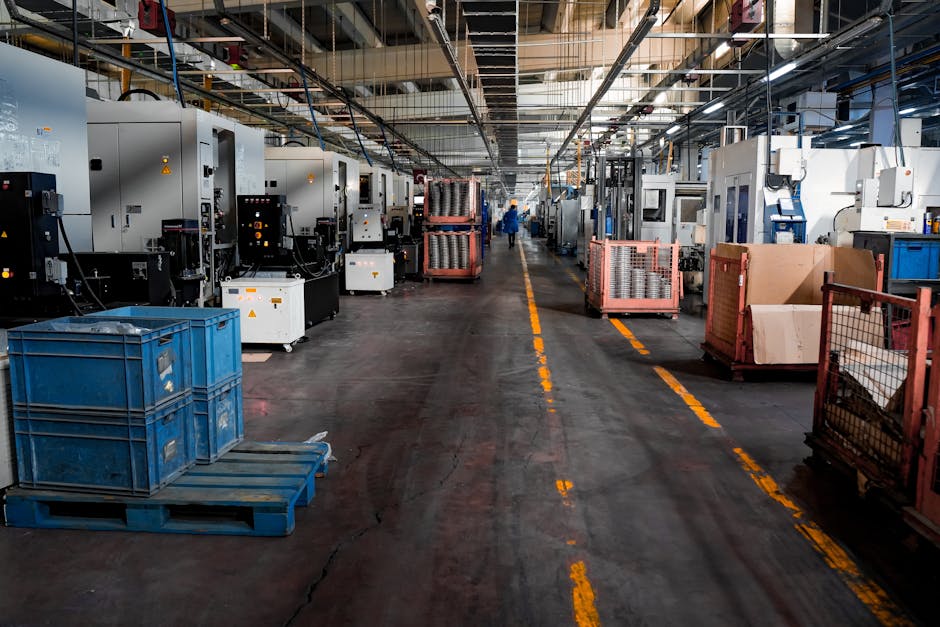
Photo by Yetkin Ağaç on Pexels
- Direct Materials: Raw materials that become an integral part of the finished product and can be directly traced.
- Direct Labor: Wages paid to employees who directly work on the product.
- Manufacturing Overhead: All other manufacturing costs that aren't direct materials or direct labor (e.g., indirect materials, indirect labor, factory utilities, depreciation on factory equipment).
The Flow of Costs

Photo by https://kaboompics.com/ on Pexels
Costs enter the Work-in-Process (WIP) inventory account of the first department. As units are completed in that department, their accumulated costs are transferred to the WIP inventory account of the next department. This continues until the units are completed in the final department, at which point their total costs are transferred to Finished Goods Inventory. When products are sold, their costs are transferred to Cost of Goods Sold.
Here's how the cost flow works:
graph TD
    A["Direct Materials (Purchased)"] --> B("Work-in-Process Inventory: Department 1")
    C["Direct Labor (Incurred)"] --> B
    D["Manufacturing Overhead (Applied)"] --> B
    B --> E("Work-in-Process Inventory: Department 2")
    E --> F("Work-in-Process Inventory: Department 3 (etc.)")
    F --> G("Finished Goods Inventory")
    G --> H("Cost of Goods Sold")
Averaging Costs

Photo by Kindel Media on Pexels
One of the main challenges in process costing is dealing with incomplete units at the end of an accounting period (Work-in-Process inventory). To handle this, we use the concept of equivalent units of production (EUP). An equivalent unit represents the amount of work done on a unit, whether it's a fully completed unit or a partially completed one.
For example, if 100 units are 50% complete with respect to conversion costs (direct labor + manufacturing overhead), that's equivalent to 50 fully completed units (100 units * 50%). Direct materials are often added at the beginning of a process, so units might be 100% complete for materials but only 30% complete for conversion costs.
3. Worked Example
Let's say a company has two departments: Mixing and Packaging.
Mixing Department Data for July:
- Beginning Work-in-Process: 0 units
- Units started into production: 10,000 units
- Units completed and transferred to Packaging: 8,000 units
- Ending Work-in-Process: 2,000 units (100% complete for materials, 50% complete for conversion costs)
Costs incurred in Mixing for July:
- Direct Materials: $20,000
- Direct Labor: $10,000
- Manufacturing Overhead: $15,000
- Total Costs: $45,000
Step 1: Calculate Equivalent Units of Production (EUP)
-
For Direct Materials:
- Units completed and transferred: 8,000 units
- Ending WIP (100% complete): 2,000 units * 100% = 2,000 EUP
- Total EUP for Materials: 10,000 units (8,000 + 2,000)
-
For Conversion Costs:
- Units completed and transferred: 8,000 units
- Ending WIP (50% complete): 2,000 units * 50% = 1,000 EUP
- Total EUP for Conversion Costs: 9,000 units (8,000 + 1,000)
Step 2: Calculate Cost Per Equivalent Unit
- Cost Per EUP for Direct Materials: $20,000 / 10,000 EUP = $2.00 per EUP
- Cost Per EUP for Conversion Costs: ($10,000 + $15,000) / 9,000 EUP = $25,000 / 9,000 EUP = $2.78 per EUP (rounded)
Step 3: Assign Costs
-
Cost of Units Completed and Transferred to Packaging:
- 8,000 units * ($2.00 Material + $2.78 Conversion) = 8,000 units * $4.78 = $38,240
-
Cost of Ending Work-in-Process Inventory:
- Materials: 2,000 EUP * $2.00 = $4,000
- Conversion: 1,000 EUP * $2.78 = $2,780
- Total Ending WIP: $6,780
Check: Total costs assigned ($38,240 + $6,780 = $45,020) should approximately equal total costs incurred ($45,000). The slight difference is due to rounding the conversion cost per EUP.
The $38,240 is now transferred to the Packaging Department's WIP account.
4. Key Takeaways
- Process costing is ideal for continuous, mass production of identical units.
- Costs are accumulated by production department, not by individual jobs.
- Manufacturing costs (DM, DL, MO) flow through departmental Work-in-Process accounts.
- Equivalent Units of Production (EUP) are crucial for averaging costs across completed and partially completed units.
- EUP is calculated separately for different cost categories (e.g., materials and conversion costs) if they are added at different stages.
- The cost per equivalent unit is used to assign costs to units completed and transferred out, and to ending Work-in-Process inventory.
- The total costs accounted for must equal the total costs to be accounted for.
Common Mistakes to Avoid:
* Confusing process costing with job order costing; remember the "identical units" rule.
* Forgetting to calculate EUP separately for different cost elements (materials vs. conversion).
* Ignoring the percentage of completion for ending WIP when calculating EUP for conversion costs.
* Not understanding that transferred-in costs from a prior department are treated like direct materials added at the beginning of the subsequent department.
* Failing to reconcile total costs assigned with total costs incurred; minor rounding differences are acceptable, large ones indicate an error.
5. Now Try It
Imagine a new department, "Finishing," receives the 8,000 units from the Mixing Department. In the Finishing Department, units are finished by adding 100% of packaging materials at the beginning of the process, and conversion costs are incurred evenly throughout. In July, the Finishing Department completed and transferred 7,000 units to Finished Goods, and 1,000 units remain in ending WIP, which are 100% complete for packaging materials and 70% complete for conversion costs.
Costs incurred in Finishing for July (in addition to transferred-in costs):
* Packaging Materials: $7,000
* Direct Labor: $6,000
* Manufacturing Overhead:
Frequently asked about Introduction to Process Costing and Cost Flows
Study this next
Get the full MANAGERIAL ACCOUNTING curriculum
Clone the complete plan to your dashboard for unlimited AI-generated notes, practice quizzes, and a personalised revision schedule.
Save this course free