Review and Assessment
From the Maths curriculum
TL;DR
Review and assessment help you check what you've learned and identify areas where you need more practice. It's about figuring out what you know well and what you still need to work on. This process isn't just about grades; it's a powerful tool for improving your understanding and problem-solving skills.
1. The Mental Model
Think of review and assessment as a personal GPS for your learning journey. You're regularly checking your current location (what you know) against your destination (what you need to know), and the assessment helps you recalibrate your route if you've gone off track or need to take a different path.
2. The Core Material
When you're reviewing, you're actively revisiting material. This isn't just rereading notes; it's about making sure you can actually do the math. Assessment is then the test of whether your review worked and where the gaps still are.
How to Review Effectively
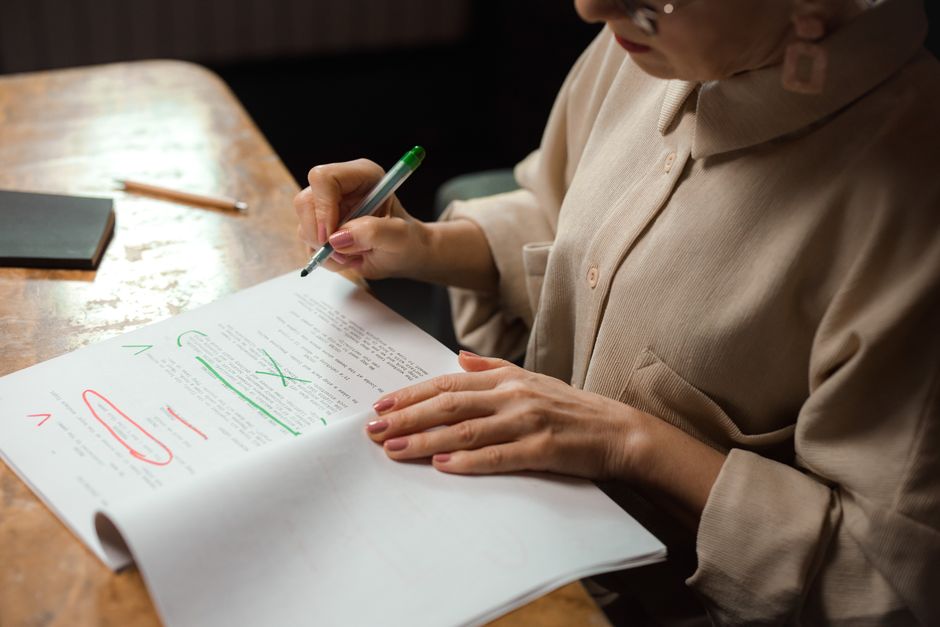
Photo by Ron Lach on Pexels
- Active Recall: Instead of just reading, try to remember information without looking at your notes. For example, if you're reviewing algebra, try to solve problems from memory. Then check your work.
- Spaced Repetition: Don't cram! Review material over several days or weeks. This helps solidify information in your long-term memory.
- Practice Problems: The best way to review math is to do math. Work through problems you've already done, and try new ones.
- Explain Concepts: If you can explain a concept to someone else (or even just to yourself), it means you truly understand it.
Understanding Assessments
Photo by Karolina Grabowska www.kaboompics.com on Pexels
Assessments come in many forms, from quizzes and tests to homework assignments and projects. Each type gives you different insights into your understanding. The key is to use the results, whether good or bad, as feedback for your learning. Don't just look at the score; look at why you got certain questions wrong.
Here's a flowchart to help you think about your review and assessment process:
flowchart TD
    A["Start Review"] --> B["Identify Key Concepts"]
    B --> C{"Understand Concept?"}
    C -- "Yes" --> D["Practice Problems"]
    C -- "No" --> E["Re-read Notes / Seek Help"]
    E --> B
    D --> F{"Confident in Skill?"}
    F -- "No" --> D
    F -- "Yes" --> G["Prepare for Assessment"]
    G --> H["Take Assessment"]
    H --> I["Review Results"]
    I --> J{"Identify Weak Areas"}
    J -- "Yes" --> K["Targeted Practice"]
    K --> A
    J -- "No" --> L["Maintain Knowledge"]
    L --> M["End Review Cycle"]
Analyzing Your Performance

Photo by Lukas Blazek on Pexels
After an assessment, don't just put it away. Go through it.
* Correct Answers: Understand why you got them right. Did you guess, or did you truly know the material?
* Incorrect Answers: These are your biggest learning opportunities.
* Was it a conceptual error (you didn't understand the idea)?
* Was it a calculation error (a simple mistake in adding, subtracting, etc.)?
* Was it a misreading of the question (you didn't understand what was being asked)?
* Was it time management (you ran out of time)?
Understanding the type of mistake helps you prevent it in the future.
3. Worked Example
Let's say you just got back a math quiz on solving linear equations. You scored 70%, but you want to improve.
- Look at the quiz: You notice you got three questions wrong.
- Analyze question 1:
3x + 5 = 14. Your answer wasx = 5. The correct answer isx = 3.- You realize you subtracted 5 on the left side but added 5 on the right side. This is a calculation error (or a sign error).
- Analyze question 2:
2(x - 4) = 10. Your answer wasx = 9. The correct answer isx = 9. Wait, you got this one right! But you remember struggling with distributing the 2.- You realize you correctly distributed in the end, but you need more practice with the distributive property to feel confident.
- Analyze question 3: "The sum of twice a number and 7 is 15. What is the number?" You wrote
2x - 7 = 15.- You realize you misread "sum of" and "and" as a subtraction. This is a misreading of the question and a conceptual error in translating words to algebra.
Action Plan based on this analysis:
* Review rules for operations with positive/negative numbers to fix calculation errors.
* Do more practice problems specifically involving the distributive property.
* Practice translating word problems into algebraic expressions, paying close attention to keywords like "sum," "difference," "product," and "quotient."
4. Key Takeaways
- Review is an active process of recalling and applying information, not just passive reading.
- Assessments are valuable feedback tools that highlight your strengths and weaknesses.
- Always analyze your mistakes to understand why you got them wrong.
- Different types of errors (conceptual, calculation, misreading) require different corrective actions.
- Regular, spaced practice is far more effective than cramming before a test.
- Use your quiz and test results to create a targeted study plan for improvement.
- Don't be afraid to seek help when you identify a concept you don't understand.
5. Now Try It
Take out a past quiz or test in any math subject that you've completed. Go through every question you got wrong and classify the type of error you made (conceptual, calculation, misreading, time, etc.). For each error, write down one specific action you'll take to prevent that same mistake in the future (e.g., "review integer rules," "do 5 more word problems on inequalities," "always reread the question twice"). Success looks like having a clear, actionable plan for improving your understanding based on your past performance.
Frequently asked about Review and Assessment
Study this next
Get the full Maths curriculum
Clone the complete plan to your dashboard for unlimited AI-generated notes, practice quizzes, and a personalised revision schedule.
Save this course free