Training Delivery and Facilitation
From the Managing training and developmemt curriculum
TL;DR
Training delivery is all about choosing the best methods and materials to get your message across effectively. Facilitation is the art of guiding a group through learning, making sure everyone participates and understands. Together, they ensure your training programs aren't just informative, but also engaging and impactful for your learners.
1. The Mental Model
Think of yourself as a chef. Training delivery is selecting the best ingredients (content) and cooking methods (delivery approaches). Facilitation is how you engage with your diners, guiding them through the meal, answering questions, and making sure they enjoy and digest everything.
2. The Core Material
Training delivery and facilitation are two sides of the same coin when it comes to making learning happen.
Training Delivery Methods

Photo by Vanessa Garcia on Pexels
This is how you present the training content. The best method depends on your audience, the subject matter, and your resources.
- Instructor-Led Training (ILT): Traditional classroom or virtual sessions where an instructor guides learners. Great for complex topics, discussion, and immediate feedback.
- Examples: Workshops, lectures, virtual classrooms.
- eLearning/Online Learning: Self-paced modules, videos, or interactive courses accessible via a computer or mobile device. Good for scalability, flexibility, and consistent messaging.
- Examples: SCORM packages, video tutorials, interactive simulations.
- Blended Learning: Combines ILT and eLearning elements. Offers the best of both worlds – flexibility of online learning with the interaction of face-to-face.
- Examples: Online pre-work followed by a classroom workshop, virtual sessions supplemented with self-paced modules.
- On-the-Job Training (OJT): Learning by doing, often guided by a supervisor or experienced colleague. Highly practical and immediate.
- Examples: Job shadowing, coaching, apprenticeships.
- Experiential Learning: Hands-on activities, simulations, or role-plays where learners directly experience concepts. Powerful for skill development and problem-solving.
- Examples: Business simulations, case studies, role-playing scenarios.
Training Facilitation Skills
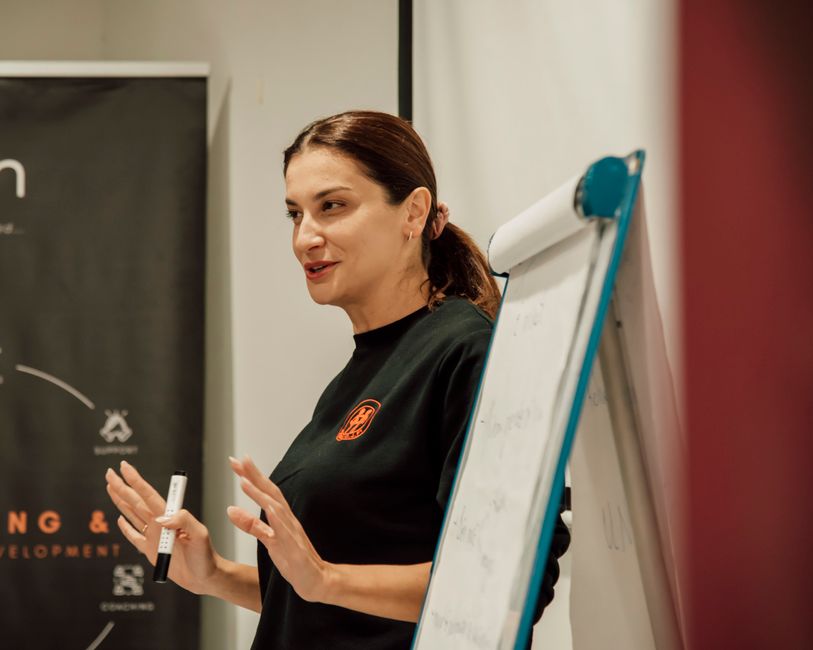
Photo by Xhemi Photo on Pexels
Facilitation is the skill of guiding a group to achieve a learning objective. It's about creating an environment where learners feel comfortable participating, asking questions, and discovering insights for themselves.
- Active Listening: Paying full attention to what learners say, both verbally and non-verbally, to understand their needs and perspectives.
- Questioning Techniques: Asking open-ended questions to stimulate thought, encourage discussion, and check understanding.
- Examples: "What are your thoughts on this?" "How might you apply this in your role?"
- Managing Group Dynamics: Handling different personalities, encouraging quieter members, managing dominant ones, and keeping discussions on track.
- Providing Constructive Feedback: Giving specific, timely, and actionable feedback that helps learners improve without demotivating them.
- Time Management: Keeping the session moving according to schedule while allowing flexibility for important discussions.
- Creating a Safe Learning Environment: Ensuring everyone feels respected, valued, and safe to share ideas and make mistakes.
Here's how these elements typically flow together:
graph TD
    A["Analyze Needs (What to teach?)"] --> B["Design Content (What materials?)"];
    B --> C{"Choose Delivery Method (How to teach?) A. ILT, B. eLearning, C. Blended, etc."};
    C -- Method Chosen --> D["Prepare Facilitator & Materials"];
    D --> E["Deliver Training (Facilitation in action)"];
    E --> F["Assess Learning & Evaluate Program"];
    F --> G["Refine & Iterate"];
Engaging Learners

Photo by Bhupindra International Public School on Pexels
Regardless of the method, engagement is key.
* Vary activities: Mix presentations with group discussions, individual exercises, and practical tasks.
* Tell stories: Relatable anecdotes make content memorable.
* Use visuals: Slides, videos, and diagrams can clarify complex ideas.
* Encourage participation: Create opportunities for learners to contribute their ideas and experiences.
3. Worked Example
Let's say you need to train a sales team on a new CRM system.
Objective: Sales team can confidently use the new CRM to log customer interactions and pull basic reports.
-
Delivery Method Choice: A blended learning approach would be great.
- Pre-work (eLearning): Short online modules (videos and quizzes) explaining the CRM's interface, basic navigation, and data entry fields. This saves valuable face-to-face time.
- Live Session (ILT): A 3-hour instructor-led virtual workshop focused on practical application, Q&A, and troubleshooting.
- Post-training (OJT/Support): A quick reference guide and access to an internal forum for ongoing questions.
-
Facilitation during the Live Session:
- Opening: Start with a quick poll ("How confident are you with the new CRM right now?") to gauge initial understanding and build rapport.
- Activities: Instead of just showing, have them do. "Let's all log into the system now. I'll walk you through creating a new contact, then you'll each create a dummy contact on your own."
- Questioning: After a demo, ask, "What potential challenges do you foresee when logging your first real customer interaction?" to prompt critical thinking.
- Feedback: As they practice, provide specific feedback: "Sarah, I see you've found the 'Activity Type' dropdown – great! Just remember to hit 'Save' at the bottom right."
- Group Dynamics: If one person is struggling, pair them with someone who grasped it quickly for a peer-learning moment. "Alex, maybe you could show Chris how you navigated to the report section?"
- Closing: Review key features, answer final questions, and assign a small follow-up task (e.g., "By end of week, log 3 real customer interactions").
4. Key Takeaways
- Choose training delivery methods based on learning objectives, audience, and resources.
- Effective facilitation creates an engaging and supportive learning environment.
- Active listening and good questioning are crucial for understanding learner needs and promoting discussion.
- Blended learning often provides the best balance of flexibility and interaction.
- Always aim to make learning active and participatory, not just passive information reception.
- Varying activities keeps learners engaged and caters to different learning styles.
Common Mistakes to Avoid:
- One-size-fits-all delivery: Using the same method for every topic or group.
- Lecturing too much: Monopolizing the conversation and not allowing learner input.
- Ignoring group dynamics: Letting dominant individuals take over or quiet ones disengage.
- Not preparing adequately: A facilitator who doesn't know the material or activities well can lose credibility.
- Overloading with information: Trying to cover too much, leading to cognitive overload and poor retention.
5. Now Try It
Think about a recent training session you attended or delivered. Outline how you would redesign one 30-minute segment of that training using a different delivery method and focusing on specific facilitation techniques.
What to do:
1. Identify the original topic and method for a 30-minute block.
2. Choose a different delivery method you think would be more effective (e.g., switch from pure lecture to a group activity or short eLearning module).
3. Describe exactly what the learners would do during those 30 minutes in your new design.
4. List at least three specific facilitation techniques you would use (e.g., "I would ask open-ended questions like...", "I would use a small group breakout for...", "I would observe for X and provide Y feedback").
What success looks like: You have a clear, actionable plan for a more engaging and effective 30-minute training segment that actively involves the learners.
Frequently asked about Training Delivery and Facilitation
Study this next
Get the full Managing training and developmemt curriculum
Clone the complete plan to your dashboard for unlimited AI-generated notes, practice quizzes, and a personalised revision schedule.
Save this course free