Number Representation and Place Value
From the maths curriculum
TL;DR
Numbers are represented by digits, and each digit's value depends on its position within the number, which is its place value. Our number system is base-10, meaning each place is ten times greater than the one to its right. Understanding place value helps you read, write, and understand the true size of any number.
1. The Mental Model
Imagine you have different slots for digits. The slot on the far right holds "ones," the next slot to the left holds "tens," then "hundreds," and so on. The further left a digit is, the bigger its contribution to the number's total value.
2. The Core Material
Our everyday number system is called the decimal system, which means it's base-10. This base-10 idea is crucial: it means that the value of each place is ten times greater than the place to its right.
Understanding Digits and Numbers
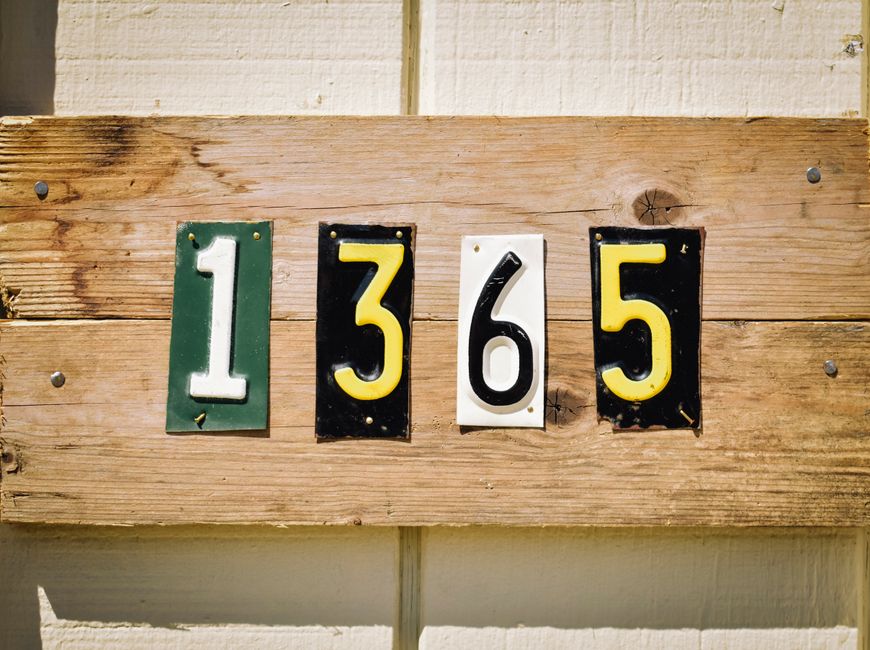
Photo by Chris F on Pexels
A digit is a single symbol from 0 to 9. A number is made up of one or more digits. For example, in the number 345, '3', '4', and '5' are digits.
Place Value Explained
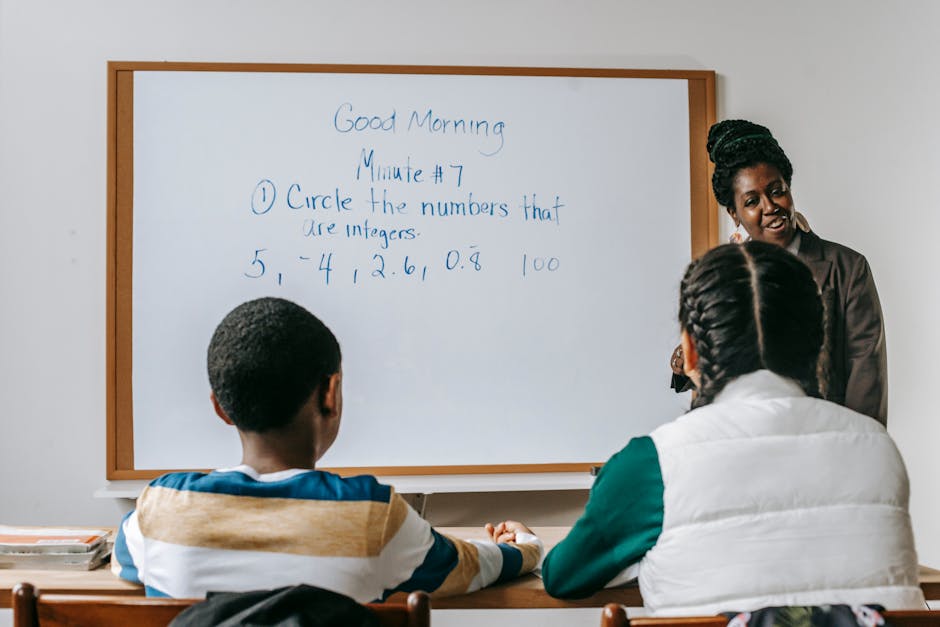
Photo by Katerina Holmes on Pexels
Every digit in a number has a specific place value based on its position.
- The rightmost digit is in the ones place.
- The digit to its left is in the tens place.
- The next digit to the left is in the hundreds place.
- This pattern continues indefinitely (thousands, ten thousands, hundred thousands, millions, etc.).
Let's look at how place value builds up:
graph LR
    D["Digit on the right"] --> P1["Ones Place (1)"]
    P1 --> P2["Tens Place (10)"]
    P2 --> P3["Hundreds Place (100)"]
    P3 --> P4["Thousands Place (1,000)"]
    P4 --> P5["Ten Thousands Place (10,000)"]
    P5 --> P6["And so on..."]
The Value of a Digit

Photo by crazy motions on Pexels
To find the actual value a digit represents, you multiply the digit itself by its place value.
For example, in the number 5,283:
- The '3' is in the ones place, so its value is $3 \times 1 = 3$.
- The '8' is in the tens place, so its value is $8 \times 10 = 80$.
- The '2' is in the hundreds place, so its value is $2 \times 100 = 200$.
- The '5' is in the thousands place, so its value is $5 \times 1000 = 5000$.
When you add these values together ($5000 + 200 + 80 + 3$), you get the original number, 5,283. This is also called the expanded form of a number.
Using Commas to Read Large Numbers

Photo by Jan van der Wolf on Pexels
To make large numbers easier to read, we use commas to separate groups of three digits, starting from the right. Each group has a special name (thousands, millions, billions, etc.).
For example:
- 1,234 (one thousand, two hundred thirty-four)
- 56,789 (fifty-six thousand, seven hundred eighty-nine)
- 123,456,789 (one hundred twenty-three million, four hundred fifty-six thousand, seven hundred eighty-nine)
3. Worked Example
Let's take the number 70,391. We want to understand the place value of each digit and write it in expanded form.
- Identify the rightmost digit: It's '1'. This is in the ones place. Value: $1 \times 1 = 1$.
- Move left to the next digit: It's '9'. This is in the tens place. Value: $9 \times 10 = 90$.
- Next digit: It's '3'. This is in the hundreds place. Value: $3 \times 100 = 300$.
- Next digit: It's '0'. This is in the thousands place. Even though it's a zero, it still holds the place! Value: $0 \times 1000 = 0$.
- Leftmost digit: It's '7'. This is in the ten thousands place. Value: $7 \times 10000 = 70000$.
Now, to write it in expanded form, we add these values:
$70000 + 0 + 300 + 90 + 1 = 70,391$.
4. Key Takeaways
- Every digit in a number contributes to its total value based on its position.
- Our number system is base-10, meaning each place value is ten times greater than the one to its right.
- The ones place is always the rightmost digit.
- Zero is a crucial placeholder; it shows that a specific place value has no amount, but it keeps other digits in their correct positions.
- Commas help you easily read and understand very large numbers by grouping digits into thousands, millions, etc.
Common mistakes to avoid:
- Forgetting that zero still holds a place, even if its value contribution is zero.
- Confusing the digit itself with its place value (e.g., thinking the '2' in 200 is just '2', not 'two hundred').
- Misplacing commas when writing large numbers, which can change how you read them.
- Not understanding that the system extends infinitely to the left for larger numbers.
5. Now Try It
Think about the number 84,005.
1. Identify the place value of each digit.
2. What is the actual value that the digit '4' represents in this number?
3. Write the number in expanded form.
You've successfully completed the exercise if you can correctly identify all the place values, say that the '4' represents 4,000, and write the expanded form as $80000 + 4000 + 0 + 0 + 5$.
Frequently asked about Number Representation and Place Value
More from maths
Get the full maths curriculum
Clone the complete plan to your dashboard for unlimited AI-generated notes, practice quizzes, and a personalised revision schedule.
Save this course free